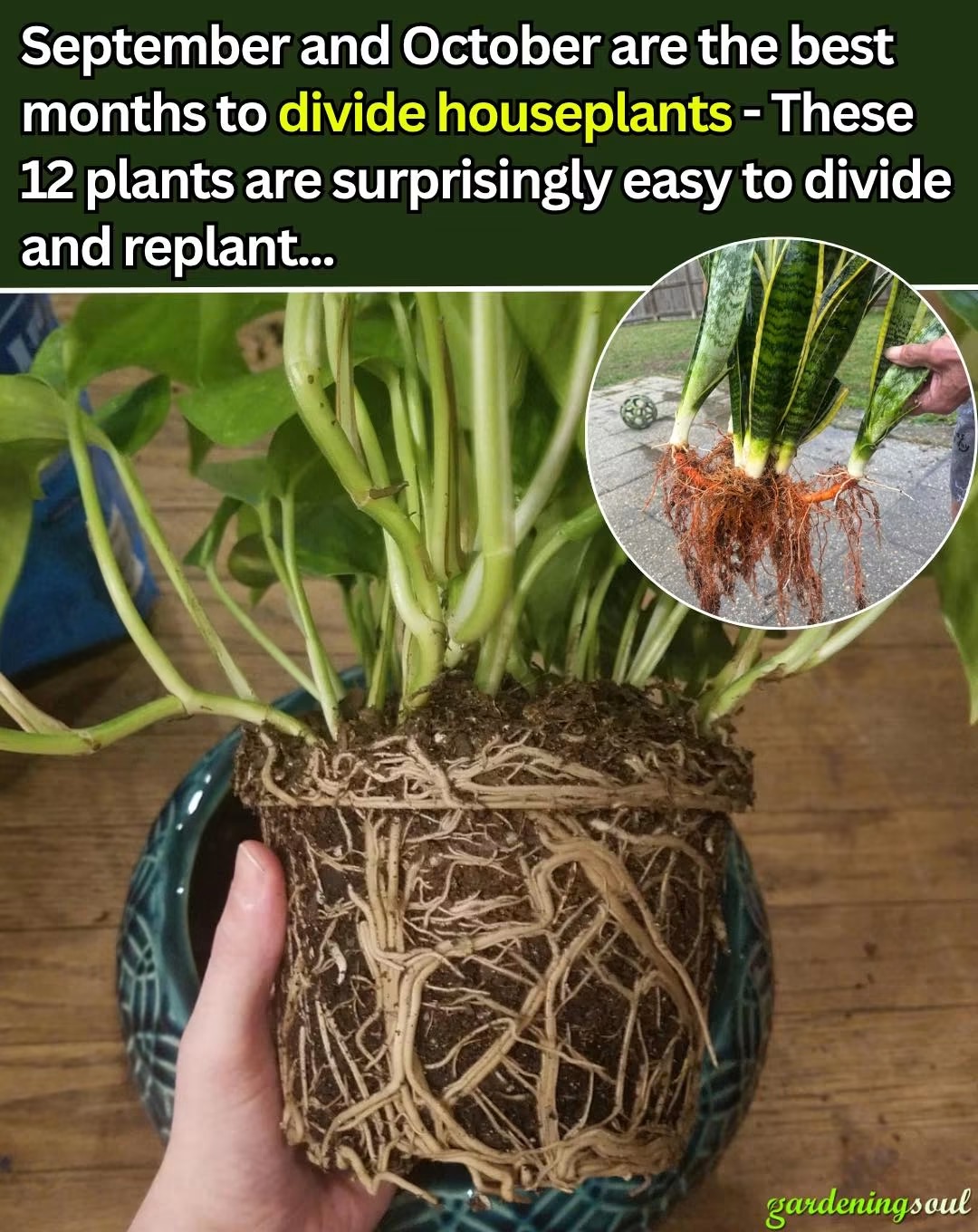
Most people wait until spring to split houseplants. That works — but it is not always the smartest window.
September and October sit in a sweet spot: plants have finished their summer growth burst, roots are thick and healthy, and the weather is cooler so transplant shock stays low. You still have 4–6 weeks of mild conditions for new roots to settle before winter slowdown.
Do it now and one crowded pot can become two, three, or four healthy plants — for free.
Why You’ll Love Dividing Houseplants in Early Fall
• You get free plants before winter instead of buying more in spring
• Overcrowded roots get space, so growth and blooms bounce back
• Cooler air and lower evaporation mean less wilting after the split
• Plants are slowing down, not fully dormant, so they recover faster than in mid-winter
• One mature plant often yields 2–5 new pots you can keep, gift, or sell
Signs Your Houseplant Is Ready to Divide
You do not need to split every plant every year. Look for these signs:
• Roots circling the pot or poking out of drainage holes
• The plant lifts itself up or the soil dries out in hours
• Growth has stalled even though you water and feed as usual
• Multiple crowns or clumps packed tight in one pot
• Flowering plants (peace lily, anthurium) have stopped blooming
• The center of a clump looks thin or dying while the edges stay lush
If you see two or more of these, fall is a good time to act.
What You Need
• Clean, sharp knife or pruning shears (wipe with rubbing alcohol)
• Fresh potting mix suited to the plant (well-draining for snake plant and ZZ; moisture-retentive for ferns and peace lily)
• Clean pots with drainage holes — usually one size down or the same size as the original
• Watering can and a spray bottle
• Gloves if the sap bothers your skin (peace lily, philodendron, alocasia)
Optional: cinnamon or sulfur powder to dust cut surfaces on rhizomes.
How to Divide Houseplants (Step-by-Step)
1. Water the plant thoroughly the day before. Moist soil slides out of the pot and roots tear less.
2. Tip the pot on its side and ease the root ball out. Tap the sides or run a knife around the rim if it is stuck.
3. Shake or tease off excess soil so you can see natural splits — separate crowns, rhizomes, or tubers.
4. Pull apart by hand when the clumps separate easily. Use a clean knife for woody rhizomes (snake plant, ZZ, alocasia). Each piece needs roots plus at least one healthy growing point or a few leaves.
5. Trim black, mushy, or circling roots. Leave healthy pale or orange-white roots.
6. Pot each division at the same depth it grew before. Firm the mix gently so there are no big air pockets.
7. Water until it drains, then mist the leaves. Place in bright, indirect light — no harsh sun for 1–2 weeks.
8. Keep the mix slightly moist, never soggy, for the first 2–3 weeks. Skip fertilizer for 4–6 weeks.
That is the whole method. Most of these 12 plants bounce back within a month.
12 Houseplants That Are Surprisingly Easy to Divide in September and October
1. Spider Plant (Chlorophytum comosum)
Pups and crowded clumps separate with almost no effort. Pull the root mass apart or snip plantlets that already have nubs of roots. Pot in regular houseplant mix and keep lightly moist. They root fast and clean the air.
2. Peace Lily (Spathiphyllum)
When the pot is packed with crowns and blooms have slowed, split into sections with 2–3 leaves and a chunk of roots each. Use a rich, moisture-holding mix. Keep out of direct sun and never let the soil dry out completely while they recover. New blooms often return the following season.
3. Snake Plant (Dracaena trifasciata / Sansevieria)
One of the easiest first divisions. Cut the rhizome so each piece has leaves and roots. Let cuts dry for a few hours if the plant was very wet, then pot in a gritty, well-draining mix. Water sparingly. They barely notice the split.
4. ZZ Plant (Zamioculcas zamiifolia)
Underground rhizomes look like small potatoes. Separate them carefully and pot each in a fast-draining mix. ZZ grows slowly, so divide only every 3–4 years. Aftercare is simple: bright indirect light and infrequent water.
5. Boston Fern (Nephrolepis exaltata)
Crowded ferns get thin in the middle. Cut the root ball into 2–4 wedges, each with fronds and roots. High humidity is the secret — mist daily or use a pebble tray for two weeks. Keep the mix evenly moist.
6. Pothos (Epipremnum aureum)
Many stems from one root ball. Separate the mass into smaller clumps or combine division with stem cuttings. Fresh mix, bright indirect light, and normal watering. New vines take off quickly.
7. Prayer Plants (Calathea and Maranta)
These form tight crowns. Gently tease crowns apart so each has roots. They hate dry air after a split — humidity and consistent moisture matter more than anything else. Avoid cold drafts.
8. Anthurium
Multiple crowns can be sliced apart with a clean knife. Replant in an airy aroid mix (bark + perlite + peat or coco). Bright indirect light and steady humidity help them push new spathes.
9. Clumping Philodendron (e.g. Selloum / Thaumatophyllum)
Large plants produce several stems from the base. Separate at natural joints. Keep soil evenly moist the first month and give them space — these become statement plants fast.
10. Alocasia and Colocasia (Elephant Ears)
Tubers and rhizomes multiply under the soil. Lift, separate pieces that have a growing point, and pot in rich, well-draining mix. They often produce bigger leaves the next growing season.
11. Chinese Evergreen (Aglaonema)
Dense clumps pull or cut apart easily. Each section needs a few canes and roots. Low-to-medium light is fine after division. Do not overwater while they settle.
12. Monstera (clumping or multi-stem plants)
Look for extra stems or basal shoots with their own roots. Separate those rather than trying to split a single thick stem. Combine with a node cutting if you want even more plants. Bright indirect light and a chunky mix.
Aftercare: How to Keep New Divisions Alive
Water thoroughly once, then let the top of the mix dry slightly before the next drink. Overwatering is the number-one killer of fresh divisions.
Give bright, indirect light. Direct sun on weakened roots causes leaf scorch.
Humidity-loving types (fern, calathea, anthurium, peace lily) appreciate daily misting or a nearby humidifier for 10–14 days.
No fertilizer until you see new growth — usually 4–6 weeks. Fresh potting mix already has enough nutrients.
Expect some droop or a yellow leaf. That is normal. Widespread collapse or mushy stems means the mix is too wet or a cut did not heal.
Tips for Better Results
• Work on a table covered with newspaper so you can inspect every root.
• Label pots if you split several plants the same day.
• Smaller divisions establish faster than giant chunks.
• If a piece has almost no roots, treat it like a cutting: higher humidity and less water until roots form.
• Snake plant and ZZ prefer to dry out more than peace lily or fern — match the mix to the plant, not a one-size-fits-all bag.
What to Do With Extra Plants
Keep the strongest division in the original decorative pot. Use extras to fill empty shelves, start a matching pair, gift to friends, or trade at a local plant swap. Mature monstera or anthurium divisions can sell well if they are clean and well-rooted.
FAQ
Is September or October better?
Both work in most homes. Aim to finish at least 4 weeks before your indoor temperatures drop sharply and growth fully stops. In very warm climates you can go later into October.
Can I divide in winter instead?
You can, but recovery is slower and rot risk is higher because plants are not actively growing. Early fall is kinder.
How often should I divide?
Every 2–4 years for fast clumpers (spider plant, peace lily, fern). Every 3–5 years for snake plant, ZZ, and aglaonema. Only when the plant is clearly pot-bound.
Do I need special soil?
Use what the parent plant already likes. Add extra perlite or bark for snake plant, ZZ, and monsteras. Keep more peat or coco for ferns and peace lilies.
Why are my new plants drooping?
Usually underwatering the first week or too much sun. Check the mix, move to gentler light, and mist the leaves.
Can I divide a plant that is flowering?
Better to wait until blooms fade (peace lily, anthurium). Division during peak flower can abort the bloom and add extra stress.
Final Thoughts
September and October give you a short, low-stress window to turn one tired houseplant into several vigorous ones. The 12 plants above are the ones that forgive beginner cuts, root quickly, and look better after they have room to breathe.
Pick the most crowded pot you own, follow the steps, and you will have extra plants before the heating goes on for winter.
Save this guide and work through your collection one plant at a time — that is how indoor jungles actually grow.