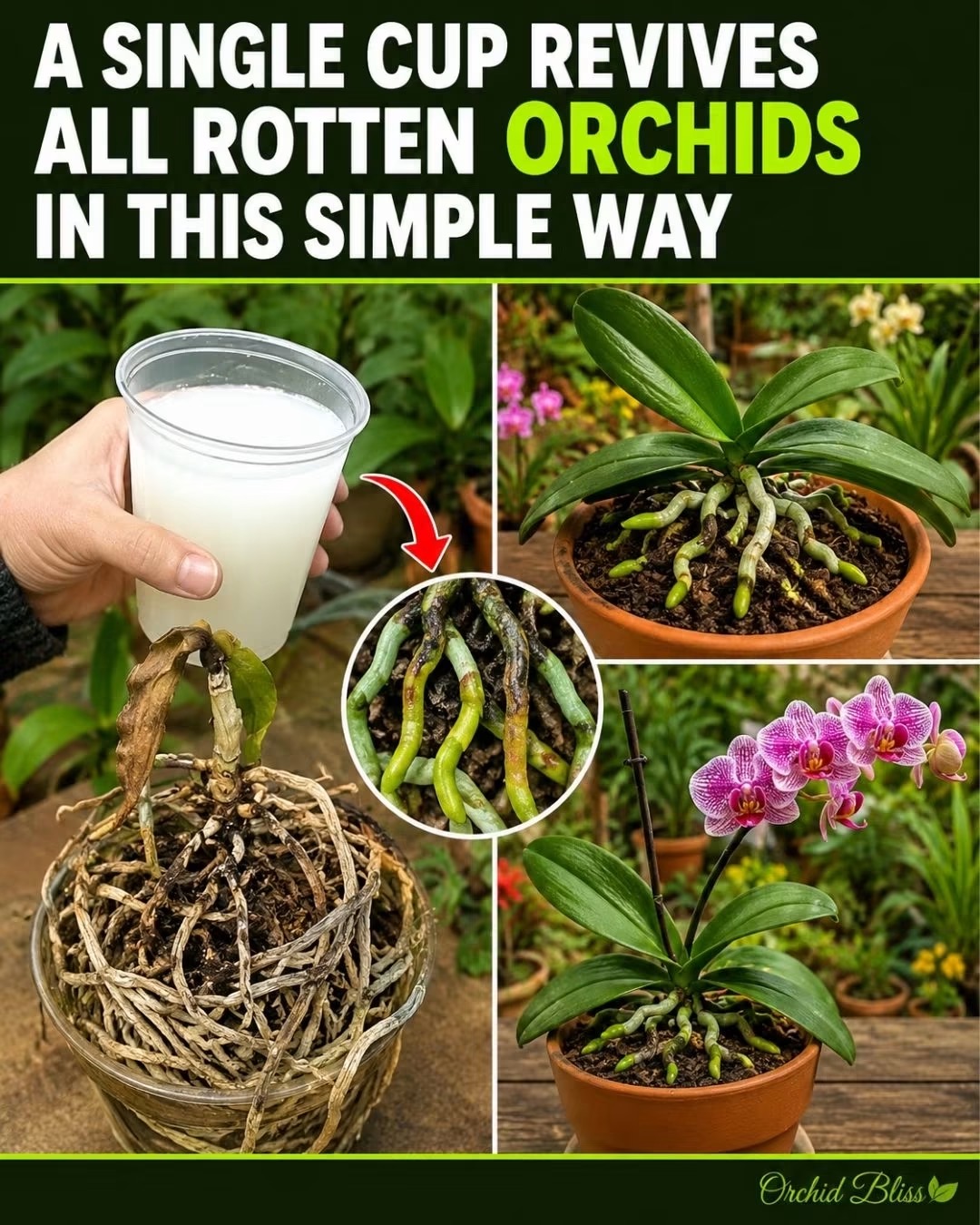
If your orchid looks finished — brown, papery leaves, a tangle of dry or mushy roots, no flowers in sight — do not throw it away yet.
Many “dead” Phalaenopsis orchids are only rotting in the potting mix. The crown can still be alive. One cup of a simple homemade tonic, used after you cut away the rot, is often enough to kick-start new roots.
This is not magic and it is not instant. It is a clean-up + mild soak + fresh bark routine that home growers use every day. Recovery usually takes 4–8 weeks for the first green root tips, and several months before a new flower spike.
Why You’ll Love This Method
- Uses one cup of kitchen ingredients you already have
- No harsh chemicals required
- Works on moth orchids (Phalaenopsis) that still have a firm crown
- Doubles as a monthly foliar wipe once the plant is stable
- Cheap, repeatable, and easy to batch
What You’ll Need (The “Single Cup”)
Base tonic (makes about 1 cup / 250 ml — enough for 1 plant)
- 1 cup (240 ml) lukewarm, non-chlorinated water (filtered, rain, or boiled then cooled)
- 1 teaspoon whole milk OR 2–3 tablespoons leftover rice-rinsing water (the milky first rinse)
- ½ teaspoon ground cinnamon
Optional additions (pick one, do not stack everything)
- ½ teaspoon aloe vera gel (fresh inner gel, not the green skin)
- 1 crushed garlic clove, steeped then strained (antibacterial)
- A pinch of sugar only if the plant is severely dehydrated (helps water uptake)
Tools
- Sterile scissors or a razor blade (wipe with rubbing alcohol between cuts)
- Clean plastic cup or small bowl
- Fresh orchid bark (medium fir bark), never garden soil
- Small terracotta or clear plastic pot with drainage holes
- Paper towel or clean cloth
- Optional: cinnamon powder for dusting cuts
How to Revive a Rotten Orchid Step by Step
- Unpot and rinse
Gently pull the orchid out of its old pot. Rinse the roots under lukewarm water until all old bark, moss, and slime are gone. Healthy roots are firm and green or silvery-white. Rotten roots are brown/black, mushy, hollow, or peel like wet paper. - Cut away every bad root
With sterile scissors, cut back to firm tissue. Do not leave “maybe” roots. If almost all roots are gone but the crown (the center where leaves meet) is still firm and green-white, the plant can still recover. Soft, brown, smelly crown = usually too late. - Dust the cuts
Lightly dust only the cut ends with dry cinnamon powder. Cinnamon is a mild natural antifungal. Do not coat living green roots. - Let the wounds callus
Set the bare plant in a dry, shaded, airy spot for 4–12 hours, or overnight. This step is easy to skip and is one of the main reasons rot comes back. - Mix the single cup
In a clean cup, stir:
- 1 cup lukewarm water
- 1 tsp milk or a splash of milky rice water
- ½ tsp cinnamon
Stir well. If you added garlic or aloe, strain first so no pulp sits on the roots.
- Short soak only
Dip only the roots (keep the crown and leaf bases dry) in the cup for 10–20 minutes. Do not soak overnight. After soaking, lift the plant out and let excess drip off. - Wipe the leaves
Dip a cloth in the same cup and gently wipe the top and underside of remaining leaves. This removes dust and gives a light feed through the leaf surface. - Repot in fresh bark
Use a snug pot (only a little bigger than the remaining root mass) with drainage holes. Fill with dry or barely damp orchid bark. Set the crown slightly above the bark line so water cannot pool in the center of the plant. - Do not water yet
Leave the newly potted orchid dry for 3–7 days so cuts can seal. Place it in bright, indirect light. No harsh midday sun. - Resume light watering
After the dry rest, water thoroughly so water runs out the holes, then wait until the bark is almost dry before watering again. For a recovering plant this is often every 7–12 days, depending on your room.
When You’ll See Results
- Week 1–2: plant looks the same. That is normal.
- Week 3–6: new root tips (bright green points) if the crown survived.
- Month 2–4: thicker roots and a new leaf on a strong plant.
- Flowers: usually the following season, not immediately.
A plant with zero living roots can still survive if the crown is firm. Keep humidity around it (a tray of wet pebbles nearby, not a sealed plastic bag that stays wet on the leaves).
How to Keep It Healthy After Revival
- Water in the morning so the crown dries by night.
- Never let water sit in the leaf cup.
- Repot every 12–24 months before bark turns to mush.
- Fertilize weakly (¼ strength orchid fertilizer) only after new roots appear.
- Bright east or filtered south light, 18–27°C (65–80°F).
Variations
Rice-water only
Skip the milk. Use the cloudy water from rinsing uncooked rice. Mild starch and B vitamins. Use fresh; do not store more than 24 hours in the fridge.
Cinnamon tea
Steep 1 tsp cinnamon in 1 cup hot water, cool completely, then use as the soak. Good if you want to avoid dairy.
Aloe + cinnamon
Blend a small piece of inner aloe gel into the cup, strain. Soothing on stressed tissue. Use sparingly.
No soak version
If roots are already very few, skip the soak. Dust cuts with cinnamon, callus overnight, pot in bark, and only mist the bark surface lightly for the first week.
Tips for Success
- Sterilize tools every time. Rot spreads on dirty blades.
- Clear pots help you watch new roots without unpotting.
- If the mix smells sour, unpot immediately — that is active rot.
- One cup treats one plant. Do not reuse leftover soak on a second sick plant.
- Patience beats “miracle” claims. New roots take weeks.
Make-Ahead Tonic & Storage
The cup is best mixed fresh each time.
If you must prep ahead:
- Mix water + cinnamon, cool, refrigerate up to 48 hours.
- Add milk or rice water only at the moment of use.
- Discard anything that smells sour or grows a film.
Do not freeze this tonic. Do not store garlic-aloe mixes more than a day.
FAQ
Can I pour the cup straight onto a rotting pot without unpotting?
No. Standing wet mix plus rot only speeds the decay. Always unpot, cut, and refresh the bark.
Is milk safe for orchids?
In this tiny dilution (about 1 tsp per cup of water), used as a short soak or leaf wipe, many growers use it without issue. Full-strength milk will sour and invite fungus. If you prefer, use rice water instead.
Should I use hydrogen peroxide?
Opinions are split. Some growers dab 3% peroxide on cuts; others say it burns living velamen. Cinnamon + fresh bark + dry rest is the gentler first choice.
My orchid has no roots left. Is it hopeless?
Not if the crown is firm. Treat it as a cutting: callus, pot high in bark or suspend over humidity, and wait for new roots from the base.
How often can I use the cup after the plant recovers?
Once a month as a weak foliar wipe is plenty. Weekly soaks are too much once the plant is growing.
Why did my orchid rot in the first place?
Usually old, broken-down bark that stays wet, a pot with no air, or water sitting in the crown. Fix the pot and watering and the tonic is only a helper.
Final Thoughts
A single cup will not resurrect a plant whose crown has already turned to mush. It will help a neglected orchid that still has a living center — after you do the unglamorous work of cutting rot, dusting cinnamon, and giving it fresh, airy bark.
Save the plant first. Flowers come later.
Printable Rescue Card
Revive Rotten Orchid — Single Cup Method
Prep: 20 minutes
Callus rest: 4–12 hours
Soak: 10–20 minutes
Dry rest after potting: 3–7 days
First new roots: 3–6 weeks (typical)
Best for: 1 Phalaenopsis (moth orchid)
The cup
1 cup lukewarm water
1 tsp milk or splash of rice water
½ tsp ground cinnamon
(optional: strained aloe or 1 garlic clove)
Steps
- Unpot and rinse
- Cut all mushy roots
- Dust cuts with cinnamon
- Air-dry 4–12 hours
- Soak roots 10–20 min
- Wipe leaves
- Pot in fresh bark
- Keep dry 3–7 days
- Water only when bark is nearly dry
Disclaimer: This is home-grower practice, not a guarantee. Severe crown rot is often fatal. When in doubt, cut more than you think you need and keep the crown dry.