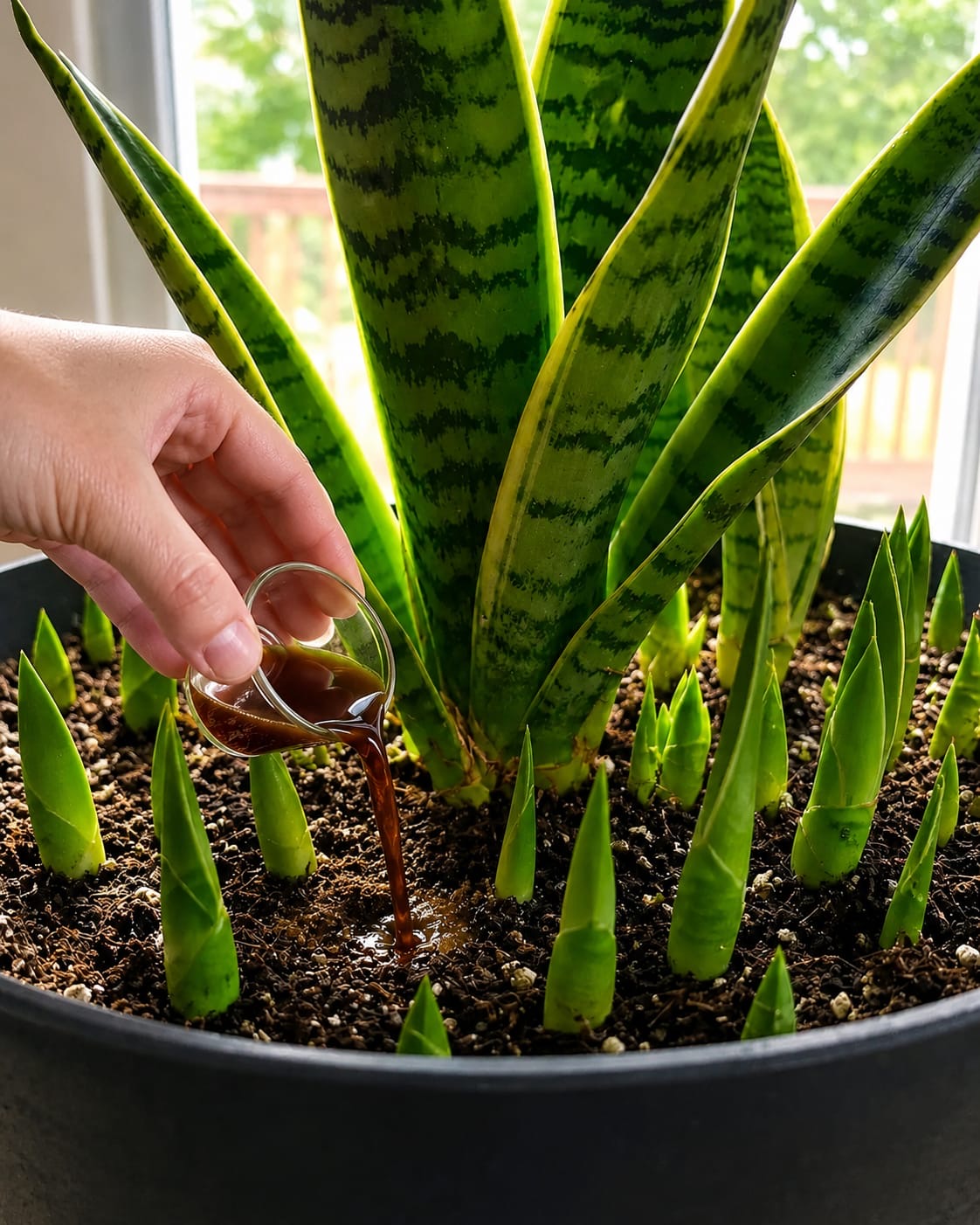
Snake plants are loved for their tall, sculptural leaves and easy-going nature. They can handle missed waterings, adapt to average indoor light, and add a clean, modern look to almost any room. Because they seem so tough, many people assume they will thrive with any homemade plant tonic—but this is where problems often begin.
A brown liquid poured into the soil may look like a natural fertilizer, yet it is not automatically safe for a snake plant. Coffee, tea, sugary drinks, kitchen leftovers, and unknown homemade mixtures can leave residues in the potting mix, attract pests, and make the roots more vulnerable to rot. Snake plants grow best with a simple routine: light, drainage, careful watering, and a properly diluted fertilizer when they are actively growing.
Why Snake Plants Need Simple Care
Snake plants store water in their thick, upright leaves and underground rhizomes. This allows them to tolerate dry soil for longer than many common houseplants. Their biggest weakness is not dryness—it is staying wet for too long.
When the soil remains soggy, roots cannot get enough oxygen. Over time, they can soften, rot, and stop supporting healthy growth. A plant may still look fine at first, but yellowing leaves, a sour smell, or leaves that feel loose at the base can follow.
This is why every care choice should support drainage and avoid adding unnecessary materials to the soil.
Is Brown Homemade Liquid Good for a Snake Plant?
It depends entirely on what the liquid contains, but most homemade brown liquids should not be used as a regular fertilizer.
Coffee, tea, sugary water, broth, milk, fruit-soaking water, and leftover drinks are not balanced plant foods. They can change the soil conditions in ways that are hard to control. Even if a mixture seems harmless once, repeated use can create buildup around the roots.
A snake plant does not need a mystery tonic to produce new shoots. The small green shoots around the base of a mature plant are usually a sign that the plant is settled, has healthy roots, and is receiving reasonable care.
Why Coffee and Tea Can Cause Problems
Coffee and tea are often promoted as “natural” plant fertilizers, but natural does not always mean suitable for a potted plant. Coffee can be acidic, and both coffee and tea may contain compounds that do not benefit snake plant roots. If sugar, milk, cream, flavorings, or syrups are present, the mixture should never go into a plant pot.
These liquids may also encourage fungus gnats, mold, and unpleasant odors in damp soil. In a container, there is nowhere for excess residues to wash away naturally as they might outdoors.
Plain water and a measured houseplant fertilizer are much more dependable choices.
What to Do If You Already Used a Homemade Liquid
There is no need to panic after one small application. Stop using the mixture and allow the soil to dry well before watering again.
If your snake plant is in a pot with drainage holes and the soil is already very wet, do not add more water immediately. Let the pot dry naturally in bright, indirect light. Check that no water is sitting in the saucer.
If the soil smells sour, shows mold, remains wet for a long time, or attracts small flies, it may be time to repot. Gently remove the plant, inspect the roots, trim any black or mushy sections with clean scissors, and place it in fresh, fast-draining potting mix.
The Best Soil for Snake Plants
Snake plants need a loose mix that drains quickly. A cactus or succulent potting mix is a practical option because it does not hold excess moisture around the roots. You can also improve regular indoor potting soil by mixing in perlite, pumice, or coarse orchid bark.
The container matters just as much as the soil. Always choose a pot with at least one drainage hole. Decorative bowls and pots without drainage can trap water at the bottom, even when the surface feels dry.
Terracotta pots are especially useful for people who tend to water often because the material allows moisture to evaporate more easily.
How Often Should You Water a Snake Plant?
Water only when the potting mix has dried out well. Push a finger a few inches into the soil, or lift the pot to feel whether it has become lighter. If the soil still feels damp, wait.
In a bright, warm room, a snake plant may need water every two to four weeks. In lower light or cooler weather, it may need water much less often. There is no perfect calendar because temperature, light, pot size, and soil type all affect drying time.
When it is time to water, pour slowly around the soil until a little water drains from the bottom. Empty the saucer after a few minutes so the plant is never left standing in water.
Light: The Key to Strong, Upright Leaves
Snake plants can survive in low light, but they grow more slowly there. For fuller growth and stronger leaf color, place them near a bright window with filtered light. A few hours of gentle morning sun can be helpful, but intense afternoon sun through glass may scorch the leaves.
Turn the pot occasionally so the plant receives even light from all sides. This helps prevent the leaves from leaning toward one direction.
If a snake plant is placed in a very dark corner, reduce watering even more. Less light means the plant uses water slowly.
How to Fertilize Safely
A balanced liquid houseplant fertilizer is the safest way to feed a snake plant. Use it only during the active growing season, usually spring and summer, and dilute it according to the label. Feeding once every four to six weeks is usually enough for a healthy indoor plant.
Do not fertilize a plant that is stressed, overwatered, recently repotted, or growing in very low light. Fertilizer cannot repair damaged roots, and too much can burn them.
During fall and winter, most snake plants grow slowly. In many homes, it is best to pause fertilizer until growth becomes active again.
Why Your Snake Plant Is Producing New Shoots
The small upright shoots around the main plant are called pups. They grow from underground rhizomes and are a normal part of a healthy snake plant’s life cycle.
A mature plant may produce pups when it has established roots and enough energy. It does not mean the pot needs more coffee, tea, or homemade fertilizer. In fact, keeping the care routine simple gives those young shoots the best chance to develop into strong leaves.
Leave the pups attached if you want a fuller, bushier plant. If you would like to make new plants, wait until the pups have several leaves and a small root system before separating them during repotting.
Common Snake Plant Problems
Yellowing leaves
Yellow leaves are most often caused by overwatering. Let the soil dry, check the roots, and make sure the pot drains freely.
Soft or collapsing leaves
This can be a sign of root rot. Remove the plant from the pot, cut away damaged roots, and repot it into dry, well-draining soil.
Brown, dry leaf tips
Dry brown tips can be caused by inconsistent watering, mineral buildup from tap water, fertilizer buildup, or very dry indoor air. Trim the damaged tips with clean scissors, following the natural shape of the leaf.
Leaves that bend or lean
Leaning can happen when the plant is reaching toward light or when the leaves become crowded. Move it closer to bright indirect light and rotate the pot every few weeks.
No new growth
Snake plants grow slowly, especially indoors. Check that the plant has enough light, the roots are healthy, and the pot is not excessively large. Do not try to force growth with heavy feeding.
A Simple Monthly Snake Plant Routine
A simple routine is more effective than chasing viral plant tricks.
- Check the soil before watering.
- Give bright, indirect light whenever possible.
- Wipe dust from the leaves with a soft damp cloth.
- Rotate the pot for even growth.
- Inspect the base of the leaves for softness or pests.
- Fertilize lightly only in the growing season.
This routine supports healthy roots and glossy, upright leaves without risking the soil.
Best Places to Display a Snake Plant
Snake plants work beautifully in bedrooms, living rooms, hallways, home offices, and entryways. Their vertical shape makes them ideal for filling an empty corner or adding height beside a sofa, shelf, or console table.
A large snake plant in a simple pot looks especially striking near a bright window. Smaller plants can sit on desks, bedside tables, bookshelves, or kitchen counters with indirect light. Choose a container that matches the room, but make sure it has drainage or keep the plant in a nursery pot inside the decorative cover pot.
Final Thoughts
The healthiest snake plants are not the ones receiving the most complicated treatments. They are the ones growing in fast-draining soil, receiving enough light, and being watered only after the soil has dried.
If the brown liquid in a plant-care trick is coffee, tea, or another homemade mixture, skip it. A measured fertilizer made for houseplants is safer, easier to control, and more likely to support long-term growth. With simple care and patience, your snake plant can keep producing strong leaves and healthy new pups for years.