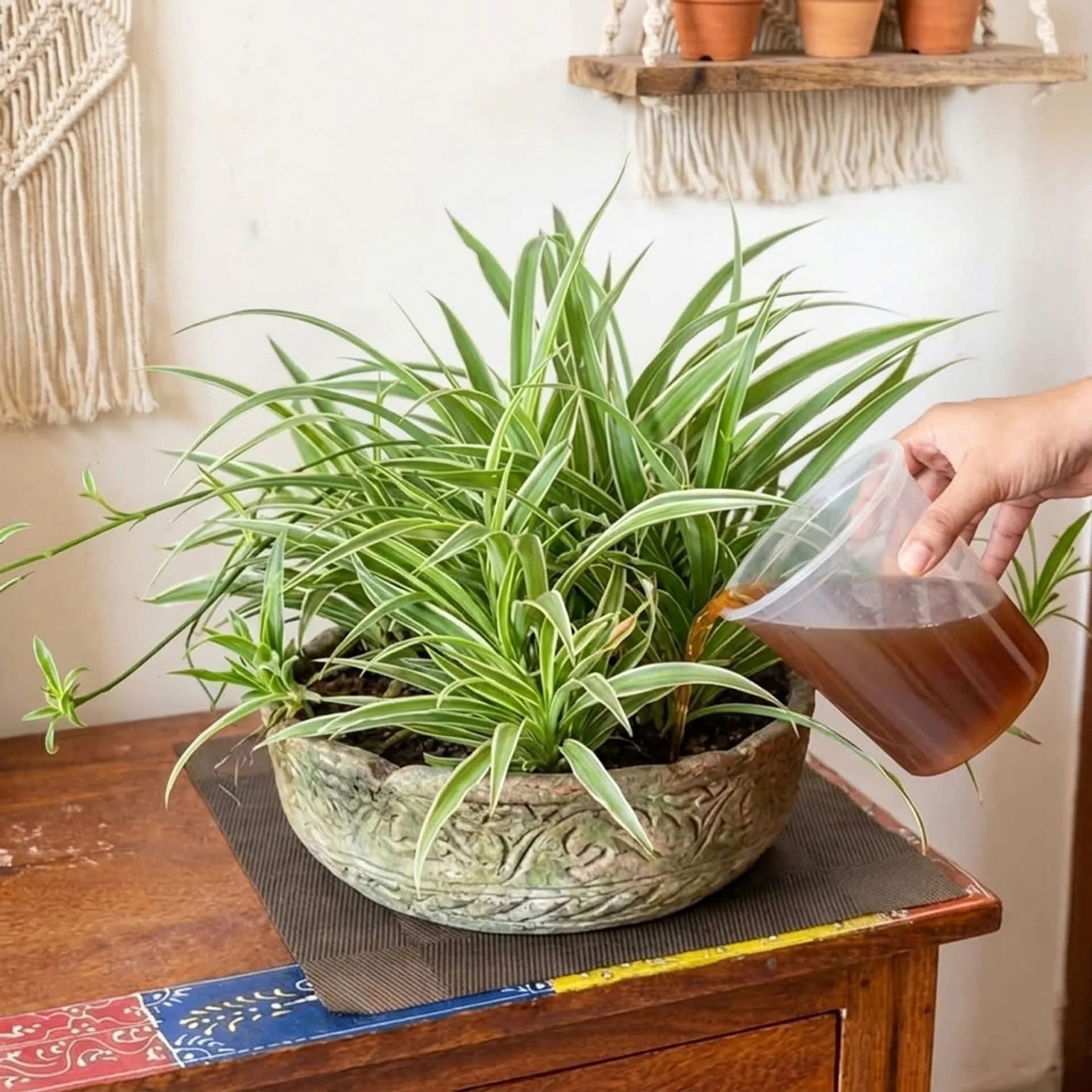
Spider plants are among the most popular houseplants because they are beautiful, forgiving, and easy to propagate. Their long green-and-white leaves create a soft, cascading shape, while their baby plants make them look even fuller over time.
Because spider plants are easy to grow, many people try homemade watering tricks to make them grow faster. One common idea is using leftover tea water or a brown homemade liquid as plant food. While this may sound natural, it is not the safest way to feed a spider plant.
Tea water, coffee water, sugary drinks, and other kitchen mixtures can change the soil, attract pests, and create fungus problems. A spider plant grows best with plain water, bright indirect light, good drainage, and a balanced houseplant fertilizer used in small amounts.
Can You Water a Spider Plant With Tea?
It is better to avoid using tea as a regular watering method. Tea may contain tannins, caffeine, additives, sugar, milk, lemon, or artificial flavors depending on how it was prepared. These ingredients can affect the soil and may not be suitable for sensitive indoor plant roots.
Even plain tea does not contain the balanced nutrients needed for healthy spider plant growth. It may make the soil more acidic over time, especially if used repeatedly.
A spider plant does not need homemade tea water to become fuller. The safest choice is room-temperature plain water, followed by a labeled liquid houseplant fertilizer during the growing season.
Why Brown Kitchen Liquids Can Cause Problems
A brown liquid may look like a natural tonic, but it can be difficult to know what is in it and how it will affect the roots.
Homemade plant mixtures may encourage mold or bacteria in the potting mix. They can also attract fungus gnats, ants, or other insects. If the soil stays moist after adding these liquids, the roots may receive too little oxygen.
Avoid putting these items into a spider plant pot:
- Tea water
- Coffee water
- Milk
- Sugar water
- Honey water
- Fruit juice
- Lemon water
- Vinegar water
- Banana peel water
- Food scraps
- Soda or flavored drinks
The roots need a clean, well-aerated growing environment. Plain water and proper fertilizer are more reliable than kitchen remedies.
The Best Way to Water a Spider Plant
Check the top 1 to 2 inches of soil before watering. If the soil feels dry, water slowly around the base of the plant until a little water drains from the bottom of the pot.
Allow the pot to drain fully, then empty any water collected in the saucer. Never leave the pot standing in water because this can lead to root rot.
A spider plant may need water about once a week in warm, bright conditions. In cooler weather or lower light, it may need water less often. Always check the soil instead of following a fixed schedule.
Signs Your Spider Plant Needs Water
A spider plant that needs water may show:
- Slightly drooping leaves
- Leaves that feel less firm
- Dry soil below the surface
- A very light pot when lifted
- Brown tips that worsen after long dry periods
Water deeply when the soil is dry. Small daily amounts are less helpful because they only wet the surface and may not reach the deeper roots.
Signs of Overwatering
Spider plants are more tolerant of dry soil than constantly wet soil. Too much water can cause:
- Yellow leaves
- Soft or limp growth
- A sour smell from the pot
- Soil that stays wet for many days
- Root rot
- Leaves falling from the center of the plant
If the soil remains damp, wait before watering again. Make sure the pot has drainage holes and that the soil mix is not compacted.
What Water Is Best for Spider Plants?
Room-temperature water is best. In some homes, tap water contains minerals or fluoride that can contribute to brown leaf tips.
If your spider plant has persistent brown tips, try filtered water, rainwater, or distilled water for a few weeks. This can reduce mineral buildup in the soil.
Once a month, water the plant thoroughly with plain water and let it drain. This helps flush away excess salts left behind by tap water or fertilizer.
Choosing the Right Light
Spider plants grow best in bright indirect light. Place yours near an east-facing window or a few feet from a bright south- or west-facing window.
Too much direct afternoon sunlight can burn the leaves and fade the striped pattern. Very low light may slow growth and reduce the number of baby plants.
A healthy spider plant should have firm, colorful leaves. Rotate the pot every week or two so all sides receive light evenly.
The Best Soil and Pot for a Spider Plant
Spider plants need a pot with drainage holes. A decorative bowl without drainage may look beautiful, but it can trap water around the roots.
Use a loose, well-draining houseplant mix. A standard indoor potting soil mixed with perlite is a good option. The soil should hold some moisture while allowing extra water to escape.
A simple soil blend can include:
- 2 parts indoor potting soil
- 1 part perlite or pumice
- 1 part coco coir or fine orchid bark
Spider plants enjoy being slightly root-bound, but they should be repotted when thick roots crowd the pot or push the soil upward.
How to Fertilize a Spider Plant Safely
Use a balanced liquid houseplant fertilizer during spring and summer. Feed the plant every four to six weeks while it is actively producing new leaves.
Always apply fertilizer to moist soil. Do not fertilize a dry or stressed plant.
Follow the label instructions carefully. Too much fertilizer can cause brown tips and mineral buildup. A light feeding routine is better than a strong dose.
Stop fertilizing during fall and winter when the plant’s growth naturally slows down.
How to Encourage More Baby Spider Plants
A mature spider plant can produce long stems with small white flowers and baby plants. These pups usually appear when the parent plant is healthy, mature, and receiving good light.
To encourage pups, provide bright indirect light, stable watering, and gentle fertilizer during the growing season. Do not try to force pups with tea, coffee, sugar, or strong fertilizer.
A slightly snug pot can also support pup production. However, do not wait until the roots are severely overcrowded or the soil dries instantly after watering.
How to Propagate Spider Plant Pups
Spider plant babies are easy to grow into new plants. Choose a pup with several healthy leaves and small root bumps at the base.
Cut the runner with clean scissors, then place the pup into a small pot filled with lightly moist, well-draining soil. Keep it in bright indirect light and water gently when the top layer of soil begins to dry.
You can also root the pup in water. Once the roots are a few inches long, move it into soil so it can establish more strongly.
How to Prevent Brown Tips
Brown leaf tips are common and do not always mean the plant is seriously unhealthy. They can result from dry air, irregular watering, tap-water minerals, overfertilizing, or heat from nearby vents.
To reduce brown tips:
- Water when the top soil dries
- Use filtered or rainwater if possible
- Fertilize lightly
- Keep the plant away from heaters and air-conditioning vents
- Empty the saucer after watering
- Trim damaged tips with clean scissors
When trimming, follow the natural pointed shape of the leaf. Remove only the brown portion so the rest of the leaf can continue supporting the plant.
Common Spider Plant Problems
Yellow Leaves
Yellow leaves are often caused by overwatering or poor drainage. Check whether the soil is wet before watering again.
Pale Leaves
Pale leaves may mean the plant needs more indirect light. Move it closer to a bright window, but avoid harsh direct sun.
Slow Growth
Slow growth is normal in winter. In spring and summer, it may mean the plant needs more light, fresh soil, or a gentle feeding schedule.
Curled Leaves
Curling can happen when the plant becomes too dry, gets too hot, or receives intense direct sunlight. Check the soil and move the plant to a calmer bright location.
Root Rot
Root rot happens when roots stay wet for too long. If stems feel soft and soil smells unpleasant, repot the plant in fresh, airy soil after trimming damaged roots.
Best Places to Display a Spider Plant
Spider plants look especially beautiful in hanging baskets because their leaves and pups can cascade naturally. They also work well on bright shelves, desks, kitchen counters, and bedroom tables.
A terracotta pot, white ceramic planter, or woven basket can make the green-and-white leaves stand out. Place the plant where it receives soft natural light and where you can enjoy its full shape.
A covered patio or balcony with bright shade is also a good location in warm weather. Bring the plant indoors before temperatures become cold.
Seasonal Care Guide
Spring
Spring is the active growing season. Begin light fertilizer, check if the plant needs repotting, and water when the top soil dries.
Summer
Keep the plant in bright indirect light. Check the soil more frequently if the room is warm or if the plant is near a sunny window.
Fall
Reduce fertilizer as growth slows. Continue watering only when the soil begins to dry.
Winter
Water less often, especially in cooler rooms. Keep the plant away from cold drafts and dry heating vents.
Frequently Asked Questions
Can I use tea water for my spider plant?
It is better not to. Tea does not provide balanced nutrition and may affect the soil over time. Use plain water and a proper houseplant fertilizer instead.
Can I use coffee water?
No. Coffee water can change the soil and may contain compounds that are not suitable for spider plant roots.
How often should I water a spider plant?
Water when the top 1 to 2 inches of soil feel dry. The exact schedule depends on temperature, light, and season.
Does a spider plant need direct sunlight?
No. Bright indirect light is ideal. Strong direct sun can burn the leaves.
Why does my spider plant have brown tips?
Brown tips may be caused by minerals in tap water, dry air, inconsistent watering, or too much fertilizer.
Final Thoughts
A spider plant can become full, bright, and covered with baby plants without tea water or other kitchen mixtures. The safest method is simple: use plain room-temperature water, give the plant bright indirect light, choose a pot with drainage holes, and feed it lightly with a balanced fertilizer during the growing season.
Keep the care routine steady, avoid overwatering, and let the soil guide you. With patience, your spider plant will stay healthy and become a beautiful part of your indoor plant display.