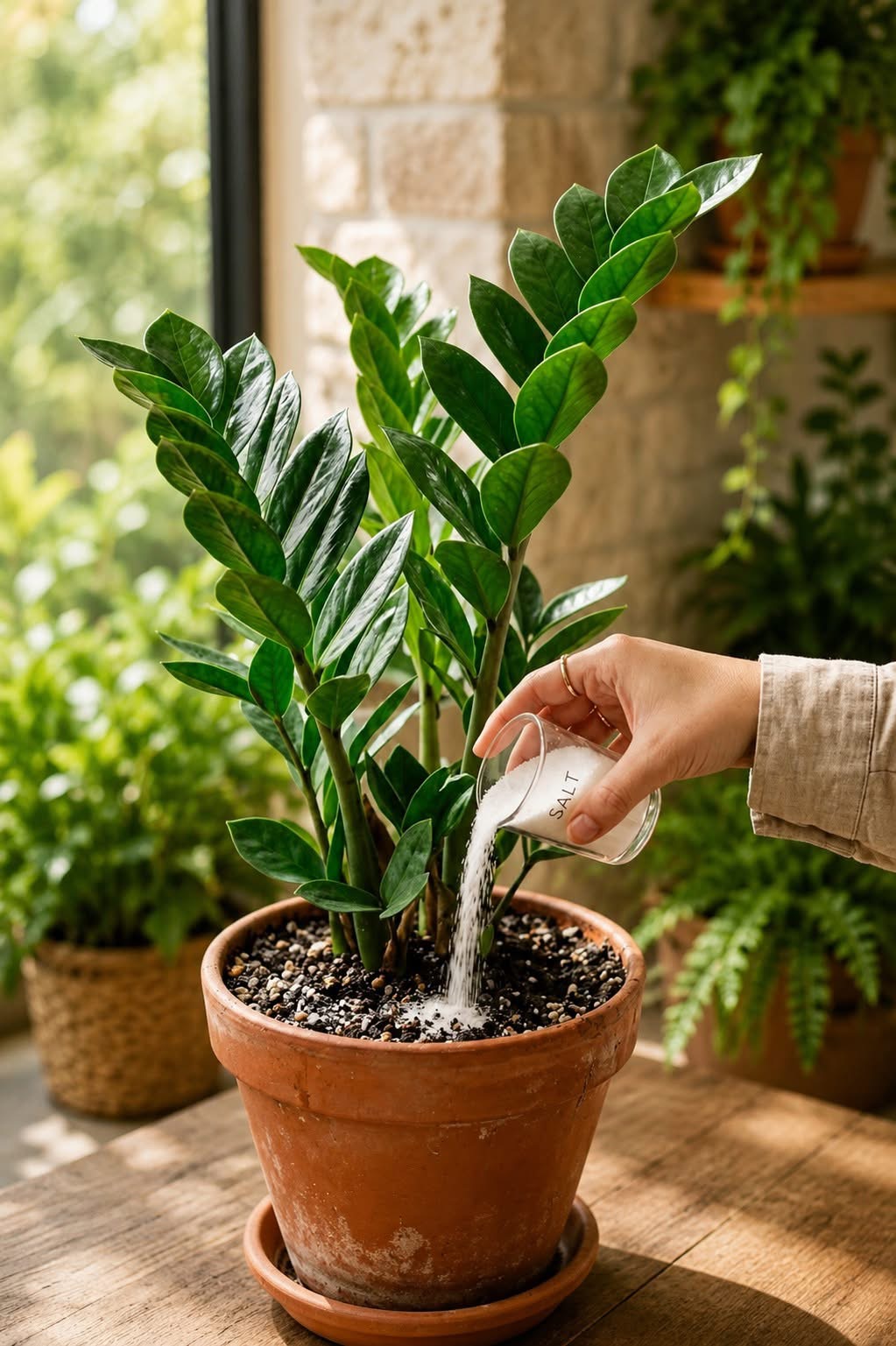
The ZZ plant, also called Zamioculcas zamiifolia, is one of the easiest and most attractive houseplants to grow. Its thick upright stems and glossy deep-green leaves look elegant in living rooms, bedrooms, offices, and bright entryways. It is also well known for handling missed waterings better than many other indoor plants.
Because ZZ plants are so popular, many plant “hacks” appear online. One image may show salt being poured onto the soil, but salt should never be used as fertilizer or treatment for a ZZ plant. Salt can damage the roots, dry the plant from the inside, and leave a harmful buildup in the potting mix.
A healthy ZZ plant does not need salt, lemon water, sugar, coffee, or kitchen ingredients. It needs bright indirect light, a pot with drainage, well-draining soil, careful watering, and light fertilizer during its active growing season.
Why Salt Is Harmful to ZZ Plants
Table salt contains sodium chloride. Plants do need a few mineral nutrients, but sodium is not a nutrient that a ZZ plant needs in its potting soil.
When salt builds up in the soil, it changes the way roots absorb water. Even if the potting mix looks moist, the roots may struggle to take in enough water. This can cause leaf yellowing, brown edges, slow growth, and stressed roots.
Salt can also leave a white crust on the soil or pot rim. Over time, the buildup may become more concentrated and damage the plant further.
Never add salt directly to the soil, dissolve it into watering water, or use it as a “pest treatment” around a ZZ plant. There are safer ways to care for the plant and deal with common problems.
What to Do If Salt Was Already Added
If only a small amount of salt was added once, do not panic. The most important step is to remove as much of it as possible from the soil surface.
Gently scoop away the top layer of potting mix where the salt landed. Then water the plant slowly with plain room-temperature water, allowing water to flow through the drainage holes. This can help flush some excess salts from the root zone.
Let the pot drain completely afterward. Do not keep watering repeatedly in one day, because too much water can create a different problem: root rot.
If a large amount of salt was added, or the soil has a visible crust, it is safest to repot the plant. Remove the old soil gently, inspect the roots, and place the ZZ plant in fresh, dry, well-draining potting mix.
Why ZZ Plants Are So Easy to Grow
ZZ plants store moisture in thick underground rhizomes. These potato-like structures act as reservoirs, helping the plant tolerate periods of dry soil.
That is why a ZZ plant usually has more problems from overwatering than underwatering. It prefers to dry out between waterings and does not need daily attention.
The glossy leaves make the plant look polished and decorative, while its easy-care nature makes it perfect for beginners. It can handle moderate to low light, although it grows best in bright indirect light.
The Best Light for a ZZ Plant
Place a ZZ plant in bright indirect light for the best growth. A spot near an east-facing window is excellent, or a few feet away from a south- or west-facing window with filtered light.
ZZ plants can tolerate lower light, but they may grow more slowly and become less full. Avoid strong direct afternoon sun, which can scorch the leaves and leave pale or brown marks.
Rotate the pot every few weeks so all sides receive light. This helps keep the stems growing evenly instead of leaning toward one direction.
How Often Should You Water a ZZ Plant?
The safest rule is to let the potting mix dry almost completely before watering again. Put your finger several inches into the soil or lift the pot. If it still feels heavy or damp, wait.
When it is time to water, pour room-temperature water slowly around the soil until a little drains from the bottom of the pot. Empty the saucer after 10 to 15 minutes.
In many homes, a ZZ plant may need water every two to four weeks. The timing changes with season, temperature, light, pot size, and soil type.
During winter, the plant often needs less water because it grows more slowly. During a warm, bright summer, the soil may dry faster.
Signs Your ZZ Plant Needs Water
A ZZ plant is quite forgiving, but it will eventually show signs of dryness. Look for:
- Slightly wrinkled leaves
- Stems that seem less firm
- Potting mix that is dry deep into the pot
- A pot that feels very light
- Slower growth during warm months
Water deeply when the soil has dried instead of giving small daily amounts. A deep watering followed by full drainage is much healthier.
Signs of Overwatering
Overwatering is the most common ZZ plant problem. Warning signs include:
- Yellow leaves
- Soft stems near the base
- Mushy or dark rhizomes
- Soil that remains wet for many days
- A sour smell from the pot
- Leaves dropping unexpectedly
If you see these signs, stop watering and let the soil dry. Make sure the pot has drainage holes. If the roots or rhizomes are soft, remove the plant from the pot, trim damaged sections with clean scissors, and repot it in fresh, dry mix.
Choosing the Right Pot and Soil
A ZZ plant must have drainage holes. Decorative pots are fine, but the inner pot should allow water to escape.
Use a loose, fast-draining mix. A standard indoor potting mix with perlite or pumice works well. You can also use a cactus or succulent mix with a small amount of regular potting soil.
A simple mix can include:
- 2 parts indoor potting mix
- 1 part perlite or pumice
- 1 part coarse sand or fine orchid bark
The goal is to create spaces for air around the roots. Dense, compacted soil holds too much moisture and increases the risk of root rot.
Repot every two to three years, or when the rhizomes are crowding and pushing against the pot.
How to Fertilize a ZZ Plant Safely
ZZ plants do not need frequent fertilizer. During spring and summer, use a balanced liquid houseplant fertilizer once every four to six weeks. Follow the product instructions and apply it to moist soil.
Never apply fertilizer to dry roots, and never use extra fertilizer to try to force faster growth. Too much fertilizer can create mineral salt buildup and burn the roots.
Stop fertilizing during fall and winter when the plant is resting. Resume in spring when you see new shoots or fresh leaves.
Avoid homemade fertilizers such as salt, milk, sugar water, coffee, tea, vinegar, lemon water, banana peel water, and food scraps. These do not provide controlled nutrition and may damage the soil environment.
How to Keep ZZ Plant Leaves Glossy
The natural shine of a ZZ plant comes from healthy leaves. You do not need leaf-shine sprays, oils, or mayonnaise to make the leaves look attractive.
Once every few weeks, wipe dust from the leaves with a soft cloth dampened with plain water. Supporting each stem gently with your hand can prevent accidental bending.
Clean leaves receive light more efficiently and look fresher in photos and home displays. Avoid rubbing hard or using harsh chemicals.
Common ZZ Plant Problems
Yellow Leaves
Yellowing usually comes from too much water, but it can also happen from very low light or old leaves aging naturally. Check the soil first. If it is wet, wait before watering again.
Brown Leaf Tips
Brown tips may be caused by dry air, inconsistent watering, fertilizer buildup, or mineral-heavy tap water. Water only when the soil is mostly dry and fertilize lightly.
Leaning Stems
A plant that leans strongly toward the window may need rotation. Turn the pot every few weeks so the plant receives light evenly.
Slow Growth
ZZ plants naturally grow slowly, especially in low light and winter. For healthier growth, give the plant brighter indirect light, warm indoor temperatures, and a light fertilizer routine in spring and summer.
Soft Stems
Soft stems or a mushy base are serious signs of too much moisture. Remove the plant from wet soil and inspect the rhizomes immediately.
Best Places to Display a ZZ Plant
A ZZ plant adds a clean, modern look to many spaces. Its upright form works beautifully beside a sofa, in a bright entryway, on a living-room table, or in a home office.
A medium-size ZZ plant looks especially elegant in a terracotta, white ceramic, black matte, or woven basket planter. Place it near a window with filtered light, but keep it away from heating vents, cold drafts, and harsh direct sun.
It is also a great choice for rooms with moderate light, where more demanding plants may struggle.
Seasonal ZZ Plant Care
Spring
Spring is the best time for new growth. Check whether the plant needs repotting, begin gentle fertilizer, and water once the soil is mostly dry.
Summer
Provide bright indirect light and allow the soil to dry between waterings. Check the pot more often if the room is warm and sunny.
Fall
Growth begins to slow. Reduce fertilizer and lengthen the time between waterings if the pot dries more slowly.
Winter
Water sparingly and keep the plant away from cold windows and dry heating vents. Do not fertilize unless the plant is actively growing under strong indoor light.
Frequently Asked Questions
Can salt help a ZZ plant grow?
No. Salt can damage roots and create harmful soil buildup. Use a balanced houseplant fertilizer instead.
Can I use salt to stop pests in the pot?
No. Salt is unsafe for the plant’s roots. For pests, first identify the problem and use a treatment labeled for indoor plants if needed.
How often should I water a ZZ plant?
Water only when the soil is almost completely dry. In many homes, this may be every two to four weeks.
Does a ZZ plant need direct sunlight?
No. Bright indirect light is best. It can tolerate lower light, but harsh direct sunlight may scorch the leaves.
Is a ZZ plant good for beginners?
Yes. It is one of the most forgiving houseplants because it stores water in its rhizomes and does not need frequent watering.
Final Thoughts
A ZZ plant stays healthy through simple, steady care—not salt or other kitchen remedies. Keep the soil well-draining, water only after it dries, give the plant bright indirect light, and fertilize lightly during the growing season.
If salt has been added, remove the affected topsoil and flush gently with plain water, or repot if the amount was large. With a safe routine, your ZZ plant can remain glossy, upright, and beautiful for many years.