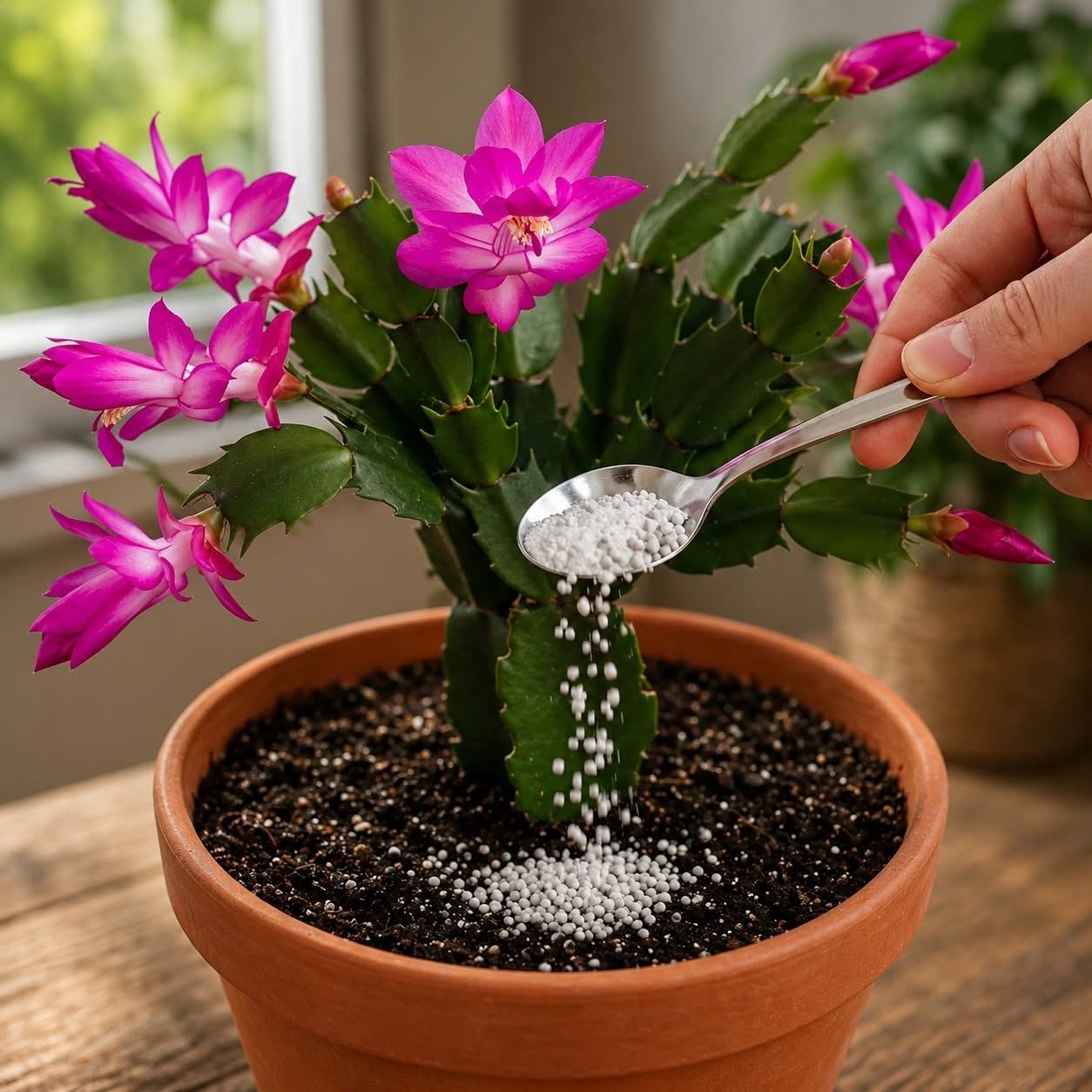
A Christmas cactus is one of the most rewarding flowering houseplants to grow. Its flat, segmented stems and bright pink, red, white, or purple flowers bring color to the home when many other plants are resting. With consistent care, it can live for decades and bloom again every year.
The plant in the image is healthy and flowering, but it is important to use fertilizer carefully. Adding a large amount of white fertilizer pellets directly on top of the soil can burn the roots, especially in a small pot. A Christmas cactus needs light feeding at the correct time—not a heavy dose of fertilizer.
This guide explains how to care for a Christmas cactus safely, including light, watering, soil, feeding, pruning, and the best way to support future blooms.
Why Christmas Cactus Care Is Different
Despite its name, a Christmas cactus is not a desert cactus. It comes from tropical forest environments, where it grows on trees and receives filtered light, humidity, and moisture that drains quickly.
That means it needs more regular moisture than a traditional cactus, but it still cannot tolerate constantly wet soil. Its roots need air. Heavy garden soil, pots without drainage holes, and frequent overwatering can quickly lead to root problems.
The ideal routine is simple: bright indirect light, loose well-draining soil, water when the top layer dries, and gentle fertilizer only during active growth.
Should You Use Fertilizer Pellets on a Christmas Cactus?
Slow-release fertilizer pellets can be used only if they are specifically labeled for houseplants and applied in the small amount recommended by the product label. However, they are easy to overapply, particularly in small pots.
Too many pellets may release more fertilizer salts than the roots can safely handle. This can lead to dry brown edges, limp segments, damaged roots, or a white crust on top of the soil.
For beginners, a diluted liquid houseplant fertilizer is often easier to control. You can use a balanced liquid fertilizer at half strength during spring and summer, then stop feeding before the bud-setting season in fall.
Never apply fertilizer to bone-dry soil. Water the plant first, then fertilize lightly.
The Best Fertilizer Routine
Feed your Christmas cactus only while it is actively growing, usually from spring through late summer. Use a balanced liquid houseplant fertilizer or a fertilizer made for flowering indoor plants.
A safe routine is:
- Fertilize every 4 to 6 weeks in spring and summer
- Use the dilution rate listed on the fertilizer label
- Apply to moist soil only
- Water with plain water occasionally to flush mineral buildup
- Stop feeding in early fall
- Do not fertilize while the plant is setting buds or flowering
The pause in fertilizer is important. In fall, the plant needs stable light, temperature, and watering conditions to prepare for flowers. Strong fertilizer during this time may encourage leaf growth instead of buds.
Avoid Homemade Fertilizer Tricks
Kitchen ingredients are not a reliable substitute for proper plant fertilizer. Avoid using milk, sugar water, coffee, tea, lemon water, vinegar, fruit peels, garlic water, or food scraps in the pot.
These materials can upset the growing medium, attract pests, encourage mold, and make the roots less healthy over time.
A Christmas cactus can grow beautifully without any complicated mixture. Proper light, a balanced watering routine, and gentle labeled fertilizer are enough.
How to Water a Christmas Cactus
Check the top 1 to 2 inches of the potting mix before watering. When it feels dry, water slowly with room-temperature water until a small amount drains from the bottom of the pot.
Empty the saucer after 10 to 15 minutes. Never leave the pot standing in water.
During spring and summer, the plant may need water every 7 to 10 days, depending on temperature, light, and pot size. In winter, it may need less frequent watering.
The soil should not become bone-dry for long periods, but it should never remain soggy. Letting the top layer dry between waterings protects the roots.
Signs the Plant Needs Water
A thirsty Christmas cactus may show:
- Slightly wrinkled stem segments
- Leaves that feel less firm
- Dry soil below the surface
- A pot that feels very light
- Drooping segments during warm weather
Water thoroughly when the soil is dry rather than adding only a tiny amount. A deep watering followed by good drainage is healthier than frequent small sips.
Signs of Overwatering
Too much water can cause:
- Soft, limp, or yellowing segments
- Soil that stays wet for several days
- A sour smell from the pot
- Stem segments dropping off
- Dark, mushy roots
If you suspect overwatering, stop watering and let the soil dry. Check that the pot has drainage holes. If the roots are damaged, repot the plant into fresh, airy mix after removing soft roots with clean scissors.
Light Requirements for More Flowers
Christmas cactus grows best in bright indirect light. Place it near an east-facing window or a few feet away from a south- or west-facing window with a sheer curtain.
Soft morning sunlight can be helpful, but strong direct afternoon sun can burn the segments and cause red or purple stress coloring.
Very low light may keep the plant alive, but it can reduce blooming. Rotate the pot every week or two so the plant grows evenly from all sides.
How to Encourage Blooming
Christmas cactus flowers depend on a seasonal change in light and temperature. In early fall, give the plant about 12 to 14 hours of uninterrupted darkness each night for six to eight weeks.
Keep the room comfortably cool at night, ideally around 55°F to 65°F. Avoid moving the plant once buds appear. Sudden changes in light, temperature, or watering can cause flower buds to drop.
When the buds form, continue watering carefully. Keep the soil lightly moist, but do not overwater.
Choosing the Right Pot and Soil
Use a pot with drainage holes. A Christmas cactus prefers a light, airy mix that drains well but still holds a little moisture.
A good mix can include:
- 2 parts quality indoor potting mix
- 1 part perlite or pumice
- 1 part fine orchid bark or coco coir
Repot every two to three years after flowering. Choose a pot that is only slightly larger than the current one. Christmas cacti prefer being somewhat snug around the roots.
Pruning for a Fuller Plant
Pruning is an easy way to make a Christmas cactus bushier. After flowering, gently twist off one or two segments from the ends of long stems.
This encourages branching and creates a fuller shape. The removed segments can be used to propagate new plants.
To propagate a cutting, let the end dry for a day or two, then place it upright in a small pot of lightly moist, well-draining mix. Keep it in bright indirect light and water sparingly until roots form.
Common Christmas Cactus Problems
Buds Falling Off
Bud drop can happen because of dry soil, overwatering, cold drafts, heating vents, moving the pot, or sudden changes in light. Keep the plant in a stable location once buds develop.
Red or Purple Stem Segments
This often means the plant is receiving too much direct sun or experiencing temperature stress. Move it away from harsh sunlight and cold windows.
No Flowers
A Christmas cactus that does not flower may need brighter indirect light, longer dark nights in fall, or cooler nighttime temperatures. Excess fertilizer in late summer or fall can also reduce blooming.
Soft Stem Segments
Soft stems may be caused by overwatering or root damage. Check the soil and roots before watering again.
Best Places to Display a Christmas Cactus
A blooming Christmas cactus looks beautiful in a bright living room, dining area, bedroom, or home office. Its arching stems are especially attractive in a terracotta pot, white ceramic planter, or hanging basket.
Place it near a window with filtered light, where its colorful blooms can become a seasonal focal point. Avoid hot radiators, fireplaces, air-conditioning vents, and very cold glass.
During the holidays, it can make a beautiful centerpiece on a table near a bright window, as long as it is protected from direct heat and drafts.
Seasonal Care Guide
Spring and Summer
This is the active growing season. Provide bright indirect light, water when the top soil dries, and fertilize lightly every four to six weeks.
Fall
Stop fertilizing and begin giving the plant longer dark periods at night. Keep watering consistent and avoid moving the pot.
Winter
During blooming, protect the plant from cold drafts and dry heat. Water when the top of the soil dries, but do not let it stay saturated.
Frequently Asked Questions
Can I use a lot of fertilizer pellets to get more flowers?
No. Too much fertilizer can burn the roots and reduce blooming. Use only the small amount recommended on the label, or choose diluted liquid fertilizer.
Do Christmas cacti need direct sunlight?
No. They prefer bright indirect light. Strong afternoon sun can scorch the stems.
How often should I water?
Water when the top 1 to 2 inches of soil feel dry. The frequency changes depending on light, season, and room temperature.
Can I fertilize while it is flowering?
It is usually best to pause fertilizer while the plant is blooming. Resume when flowering is finished and new growth begins.
Why are the buds dropping?
Bud drop often comes from stress, such as sudden changes in temperature, light, watering, or location.
Final Thoughts
A Christmas cactus does not need heavy fertilizer or homemade kitchen mixtures to grow beautifully. The safest method is a steady routine: bright indirect light, a pot with drainage holes, well-draining soil, room-temperature water, and light feeding only during active growth.
Use fertilizer carefully, especially slow-release pellets. A small, measured amount is always better than a large handful. With patience and stable care, your Christmas cactus can become fuller, healthier, and covered in colorful blooms every season.