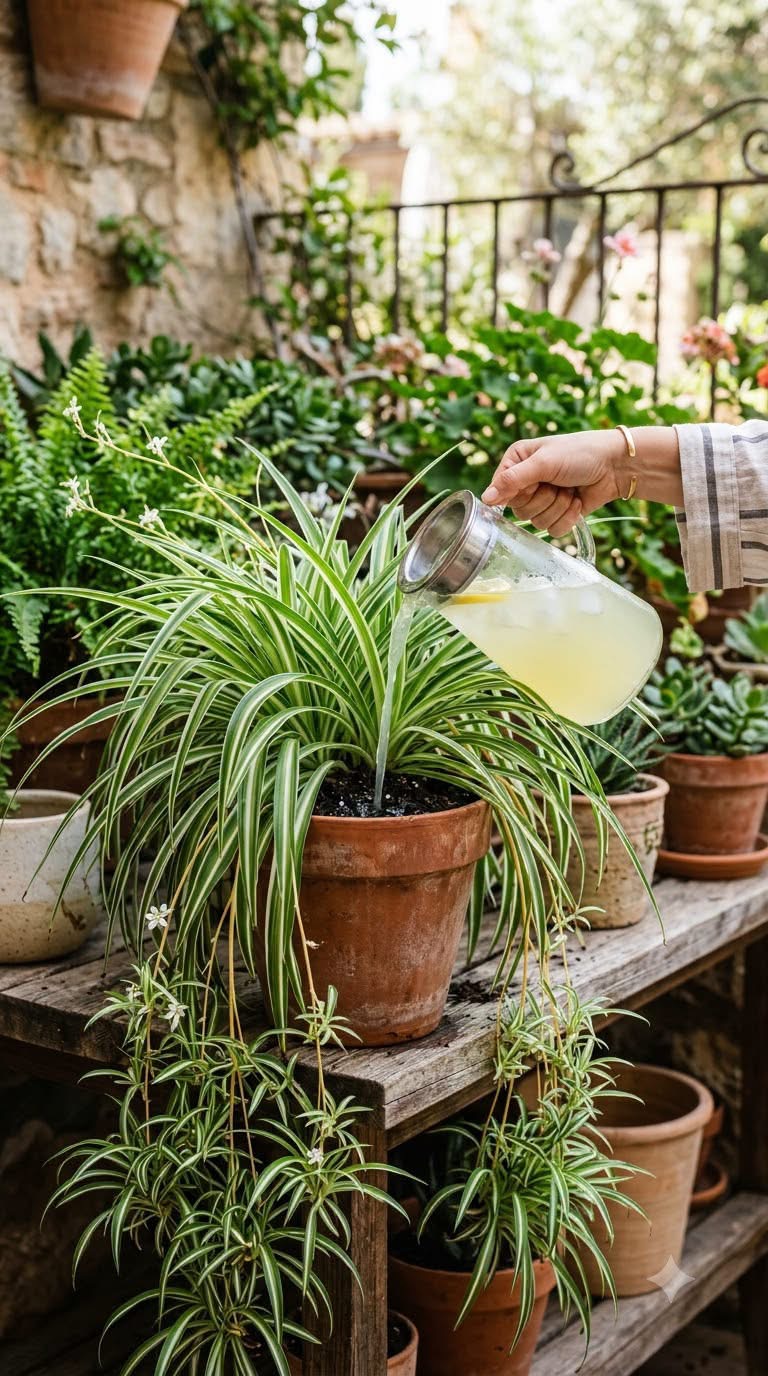
Can You Water a Spider Plant With Lemon Water? A Safe Care Guide for Fuller Growth
Spider plants are easy to love. Their long striped leaves, graceful shape, and little baby plants make them one of the most attractive choices for homes, patios, and bright indoor corners. A mature spider plant can grow into a full, cascading display that looks beautiful in a hanging basket, on a shelf, or in a simple terracotta pot.
Because they are such popular houseplants, many home remedies appear online. One of the most common is watering a spider plant with lemon water. It may sound natural, but lemon water is not a good long-term treatment for a spider plant. Lemon juice is acidic, and regular use can disturb the growing medium, stress the roots, and make it harder for the plant to absorb the nutrients it needs.
The good news is that spider plants do not need complicated tricks to thrive. With the right light, proper watering, good drainage, and a gentle fertilizer routine, they can grow lush, healthy leaves and produce plenty of pups naturally.
Why Spider Plants Make Great Houseplants
Spider plants are resilient, attractive, and adaptable. They can handle normal indoor temperatures and do not need constant attention. Their green-and-white leaves brighten a room without demanding direct sunlight.
As a spider plant matures, it can grow long stems with tiny white flowers. These stems later produce baby spider plants, often called pups or plantlets. The pups can be left attached for a dramatic cascading look, or they can be propagated into new plants.
Spider plants are especially useful for people who want a low-maintenance plant that still looks full and decorative. They work beautifully in apartments, offices, kitchens, bedrooms, hallways, and covered outdoor spaces.
Does Lemon Water Help a Spider Plant?
Lemon water should not be used as a regular fertilizer or watering method for spider plants. Lemons contain citric acid, which may lower the pH of the soil or potting mix. While small changes in acidity might not harm a plant immediately, repeated use can create an unhealthy root environment.
Spider plants need balanced nutrients such as nitrogen, phosphorus, potassium, calcium, magnesium, and trace minerals. Lemon juice does not provide these nutrients in the correct form or amount.
Using lemon water can also create problems in containers because the acid may build up around the roots. Over time, this can contribute to leaf stress, poor growth, or brown tips.
Instead of lemon water, use plain room-temperature water and a proper houseplant fertilizer during the growing season.
Why Homemade Kitchen Liquids Can Cause Problems
Many kitchen ingredients are useful for people, but they do not automatically belong in a plant pot. Liquids such as lemon juice, vinegar, milk, coffee, tea, sugary water, soda, and leftover food mixtures can change the soil in unpredictable ways.
A spider plant grows best when its roots receive moisture, oxygen, and balanced nutrients. Food-based liquids may feed mold or microorganisms instead of helping the plant. They can also attract fungus gnats, ants, or other pests.
Avoid adding these items directly to your spider plant soil:
- Lemon juice or lemon water
- Vinegar water
- Honey or sugar water
- Milk
- Coffee grounds or coffee water
- Tea leaves or tea water
- Banana peel water
- Garlic water
- Fruit juice
- Food scraps
Simple plant care is safer and more effective than unmeasured home remedies.
The Best Way to Water a Spider Plant
Water a spider plant when the top 1 to 2 inches of potting mix feel dry. Use room-temperature water and pour it slowly around the soil surface until a little water runs from the drainage holes.
Let the pot drain completely, then empty the saucer after about 10 to 15 minutes. Never let the pot sit in water for hours, because spider plant roots can rot in constantly wet soil.
A watering schedule will change based on the season. In spring and summer, the plant may need water about once a week. In cooler months, it may need water less often because the soil dries more slowly.
The most reliable method is always to check the soil with your finger. If it still feels damp, wait before watering again.
What Type of Water Is Best?
Some spider plants develop brown tips because of mineral buildup in tap water. This does not happen to every plant, but it is common in areas where water contains high levels of fluoride, chlorine, or dissolved minerals.
If brown tips continue even after you improve your watering routine, try using filtered water, rainwater, or distilled water for a few weeks. This can help reduce salt buildup in the soil.
Do not use water that is very cold or very hot. Room-temperature water is the gentlest option for the roots.
Once a month, water the plant thoroughly with plain water and allow it to drain well. This helps flush away excess minerals and fertilizer salts.
Light Requirements for Full, Healthy Growth
Spider plants prefer bright, indirect light. An east-facing window is often ideal because it provides soft morning light. They also do well a few feet away from a south- or west-facing window if a sheer curtain filters the strongest rays.
Too much direct sun can burn the leaves, fade the striping, and create dry brown patches. Very low light can make the plant grow slowly and become less full.
A healthy spider plant should have clear green-and-white leaves, firm growth, and a balanced shape. If the plant leans strongly toward the window, rotate the pot every week or two so all sides receive light.
Choosing the Right Pot and Soil
A pot with drainage holes is essential. A decorative pot without drainage can trap water around the roots and create serious problems.
Spider plants like a pot that is only slightly larger than their root ball. They can become somewhat root-bound without harm, and many mature plants produce more pups when their roots are comfortably snug.
Use a loose indoor potting mix that drains well. A standard houseplant soil blended with perlite works well. The mix should hold enough moisture for the roots but should not remain heavy and wet for days.
A good simple soil blend includes:
- 2 parts indoor potting mix
- 1 part perlite or pumice
- 1 part coco coir or fine orchid bark
Repot when thick roots begin filling the container, when water runs straight through too quickly, or when the soil no longer drains well.
Safe Fertilizer for Spider Plants
A balanced liquid houseplant fertilizer is the safest way to feed a spider plant. Apply it during spring and summer, when the plant is making new leaves and pups.
Choose a fertilizer made for indoor foliage plants and follow the label directions. Use it on already-moist soil, not on a completely dry root ball.
For most spider plants, feeding once every four to six weeks during active growth is enough. Too much fertilizer can cause mineral buildup and brown tips, so more is not better.
Reduce or stop fertilizer in fall and winter, when the plant’s growth naturally slows down.
How to Prevent Brown Leaf Tips
Brown tips are one of the most common spider plant issues. They can be caused by dry air, mineral-heavy water, too much fertilizer, uneven watering, or heat from nearby vents.
To keep the leaves looking their best:
- Water when the top layer of soil dries
- Use filtered or rainwater if your tap water is very hard
- Fertilize lightly
- Keep the plant away from radiators and air-conditioning vents
- Make sure the pot drains well
- Trim brown tips with clean scissors
When trimming, follow the natural pointed shape of the leaf. Cut only the brown section and avoid removing too much healthy green tissue.
How to Encourage More Spider Plant Pups
Spider plants produce pups when they are mature, healthy, and receiving the right conditions. Bright indirect light is especially important. A plant kept in a very dark corner may survive but is less likely to make flowers or baby plants.
Keep the plant slightly snug in its pot, but do not let it become severely crowded. Provide consistent watering and gentle feeding during the growing season.
Do not force the plant with lemon water, sugar, or strong fertilizer. The healthiest pups come from a healthy mother plant with strong roots and steady care.
When pups appear, you can leave them attached for a lush, hanging display. You can also root them to create new plants.
How to Propagate Spider Plant Babies
Propagating a spider plant is simple and rewarding. Choose a healthy pup with several leaves and small root bumps at the base.
Cut the runner with clean scissors, leaving a short piece of stem attached to the pup. Place it in a small pot filled with lightly moist, well-draining soil.
Keep the new plant in bright indirect light. Water lightly whenever the top of the soil begins to dry. In a few weeks, the roots should begin to establish.
You can also root pups in a glass of water, but do not leave them there too long. Once the roots are a few inches long, transfer them to soil for stronger long-term growth.
Common Spider Plant Problems
Yellow Leaves
Yellow leaves can be caused by overwatering, poor drainage, very low light, or normal aging of older leaves. Check the soil before watering again. If it remains wet for too long, reduce watering and make sure the pot has drainage holes.
Leaves Curling or Looking Limp
A limp spider plant may be too dry, too hot, or exposed to strong direct sun. Water thoroughly if the soil is dry, then move the plant to a brighter but more protected location.
Slow Growth
Slow growth is normal during winter. During spring and summer, slow growth can mean the plant needs more bright indirect light, a fresh potting mix, or a small amount of balanced fertilizer.
Root Rot
Soft yellow leaves, a sour smell, or mushy roots are warning signs of too much moisture. Remove the plant from the pot, trim away dark and soft roots, and repot it in fresh, airy soil.
Best Places to Display a Spider Plant
Spider plants can add a soft, natural look to many rooms. Place a large mature plant in a hanging basket near a bright window for a dramatic cascading effect.
A smaller plant looks lovely on a kitchen shelf, bathroom counter with natural light, bedroom table, or office desk. The striped leaves pair especially well with white ceramic pots, woven baskets, terracotta containers, and simple wooden furniture.
On a covered patio or balcony, place the plant where it receives bright shade rather than hot afternoon sun. The plant can enjoy fresh air, but it should be brought indoors before cold weather arrives.
Frequently Asked Questions
Can lemon water make a spider plant grow faster?
No. Lemon water is not a balanced fertilizer and may make the potting medium too acidic over time. Use proper plant fertilizer instead.
How often should I water my spider plant?
Water when the top 1 to 2 inches of soil feel dry. The exact frequency depends on light, temperature, pot size, and season.
Can a spider plant grow outside?
Yes, in warm conditions with bright shade. Keep it out of harsh direct sun and bring it indoors before cold temperatures arrive.
Why are the tips of my spider plant brown?
Brown tips are often caused by dry air, uneven watering, mineral-heavy tap water, or fertilizer buildup.
Do spider plants need direct sunlight?
No. They grow best in bright indirect light. Direct afternoon sun can burn the leaves.
Final Thoughts
Your spider plant can become full, fresh, and overflowing with baby plants without lemon water or other kitchen mixtures. The best care method is simple and reliable: bright indirect light, a draining pot, room-temperature water, healthy soil, and gentle fertilizer during the active growing season.
Give the plant consistent care, trim damaged tips when needed, and let its roots guide your watering routine. With patience, your spider plant will develop into a beautiful green display that brings life to any room or patio.