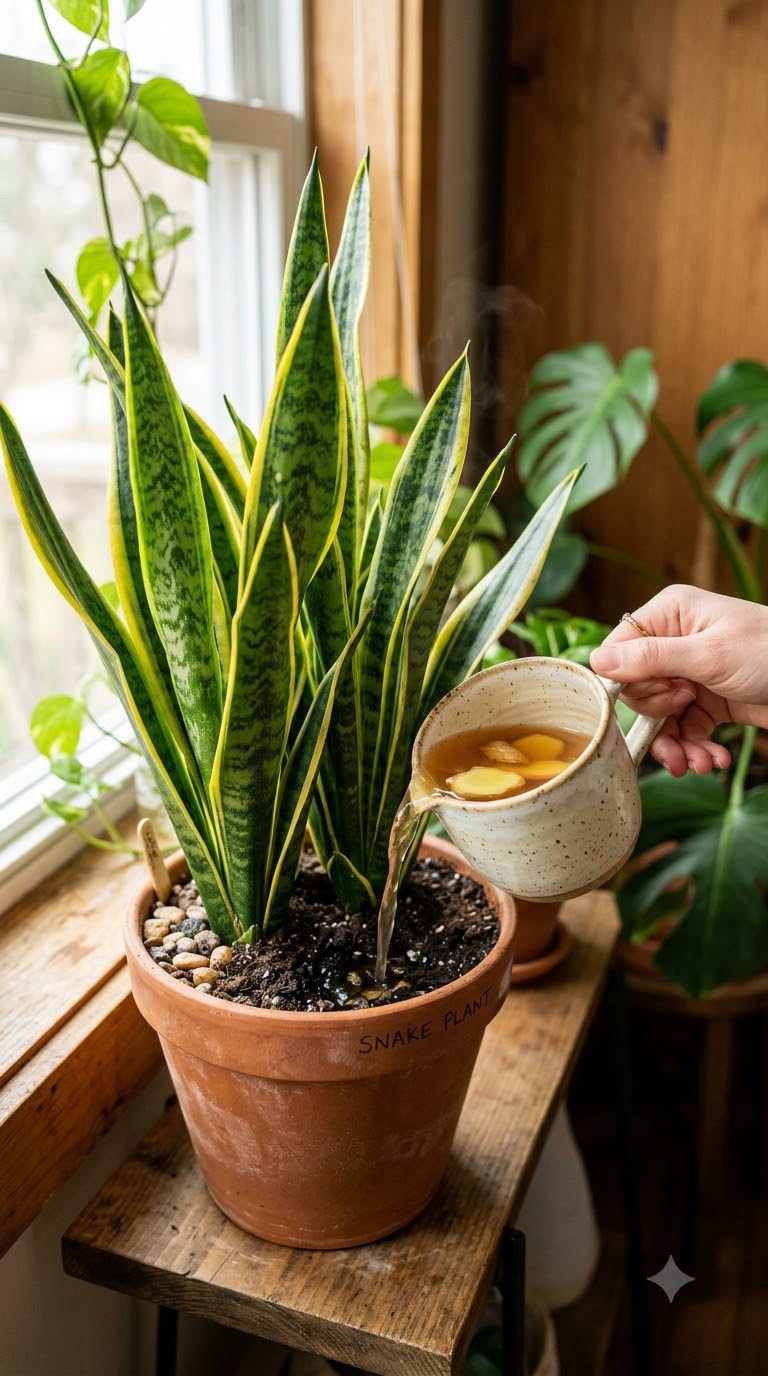
A healthy snake plant can slowly fill its pot with strong upright leaves and small new shoots growing from the soil. These baby plants, often called pups, are one of the most rewarding signs that your snake plant has settled in and developed a healthy root system.
It is tempting to believe that a homemade liquid is the hidden trick behind endless new shoots. Images often show brown or yellow plant tonics made with kitchen ingredients such as ginger, tea, coffee, or food scraps. However, those mixtures are not a reliable way to encourage growth. Snake plants respond best to steady, simple care: bright indirect light, well-draining soil, careful watering, and a light dose of proper fertilizer during the growing season.
Why Snake Plants Produce New Shoots
Snake plants spread through underground stems called rhizomes. When the plant has healthy roots, enough space, and suitable growing conditions, the rhizomes can form new shoots beside the main plant.
A new shoot does not usually appear overnight. It develops slowly below the soil first, then emerges as a small pointed green spear. With time, it becomes a full leaf cluster.
The real “secret” is not forcing the plant with extra water or homemade mixtures. It is creating the conditions that allow the roots and rhizomes to stay healthy for months.
Is Ginger Water Good for Snake Plants?
Ginger water and other kitchen-made tonics are often shared as natural plant boosters, but they are not necessary for snake plant care. Ginger pieces, tea, coffee, fruit water, sugary water, milk, and food leftovers can leave residues in the potting mix.
Those residues may encourage mold, fungus gnats, unpleasant odors, or soil that stays wet for too long. Snake plants are especially sensitive to excess moisture because their roots can rot in soggy soil.
If you want to feed your snake plant, use a balanced liquid houseplant fertilizer diluted according to its label. Apply it only during active growth in spring and summer. This gives the plant nutrients in a measured, dependable way.
The Best Light for More Snake Plant Pups
Snake plants tolerate low light, but they tend to grow much more slowly there. For stronger leaves and a better chance of producing pups, place your plant in bright indirect light.
A spot near an east-facing window is often ideal because it offers gentle morning light. A few feet back from a south- or west-facing window can also work well if direct sun is filtered by a sheer curtain.
Very dark corners are fine for keeping a snake plant alive, but they are not the best place for active growth. If your plant is not producing new leaves or shoots, improving the light is often more helpful than adding fertilizer.
Use Fast-Draining Soil
A snake plant needs a potting mix that drains quickly. Regular dense garden soil holds too much moisture around the roots and can lead to rot.
A cactus or succulent mix is a simple choice. You can also make regular indoor potting soil lighter by mixing in perlite, pumice, or orchid bark. The goal is to let water move through the pot instead of sitting around the roots.
Always use a pot with drainage holes. A beautiful decorative pot is fine, but the inner container must allow extra water to escape. Empty the saucer after watering so the plant never sits in standing water.
How Often Should You Water?
The most common snake plant mistake is watering too often. These plants store moisture in their thick leaves and can handle dry soil much better than constantly wet soil.
Before watering, check several inches down into the potting mix. If the soil is still damp, wait. If it is dry and the pot feels light, water slowly until a small amount drains from the bottom.
In many homes, snake plants need water every two to four weeks in spring and summer. During winter or in low light, they may need water much less often. Always let the soil guide you rather than following a strict calendar.
A Safe Feeding Routine
Use a balanced liquid fertilizer designed for houseplants. Dilute it according to the package directions, and feed your snake plant about once every four to six weeks during spring and summer.
Do not fertilize an overwatered, stressed, or recently repotted plant. Fertilizer is not a repair treatment for damaged roots. First correct the light, soil, and watering routine, then feed only once the plant is stable.
During fall and winter, many snake plants grow slowly. It is usually best to pause fertilizer until active growth returns.
Should a Snake Plant Be Root-Bound?
Snake plants often do well when their roots are slightly snug in the pot. A plant that is mildly root-bound may even produce pups because the rhizomes are growing actively in the available space.
However, a severely crowded plant eventually needs repotting. Signs include roots pushing the plant upward, a cracked pot, water rushing through without soaking the soil, or pups becoming too crowded to develop properly.
When repotting, choose a container only one or two inches wider than the current pot. A very large pot holds extra wet soil around the roots, which can slow growth and increase the risk of rot.
How to Separate Snake Plant Pups
You can leave pups attached to the mother plant for a fuller display. If you would like more plants, separate them during repotting.
Carefully remove the plant from the pot and brush away enough soil to see the rhizomes. Find where the pup connects to the main plant. Use a clean, sharp knife to cut through the connecting rhizome, making sure each new section has roots.
Allow any cut areas to dry for a few hours, then plant each pup in a small pot with fast-draining soil. Water lightly after planting, then wait until the soil dries before watering again.
Common Problems That Stop New Growth
Too much water
Overwatering is the number one reason snake plants stop growing. Yellow leaves, soft bases, a sour smell, or leaves that fall over can all point to too much moisture.
Very low light
The plant may survive in dim light but will grow slowly. Move it gradually to brighter indirect light for better long-term growth.
Heavy soil
Dense soil holds moisture too long. Refresh the plant with cactus soil or a loose potting mix with added perlite.
Too much fertilizer
More fertilizer does not create more pups. Excess fertilizer can burn roots and leave mineral buildup in the soil. Use small, measured applications only.
Frequent moving
Snake plants adjust slowly to changes in temperature and light. Give your plant a stable place and avoid moving it often.
How to Keep Snake Plant Leaves Beautiful
Wipe dust from the leaves occasionally with a soft, damp cloth. Clean leaves allow the plant to receive light more effectively and keep the glossy pattern visible.
Avoid using leaf shine products, cooking oil, milk, or heavy sprays. They can leave residue on the foliage and do not improve plant health.
Turn the pot every few weeks so the leaves grow evenly. This is especially helpful near a window, where the plant may lean toward the light.
Best Places to Display a Snake Plant
Snake plants look beautiful in living rooms, bedrooms, entryways, offices, and bright hallways. Their upright shape adds height without taking up much floor space.
A large snake plant in a terracotta or ceramic pot looks striking beside a sofa, near a window, or in an empty corner. Smaller plants work well on desks, side tables, bookshelves, and kitchen counters with indirect light.
Choose a spot that suits your home, but make sure the plant receives enough gentle light and stays away from cold drafts or heating vents.
Frequently Asked Questions
How long does it take for a snake plant to make pups?
It can take several months or longer. Growth depends on light, temperature, root health, pot size, and season. Patience is part of snake plant care.
Do snake plants need direct sunlight?
They can tolerate a little gentle morning sun, but bright indirect light is usually best. Strong afternoon sun through a window may scorch the leaves.
Can I use coffee grounds or tea water?
It is better not to use them in an indoor snake plant pot. They can affect soil conditions and leave organic material that encourages pests or mold.
Why are my new shoots small?
Young pups begin small naturally. Give them stable light, fast-draining soil, and careful watering. They will develop gradually as the roots strengthen.
Final Thoughts
The best way to encourage more snake plant shoots is not a mystery liquid. It is a consistent routine that protects the roots and gives the plant enough energy to grow.
Use bright indirect light, well-draining soil, a pot with drainage, and water only when the soil has dried. Feed lightly during the growing season with a proper houseplant fertilizer. With patience, your snake plant can produce healthy new pups and become a fuller, more beautiful part of your home.