SEO Title: Spider Plant Care: 10 Easy Tips for Lush Leaves and More Baby Plants
Meta Description: Learn everything about spider plant care, including the best light, watering, soil, fertilizer, brown leaf tips, repotting, propagation, and common problems.
Focus Keyword: Spider Plant Care
Slug: spider-plant-care
Category: Indoor Plants / Houseplant Care
Target Length: ~1,700 words
Spider Plant Care: How to Keep Your Spider Plant Healthy, Green, and Full
Spider plants are among the most popular houseplants for a reason. They are attractive, adaptable, relatively easy to care for, and famous for producing long stems covered with tiny baby plants. Their graceful, arching leaves look especially beautiful when the plant is placed in a hanging basket or on a shelf where the foliage can cascade naturally.
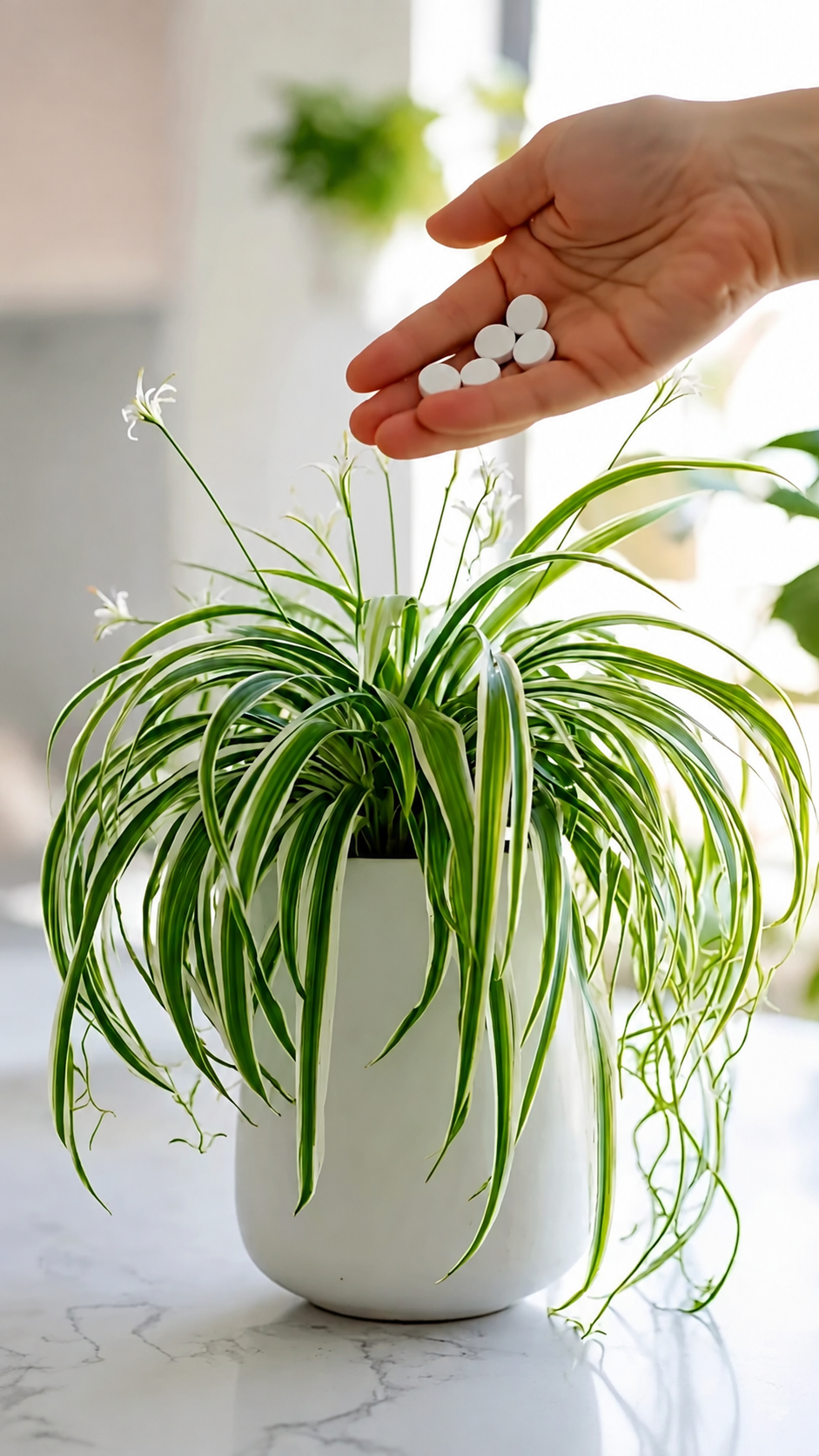
The plant shown here is a beautiful spider plant (Chlorophytum comosum), with long striped leaves and several delicate flower stems. Although spider plants are forgiving, they still need the right combination of light, watering, drainage, nutrition, and occasional maintenance to look their best.
If your spider plant has brown tips, yellow leaves, slow growth, or isn’t producing many babies, don’t immediately assume that it needs a special homemade treatment. In most cases, the basics—light, water, drainage, and appropriate feeding—are much more important.
Let’s look at exactly how to care for a spider plant indoors.
🌱 What Makes Spider Plants So Special?
Spider plants have long, narrow leaves that grow outward from the center of the plant. Mature plants can send out long arching stems, called runners, which may produce small white flowers and eventually baby plantlets.
These little plantlets are one of the reasons spider plants are so enjoyable to grow. Once they develop roots, they can be propagated to create new plants.
Spider plants are also wonderfully versatile. They can be grown in ordinary containers, hanging baskets, or decorative pots, provided the growing container allows excess water to escape.
The most important thing to remember is that easy-care doesn’t mean no-care. Your plant will still respond to its environment.
☀️ 1. Give Your Spider Plant the Right Amount of Light
Light is one of the most important parts of spider plant care.
Spider plants generally do well in bright, indirect light. A location close to a bright window can provide excellent conditions, particularly when harsh sunlight is filtered through a sheer curtain.
Too much strong direct sunlight can cause the foliage to become stressed or scorched. On the other hand, very low light can result in slower growth and less vigorous foliage.
If your spider plant is sitting in a dark corner, consider moving it gradually toward a brighter location.
The ideal indoor position
Try placing your spider plant:
- Near a bright window
- Behind a light curtain
- In a naturally bright room
- Away from prolonged harsh afternoon sunlight
Watch the leaves rather than relying on a strict distance from the window. Every home has different levels of natural light.
💧 2. Water Carefully
Watering is where many houseplant problems begin.
A spider plant doesn’t want its roots sitting in constantly saturated soil. At the same time, allowing the plant to become severely dehydrated again and again can cause stress and contribute to dry or brown foliage.
Instead of watering on a fixed schedule, check the soil.
Insert your finger into the upper layer of the potting mix. If it has dried somewhat, it’s generally time to consider watering.
When you water, water thoroughly enough to moisten the growing medium, then allow excess water to drain away.
Never let the pot sit permanently in standing water.
The exact frequency will depend on factors such as:
- Temperature
- Humidity
- Pot size
- Soil composition
- Light level
- Season
- Plant size
During periods of slower growth, your spider plant may need less water than it does during active growth.
🪴 3. Drainage Is Extremely Important
A beautiful decorative pot isn’t enough if it doesn’t provide proper drainage.
Spider plants prefer a growing medium that provides moisture while allowing excess water to escape. A standard, quality houseplant potting mix can work well.
Most importantly, choose a container with drainage holes.
If your decorative container doesn’t have a drainage hole, consider keeping the plant in a suitable nursery pot inside the decorative container. This makes it easier to remove the plant for watering and allow excess water to drain completely.
Good drainage helps you avoid one of the most common houseplant mistakes: watering again before the previous moisture has had a chance to dissipate.
🌿 4. Choose the Right Potting Mix
Spider plants are not extremely fussy about soil, but they appreciate a loose, well-draining growing medium.
Avoid using heavy garden soil by itself in an indoor container. It can become compacted and may hold too much moisture.
A quality commercial houseplant mix is usually a simple choice.
You want the soil to:
- Hold some moisture
- Drain excess water
- Allow air around the roots
- Avoid becoming heavily compacted
If water takes a very long time to drain through the container, inspect the soil and drainage situation.
🌱 5. How to Fertilize a Spider Plant
Spider plants can benefit from fertilizer during active growth, but more fertilizer does not mean more growth.
Use a balanced houseplant fertilizer according to the manufacturer’s instructions. Depending on the product, you may need to dilute it or apply it at a particular interval.
Always read the label before applying fertilizer.
Overfertilization can lead to salt accumulation in the growing medium and may contribute to brown leaf tips.
This is especially important if your spider plant already has brown tips. Don’t automatically respond by adding more fertilizer.
Instead, look at the entire care routine:
Is the plant getting appropriate light?
Is the soil staying wet for too long?
Is the plant drying out excessively?
Could fertilizer salts be accumulating?
Fixing the underlying problem is more useful than simply adding another product.
🍂 6. Why Does My Spider Plant Have Brown Tips?
Brown leaf tips are probably one of the most common complaints from spider plant owners.
There isn’t always one single cause.
Brown tips can be associated with environmental stress, inconsistent watering, excessive fertilizer or salt buildup, low humidity, strong sunlight, and the quality of the water being used.
If you notice brown tips, start by checking the basics.
First, inspect the watering
Are you allowing the plant to become extremely dry before watering?
Or is the soil staying wet continuously?
Either situation can indicate that the watering routine needs adjustment.
Next, check the light
If the plant is receiving strong direct sunlight for extended periods, move it to a location with bright but filtered or indirect light.
Then consider fertilizer
If you’ve been feeding frequently, reduce unnecessary applications and follow the fertilizer label.
You can also trim damaged brown tips with clean scissors. Cut along the natural shape of the leaf rather than removing healthy green tissue unnecessarily.
Remember that cutting off brown tips won’t fix the underlying cause. It simply improves the appearance while you correct the growing conditions.
🌸 7. How to Encourage More Spider Plant Babies
One of the most exciting parts of growing a mature spider plant is seeing those long runners appear.
Healthy, mature plants may produce small plantlets along these stems. These babies can eventually become independent plants.
If your spider plant isn’t producing babies, don’t assume it needs a secret fertilizer or homemade remedy.
The plant’s maturity, growing conditions, light, and overall health all matter.
Focus first on providing:
- Adequate indirect light
- Appropriate watering
- Good drainage
- Suitable potting mix
- Reasonable nutrition
A healthy, established spider plant is more likely to reward you with attractive new growth.
👶 8. How to Propagate Spider Plant Babies
Propagation is surprisingly easy.
Once a spider plantlet has developed roots, it can be separated from the mother plant and grown independently.
Simple propagation method
Step 1: Choose a healthy plantlet.
Step 2: Check whether it has started developing roots.
Step 3: Prepare a small container with moist, well-draining potting mix.
Step 4: Carefully separate the rooted plantlet from the mother plant.
Step 5: Place the roots into the growing medium.
Step 6: Keep the soil appropriately moist while the new plant establishes itself.
Avoid keeping the new plant constantly soaked.
You can also allow a plantlet to remain attached to the mother plant while it develops roots, then separate it later.
🪴 9. When Should You Repot a Spider Plant?
Spider plants can eventually become crowded in their containers.
Their roots can become quite dense, and a mature plant may eventually need fresh growing medium or a slightly larger container.
Signs that it may be time to consider repotting include:
- Roots becoming extremely crowded
- The plant drying out unusually quickly
- The container becoming unstable
- Growth appearing restricted
- Roots emerging from drainage holes
When repotting, don’t automatically choose a dramatically larger pot.
A container that is only modestly larger is often more practical because an oversized pot can hold a large amount of wet soil around the roots.
After repotting, return the plant to an appropriate bright location and continue with normal care.
✂️ 10. Simple Spider Plant Maintenance
Spider plants don’t require complicated pruning.
Remove leaves that are completely dead or badly damaged. You can also trim brown tips for cosmetic reasons.
Use clean scissors and avoid cutting away large amounts of healthy green foliage.
If your plant becomes extremely crowded, you can also use propagation as a way to manage some of the plantlets.
Regularly rotate the container if the plant receives light primarily from one direction. This can help the plant grow more evenly.
🚨 Common Spider Plant Care Mistakes
Here are some mistakes to avoid:
❌ Watering every day
A fixed daily watering schedule can keep the roots too wet.
❌ Keeping the pot in standing water
Always allow excess water to drain away.
❌ Giving intense direct sunlight
Strong sunlight can damage delicate foliage.
❌ Adding fertilizer whenever leaves look unhealthy
Brown tips can have many causes. More fertilizer isn’t automatically the solution.
❌ Using random household tablets
Some social media gardening posts recommend putting tablets or medications into plant soil. There is no reason to use medication simply because it is shown in a viral plant-care image.
Use products specifically formulated for plants and follow their directions.
❌ Moving a plant into an enormous pot
A much larger container can retain excess moisture for longer.
🌿 The Best Spider Plant Care Routine
If you want to keep your spider plant looking like the beautiful example in the photo, keep the routine simple.
Every few days
Check the soil rather than watering automatically.
Every week
Look closely at the foliage for yellowing, brown tips, pests, or other changes.
During active growth
Provide appropriate fertilizer according to the product label.
Occasionally
Remove dead or damaged leaves and rotate the plant if necessary.
When the plant becomes crowded
Consider propagation or repotting.
The goal isn’t to constantly interfere with the plant. Good plant care is often about creating the right conditions and then allowing the plant to grow.
🌱 Final Thoughts
Spider plant care doesn’t need to be complicated.
Give your plant bright indirect light, appropriate watering, good drainage, suitable soil, and moderate nutrition, and you’ll give it a strong foundation for healthy growth.
If you see brown tips, don’t panic. Check the plant’s environment before reaching for a special treatment. Look at the watering pattern, drainage, light, fertilizer use, and water quality.
And if your mature spider plant begins producing long runners with little babies hanging from them, that’s one of the best rewards of growing this beautiful houseplant.
With patience and consistent care, a spider plant can become a lush centerpiece for your home—and those little spider babies can give you plenty of new plants to grow and share. 🌿🪴
Would you try these spider plant care tips? 🌱 Tell us in the comments!