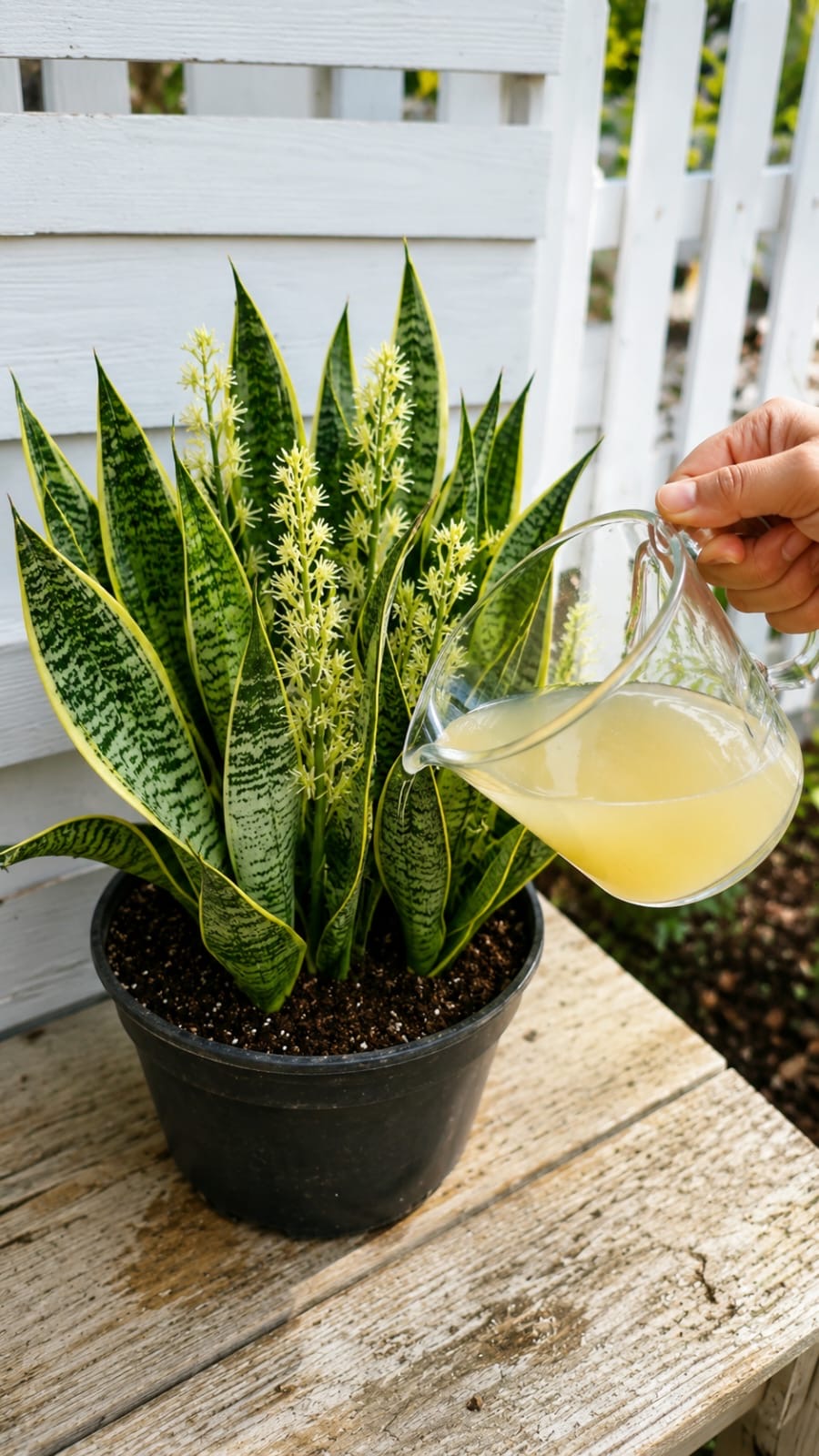
Seeing flowers on a snake plant can be surprising. Most people know snake plants for their upright, patterned leaves, but mature plants can sometimes produce tall flower stalks filled with small pale green, cream, or white blooms.
A flowering snake plant is usually a sign that the plant is mature and receiving conditions it can tolerate well. It is not something you need to force with mystery liquids or harsh home remedies. The best way to support your plant is with steady, simple care: bright indirect light, a well-draining potting mix, and careful watering.
What Snake Plant Flowers Look Like
Snake plant flowers grow on tall, thin stalks that rise from the base of the plant. The blooms are usually small and tubular, often white, cream, or pale green. Some varieties have flowers with a light, sweet fragrance that can be more noticeable in the evening.
The flower stalk may look different from a new leaf because it is thinner and covered with small buds. It is completely normal for it to appear between the leaves near the center of the plant.
Not every snake plant will bloom indoors, and a plant can stay healthy for years without producing flowers.
Why Do Snake Plants Bloom?
Snake plants usually bloom after they have matured and established a strong root system. Bright light, a stable environment, and a snug but not severely crowded pot can all support flowering.
Flowering is not a guaranteed result of any one care trick. It depends on the plant’s age, variety, growing conditions, and natural growth cycle.
Some snake plants also bloom after mild environmental stress, such as becoming root-bound. However, you should never purposely deprive a plant of water or keep it in poor soil just to encourage flowers. Stress can also lead to weak leaves, root damage, and slow recovery.
The Best Light for a Flowering Snake Plant
Snake plants adapt to lower light, but they grow more strongly in bright, indirect light. Place your plant near a bright window where it receives filtered daylight.
Morning sun is usually gentle enough for many snake plants, but strong direct afternoon sun can scorch the leaves, especially in hot weather. If the leaves develop pale patches, brown marks, or dry edges, move the plant slightly farther from the window.
A bright living room, office, covered porch, or entryway can be a beautiful place for a flowering snake plant. Its tall leaves and flower stalks create a clean, dramatic look beside light-colored walls, wood furniture, or a simple decorative pot.
Watering a Snake Plant Correctly
Overwatering is one of the most common reasons snake plants struggle. Their thick leaves and roots store water, so they prefer soil to dry substantially between waterings.
Check the potting mix with your finger before watering. If the top several inches feel dry, water slowly around the soil surface until a little water runs from the drainage holes. Empty the saucer after a few minutes so the pot is never left sitting in water.
During cooler or darker months, the plant may need water only every few weeks. In bright, warm conditions, it may need water more often. Always check the soil instead of following a strict calendar.
Avoid pouring water into the center rosette of the plant. Aim for the soil around the base and keep the crown dry.
Should You Use Yellow Homemade Tonic on a Snake Plant?
Be careful with unknown yellow liquids, kitchen mixtures, or strong homemade tonics. They can leave residues in the soil, attract pests, change soil chemistry, or damage sensitive roots.
For reliable plant care, plain water is usually enough. If your snake plant is actively growing in spring or summer, you can use a balanced liquid houseplant fertilizer diluted to half the label strength. Apply it only to already-moist soil and only occasionally.
Do not fertilize a plant that is stressed, sitting in soggy soil, recently repotted, or growing slowly in low light. Fertilizer cannot fix root rot or poor drainage, and adding it at the wrong time can make the problem worse.
Choosing the Right Pot and Soil
A pot with drainage holes is essential. Snake plant roots can rot quickly if excess water has nowhere to escape.
Use a fast-draining cactus or succulent potting mix, or mix regular indoor potting soil with perlite or pumice to improve airflow. The roots need moisture, but they also need oxygen.
Choose a pot that is only slightly larger than the root ball when repotting. A very oversized container stays wet too long and increases the risk of root problems.
How to Care for the Flower Stalk
Do not cut the flower stalk when buds are still developing. Let the flowers open and enjoy them while they last.
Once the blooms fade and the stalk becomes yellow or brown, use clean scissors or pruners to cut it close to the soil surface. This tidies the plant and lets it direct energy back toward leaves and roots.
The same plant may flower again in a future season, but there is no predictable schedule. Focus on overall health rather than trying to make it bloom every year.
Common Snake Plant Problems
Yellow, soft leaves usually point to too much water or poor drainage. Let the soil dry, inspect the roots if needed, and remove any mushy or dark roots before repotting into fresh, dry, well-draining mix.
Wrinkled or curling leaves may mean the plant has stayed dry for too long. Water thoroughly, then return to a consistent check-the-soil routine.
Brown leaf tips can come from inconsistent watering, salt buildup from fertilizer, very dry air, or physical damage. Trim only the brown part with clean scissors and review the care routine.
Pale leaves or weak growth may mean the plant needs brighter indirect light. Move it closer to a window gradually rather than placing it immediately in harsh sun.
How to Help a Snake Plant Grow Fuller
A fuller snake plant comes from healthy roots and steady care. Give it bright indirect light, avoid overwatering, and rotate the pot every few weeks so the leaves grow evenly toward the light.
Repot only when the plant is truly crowded or the pot is cracking from expanding roots. When you repot, you can separate healthy pups with their own roots and plant them in small pots.
Do not expect instant dramatic changes. Snake plants are slow-growing, and small improvements over several months are more realistic and healthier than rapid forced growth.
Frequently Asked Questions
Is it rare for a snake plant to flower?
It is less common indoors than leaf growth, but it is completely natural for a mature, healthy snake plant to flower.
Should I fertilize my snake plant to make it bloom?
No fertilizer can guarantee flowers. Use a diluted, balanced houseplant fertilizer only during active growth and only if the plant is already healthy.
Can I keep a flowering snake plant outside?
Yes, in warm conditions with bright shade or gentle morning sunlight. Bring it indoors before temperatures become cold, as snake plants are sensitive to frost.
Is a flowering snake plant unhealthy?
No. A flower stalk alone is not a sign of trouble. Check that the leaves remain firm, the pot drains well, and the soil is not constantly wet.
Are snake plants safe around pets?
Snake plants can be irritating if chewed by cats or dogs. Keep the plant out of reach of pets and children who may bite or handle the leaves.
Final Thoughts
A flowering snake plant is a beautiful bonus, but healthy leaves and roots are the real goal. Give your plant bright indirect light, let the soil dry between waterings, use a pot with drainage, and avoid unverified liquid mixtures.
With patient, simple care, your snake plant can stay strong, upright, and attractive for many years—whether it blooms this season or not.