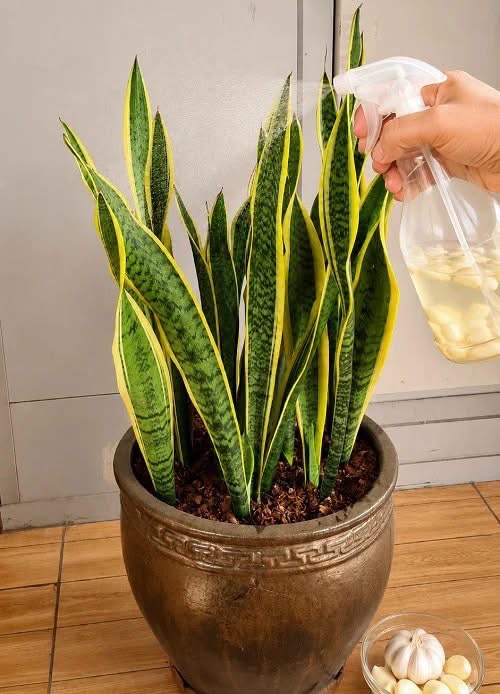
Snake plants are loved for their tall upright leaves, beautiful green patterns, and easy-care nature. They can make a living room, hallway, bedroom, or office look more polished with very little effort.
The image may show garlic water being sprayed around a snake plant. Garlic sprays are often shared as a home garden idea, but they are not a guaranteed treatment for indoor plants. Strong mixtures can leave residue on leaves, create an unpleasant smell indoors, or irritate delicate new growth.
For a healthy snake plant, the most reliable routine is bright indirect light, fast-draining soil, careful watering, clean leaves, and regular checks for pests.
Why Snake Plants Are So Popular
Snake plants have thick, firm leaves that store water. This makes them more forgiving than many houseplants and a good choice for people who do not want to water every few days.
Their leaves grow upright in shades of deep green, silver-green, and yellow-edged variegation. A mature plant can also create new pups at the base, giving the pot a fuller and more luxurious look over time.
Snake plants grow slowly, but steady care helps them remain strong and attractive for years.
Should You Spray Garlic Water on a Snake Plant?
Garlic is sometimes used in outdoor gardening, but it should not replace proper indoor plant care. A concentrated garlic mixture may leave sticky residue, affect the appearance of the leaves, or encourage moisture to remain around the crown.
If you notice insects on your snake plant, first isolate it from other houseplants and inspect the leaves, stems, and soil carefully. Wipe visible pests away with a soft damp cloth.
For a persistent pest issue, use a ready-made houseplant insecticidal soap according to its label directions. Test it on one small leaf area first and avoid spraying the plant in direct sun.
The Best Light for Snake Plants
Snake plants tolerate lower light, but bright indirect light helps them look their best. Place the pot near a bright window where it receives gentle daylight rather than harsh direct afternoon sun.
An east-facing window is often ideal. A spot a few feet from a south- or west-facing window can also work well when the light is filtered through a sheer curtain.
Low light will not always harm the plant, but it can slow growth. Brighter indirect light supports stronger leaves and can encourage healthy new pups.
How to Water a Snake Plant Correctly
The biggest mistake with snake plants is overwatering. Their roots need time to dry out between waterings.
Check the soil before adding water. Only water when the potting mix is dry almost all the way through. Then pour room-temperature water slowly over the soil until a small amount drains from the bottom of the pot.
Always empty the saucer after watering. A snake plant should never sit in standing water.
In many homes, watering every two to four weeks is enough during warmer months. In winter, the plant may need water only occasionally.
Use a Pot With Good Drainage
A pot with drainage holes is essential for snake plant care. Without drainage, water can collect around the roots and make the soil stay wet for too long.
Choose a pot that is only slightly larger than the plant’s root system. Snake plants enjoy being a little snug, and a very large pot can hold unnecessary moisture.
Terracotta pots are a lovely option because they help soil dry more evenly. Ceramic and plastic pots also work well when they have proper drainage.
Choose a Light Soil Mix
Snake plants grow best in loose, well-draining soil. A cactus or succulent mix is a simple choice.
For an airy homemade mix, combine:
- 2 parts indoor potting mix
- 1 part perlite
- 1 part coarse sand or orchid bark
This gives the roots more air and allows excess water to move through the pot.
Keep the Leaves Clean
Dust can collect on the wide upright leaves of a snake plant. Wipe the leaves gently with a soft cloth dampened with plain water every few weeks.
This makes the leaves look brighter and helps you notice early signs of insects, brown edges, or physical damage.
Avoid heavy oils, leaf-shine products, and strong homemade sprays. Clean water and a soft cloth are usually all that is needed.
How to Check for Common Pests
Look closely along the leaf bases, undersides, and new growth. Common houseplant pests can include mealybugs, scale, and spider mites.
Mealybugs may look like small white cottony spots. Scale can appear as tiny brown or tan bumps on leaves. Spider mites can sometimes leave fine webbing.
If you find a small number of pests, remove them gently with a damp cloth. For a larger problem, use a labeled houseplant pest-control product and follow every instruction on the package.
Encourage Healthy New Growth
A snake plant can slowly produce new shoots, also called pups, from its underground stems. The best way to support this natural growth is consistency.
Give the plant bright indirect light, allow the soil to dry between waterings, and use a diluted balanced houseplant fertilizer during spring and summer.
Feed lightly every four to six weeks during active growth. Do not overfertilize, and do not fertilize a plant that is stressed or sitting in wet soil.
Best Places to Display a Snake Plant
Snake plants look beautiful beside a bright living-room window, near an entryway, on a home-office floor, or in a bedroom corner with gentle daylight.
Their upright shape pairs beautifully with modern ceramic pots, terracotta planters, woven baskets, and natural wood furniture.
For a fuller indoor garden, place a snake plant beside pothos, ZZ plants, spider plants, or peace lilies.
Common Snake Plant Care Mistakes
Overwatering is the most common issue. Yellowing leaves, soft spots near the base, and soil that stays wet for many days can be warning signs.
Another common mistake is using a pot without drainage holes. Even if you water carefully, trapped water can stress the roots.
Avoid strong garlic water, table salt, bleach, dish soap, and other unmeasured kitchen mixtures. They are not a substitute for good soil, proper watering, and labeled plant-care products.
Frequently Asked Questions
Can I spray garlic water on snake plant leaves?
It is better to avoid it. Garlic water is not a dependable houseplant treatment and may leave residue or irritate the plant. Use a labeled insecticidal soap only when you have confirmed a pest issue.
How often should I water a snake plant?
Water when the soil has dried almost completely. This is often every two to four weeks, but always check the soil first.
Why are my snake plant leaves turning yellow?
Yellow leaves often come from overwatering or poor drainage. Let the soil dry, check the pot for drainage holes, and remove any soft or damaged roots if needed.
Can snake plants grow in low light?
Yes, they can tolerate low light, but bright indirect light supports healthier and steadier growth.
How can I make my snake plant look fuller?
Keep it in bright indirect light, water carefully, use draining soil, and allow it time to produce new pups naturally.
Final Thoughts
A strong snake plant does not need complicated sprays or harsh homemade mixtures. Bright indirect light, dry-between-waterings care, clean leaves, good drainage, and light feeding in the growing season are the real foundation of healthy growth.
With a simple routine and a little patience, your snake plant can stay tall, fresh, and beautiful in your home for many years.