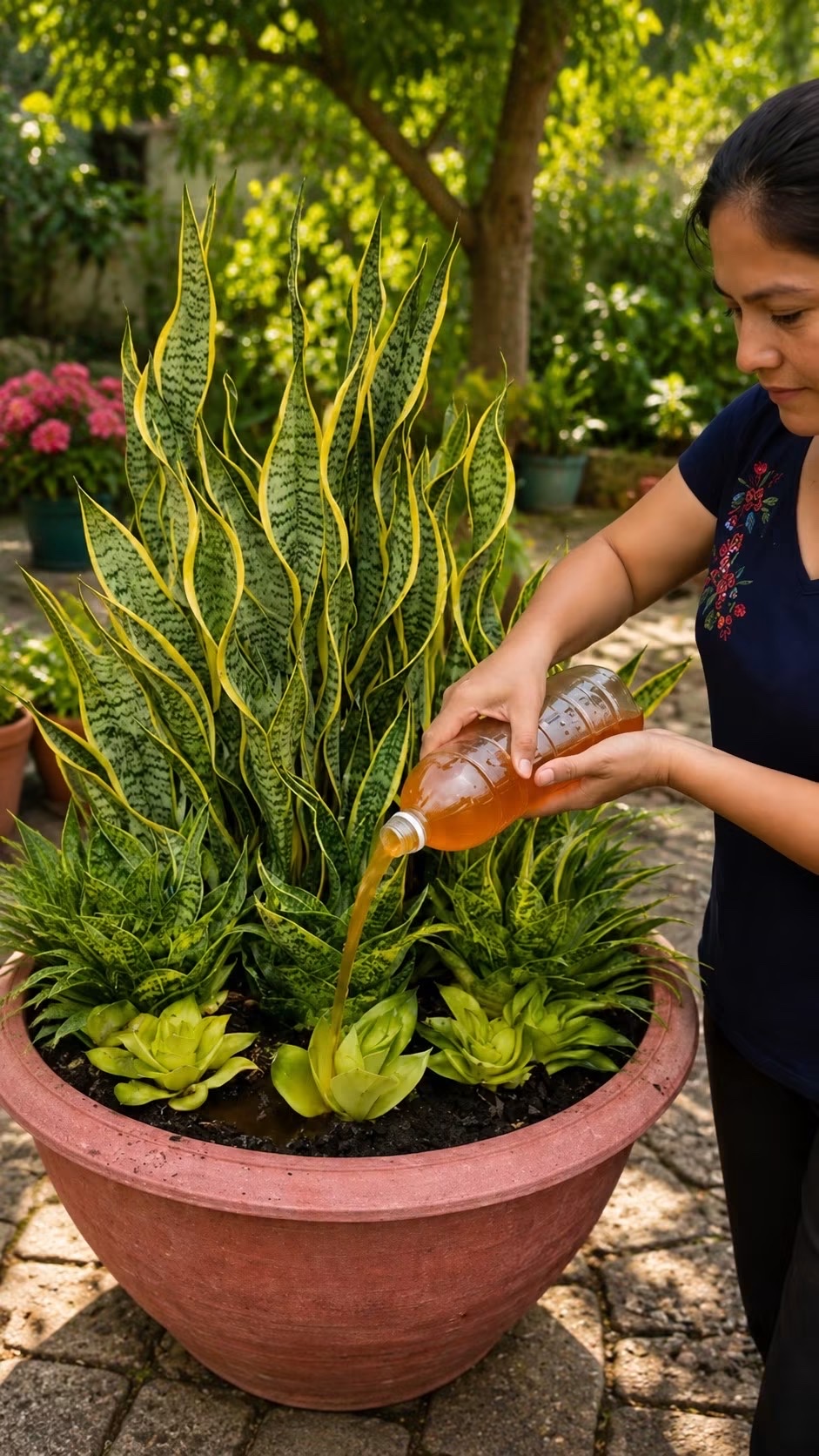
A large snake plant can turn an ordinary patio, doorway, or garden corner into a bold green feature. Its tall patterned leaves add height and structure, while smaller companion plants around the base create a full, layered display.
One simple way to support this type of container garden is with a light compost tea routine. This gentle brown plant tonic is made by steeping organic compost or worm castings in water, then using the strained liquid to refresh the soil around the plant.
Used as part of a complete care routine, compost tea can help maintain a rich-looking container display with healthy green leaves, fresh soil, and beautiful companion plants.
Why Snake Plants Look So Impressive in Large Planters
Snake plants have strong upright leaves that bring instant height to a large pot. Their deep green patterns stand out beautifully against terracotta, stone, wood, and garden greenery.
A wide planter also gives you room to create a more decorative design. Place the tallest snake plants in the center or toward the back, then surround them with low-growing succulents or small leafy plants near the edge. The contrast between tall vertical leaves and rounded plants makes the whole arrangement look more complete.
This is an easy way to give a patio or sunny outdoor space a polished, tropical feel.
What Is Compost Tea?
Compost tea is a simple liquid made by soaking mature compost or worm castings in water. The water takes on a light brown color and can be used to refresh the growing mix around container plants.
For a simple version, you only need:
- 1 tablespoon worm castings or finished compost
- 4 cups water
- A jar, jug, or watering can
- A fine strainer
Worm castings are especially convenient because they are fine, easy to mix, and rich in natural organic matter. The goal is a light, clean-looking liquid that can be poured directly onto the soil.
How to Make a Simple Compost Tea
Fill a clean container with 4 cups of water. Add 1 tablespoon of worm castings or well-finished compost and stir gently.
Let the mixture rest for 12 to 24 hours. Stir it once or twice during that time so the organic material blends into the water.
When it is ready, pour the mixture through a fine strainer. The strained brown liquid is your simple compost tea. Use it the same day for the freshest result.
The remaining compost can be added back to a garden bed or sprinkled lightly over the top of another plant pot.
How to Use Compost Tea for a Snake Plant
Apply compost tea to the soil around the base of the snake plant. Pour slowly and evenly, allowing the liquid to settle into the potting mix.
For a large outdoor planter, use about 2 to 4 cups of prepared compost tea, depending on the size of the container. Pour it around the outer area of the plant and around the companion plants rather than using it all in one spot.
This method gives the entire planter a refreshed look and helps keep the soil surface evenly cared for.
Use compost tea during the active growing season, especially in spring and summer when the plant is producing new leaves and pups.
Create a Beautiful Snake Plant and Succulent Arrangement
A large round planter is perfect for combining different plant shapes. Begin with your tallest snake plants in the center. Their upright leaves create the main structure of the design.
Around the outside edge, add compact succulents in soft green shades. Rosette-shaped succulents look especially beautiful beside snake plants because they create a low, rounded layer beneath the tall leaves.
Leave a little open soil around each plant so the design does not feel crowded. The final arrangement should look full but still balanced, with each plant visible from the front.
A terracotta pot works beautifully for this style because it adds warmth and gives the green foliage a natural, elegant contrast.
Choosing the Right Location
Snake plants look their best in bright, filtered light. Outdoors, choose a bright covered patio, a sheltered balcony, or a garden area that receives gentle morning light.
A location near a wall, bench, or entrance can make the planter feel like part of the décor. Place it where the tall leaves can be seen clearly from several angles.
The patterned leaves look especially striking near wood, stone, white walls, and natural garden plants. A large snake plant arrangement can become the main focal point of a peaceful outdoor seating area.
A Simple Watering Routine
Let the upper part of the soil dry before watering again. When it is time to water, soak the soil evenly and allow the pot to drain naturally.
For a container with snake plants and succulents together, a simple and consistent routine keeps the display looking neat. Check the soil with your fingertip before adding water. If it still feels moist below the surface, wait a little longer.
Water around the soil rather than over the leaves. This keeps the foliage clean and lets the patterned leaves remain the center of attention.
Keeping the Leaves Clean and Glossy
Snake plant leaves can collect dust, especially in a patio or garden setting. Wipe them gently with a soft damp cloth every few weeks.
Cleaning the leaves brings out the natural green bands and yellow edges, making the plant look brighter and more luxurious. It also gives you a chance to enjoy the plant up close and notice any new leaves coming from the base.
For a large planter, take a few minutes to remove fallen leaves and tidy the soil surface. Small details make a big difference in a decorative container garden.
Supporting New Pups and Fuller Growth
Snake plants naturally produce pups, which are small new plants that emerge from the soil around the original plant. Over time, these pups create a fuller and more impressive display.
A roomy planter, bright light, quality potting mix, and a light seasonal feeding routine all support a healthy-looking container. When new pups appear, allow them to grow in place if you want the planter to become dense and lush.
The combination of mature tall leaves and smaller new growth gives the arrangement depth, texture, and a beautiful layered shape.
Styling Ideas for a Luxury Garden Look
Use a large terracotta bowl or wide ceramic planter for a warm, natural garden style. Place it beside a wooden chair, garden bench, or entryway table.
For a more modern look, choose a smooth black, white, or gray planter and pair it with clean paving stones. Keep the surrounding décor simple so the upright snake plant leaves remain the star of the space.
You can also place several smaller pots around the main planter to build a full plant corner. Mix snake plants with low succulents, trailing plants, and flowering pots for color.
Frequently Asked Questions
Can I use worm castings instead of regular compost?
Yes. Worm castings are a lovely choice for a simple compost tea because they mix easily with water and create a smooth, light brown liquid.
How often should I use compost tea?
Use it occasionally during spring and summer as part of your regular plant-care routine. A light application every few weeks is enough for a container display.
Can I use compost tea on the smaller plants around the snake plant?
Yes. Pour the strained compost tea lightly around the soil of the companion plants so the whole arrangement receives the same refresh.
Can I keep this arrangement outdoors?
Yes, a bright sheltered outdoor location can be beautiful for snake plants and succulents. Choose a spot that feels calm, warm, and protected.
What makes a snake plant arrangement look fuller?
Use several snake plants together, allow pups to grow around the base, and add low companion plants near the edge of the pot. Different heights make the arrangement look rich and professionally styled.
Final Thoughts
A large snake plant planter can become one of the most beautiful features in your home or garden. Its tall patterned leaves, combined with low green companion plants, create an eye-catching display that feels calm, fresh, and full of life.
A simple compost tea routine is a lovely addition to seasonal care. Combined with bright light, tidy soil, and a well-designed planter, it helps you create a lush snake plant display that looks beautiful from every angle.