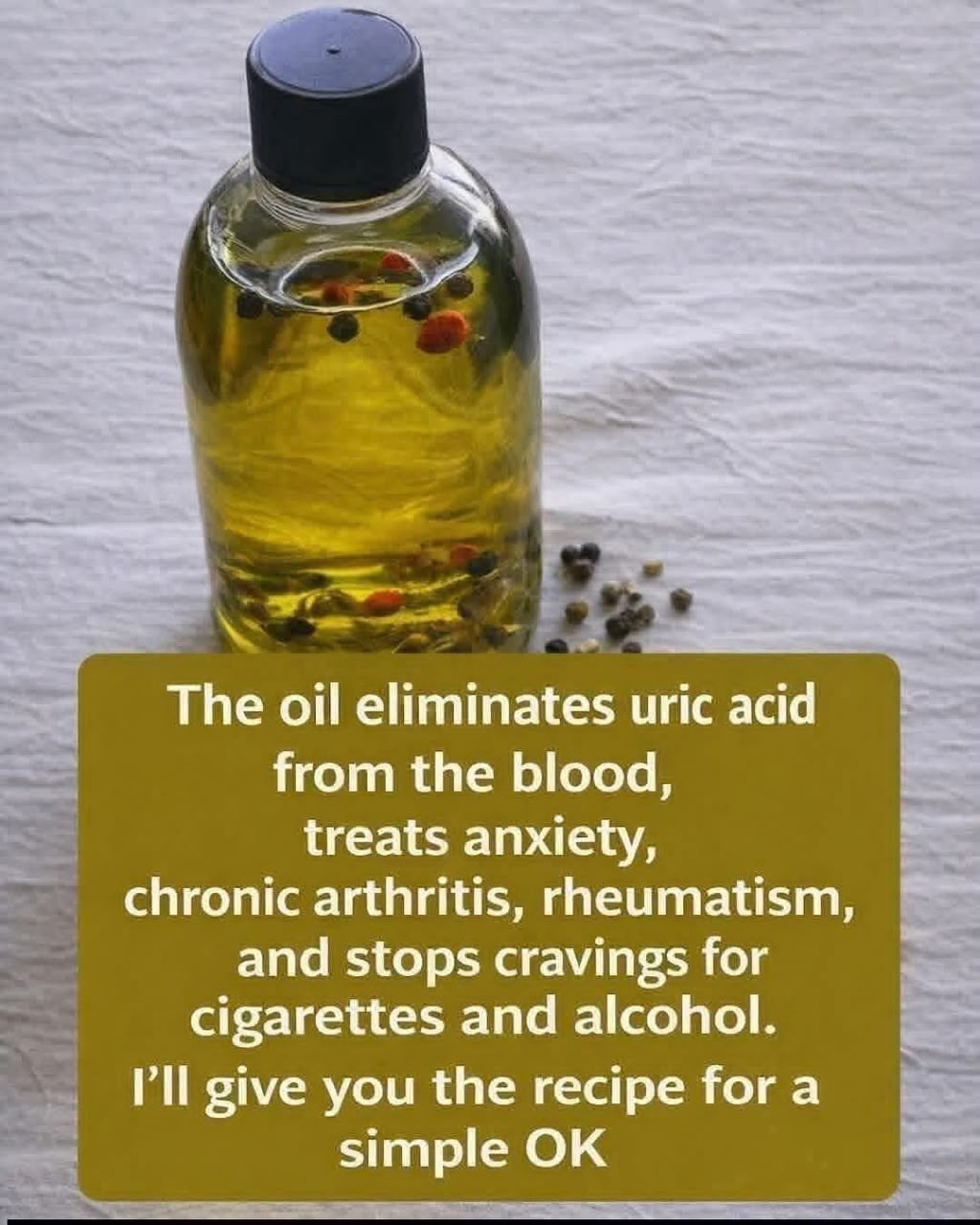
Natural oils infused with herbs and spices have been used in traditional wellness practices for generations. They are often promoted online as simple remedies for joint discomfort, inflammation, stress, and other health concerns. However, some viral claims go much further, suggesting that a particular homemade oil can “eliminate uric acid from the blood,” treat chronic arthritis and rheumatism, reduce anxiety, or stop cravings for cigarettes and alcohol.
These claims should be approached carefully. While certain herbs and spices contain compounds that are being studied for their potential health effects, there is no reliable evidence that a homemade infused oil can remove uric acid from the bloodstream or cure arthritis, rheumatism, anxiety, or addictive behaviors.
Understanding Uric Acid
Uric acid is a natural waste product produced when the body breaks down substances called purines. Most uric acid is filtered through the kidneys and leaves the body through urine.
When uric acid levels become too high, crystals can sometimes form in and around joints, contributing to gout. Managing elevated uric acid usually involves appropriate medical evaluation, dietary and lifestyle considerations, and, when necessary, prescribed treatment.
Applying an oil to the skin cannot directly remove uric acid from the bloodstream. If someone has been diagnosed with high uric acid or gout, an internet remedy should not replace professional medical advice.
What About Arthritis and Rheumatism?
“Arthritis” describes a broad group of conditions affecting joints. Different types have different causes and treatments. Some involve inflammation, while others are associated with changes in cartilage and joint structures.
Massage with a pleasant-smelling oil may feel soothing and can provide temporary comfort for some people, but that is different from treating the underlying cause of arthritis. An infused oil should therefore be considered a complementary self-care product rather than a cure.
Persistent joint pain, swelling, stiffness, or difficulty moving should be evaluated by a healthcare professional.
Could Herbal Oils Help With Relaxation?
Certain aromas and massage routines may help some people feel relaxed. Taking a few quiet minutes for gentle self-care can be useful as part of a healthy routine.
However, relaxation is not the same as treating an anxiety disorder. Anxiety that is persistent, overwhelming, or interfering with everyday activities deserves appropriate support from a qualified professional.
A homemade oil should never be presented as a substitute for evidence-based mental health care.
Be Careful With Addiction-Related Claims
Another common claim in viral remedy posts is that a special oil can eliminate cravings for cigarettes or alcohol. There is no good evidence that rubbing or consuming a homemade herbal oil can reliably stop addiction or withdrawal.
Changing addictive habits can be difficult, and people deserve supportive, evidence-based care rather than promises of an instant cure. If someone is struggling with substance use, speaking with a healthcare professional or another trusted adult can help them find appropriate support.
A Safer Way to Think About Natural Remedies
Natural ingredients can be part of everyday cooking and personal-care routines, but “natural” does not automatically mean effective or risk-free. Some concentrated herbs and essential oils can irritate the skin, cause allergic reactions, or interact with medications.
If you choose to use an oil for massage, use a product intended for topical use, avoid applying it to broken or irritated skin, and stop if irritation occurs. Essential oils should generally be diluted appropriately rather than applied directly to the skin.
Healthy Habits That Support Joint and Overall Health
Instead of relying on a single miracle remedy, focus on habits that support overall wellness. Eating a varied diet, drinking enough water, getting regular age-appropriate physical activity, sleeping well, and maintaining a healthy routine can all contribute to general health.
For people concerned about uric acid specifically, a healthcare professional can determine whether testing is appropriate and explain what the results mean.
The Bottom Line
Herbal-infused oils can be pleasant for massage and personal-care routines, but there is no solid evidence that a homemade oil can “flush uric acid from the blood,” cure chronic arthritis, eliminate rheumatism, treat anxiety, or stop cravings for cigarettes and alcohol.
The safest approach is to enjoy natural remedies for what they can realistically offer while avoiding exaggerated health promises. When symptoms are persistent or significant, identifying the underlying cause and getting appropriate medical guidance is far more useful than relying on a viral “miracle” recipe.
Natural wellness works best when it complements healthy habits and responsible healthcare—not when it promises instant cures.