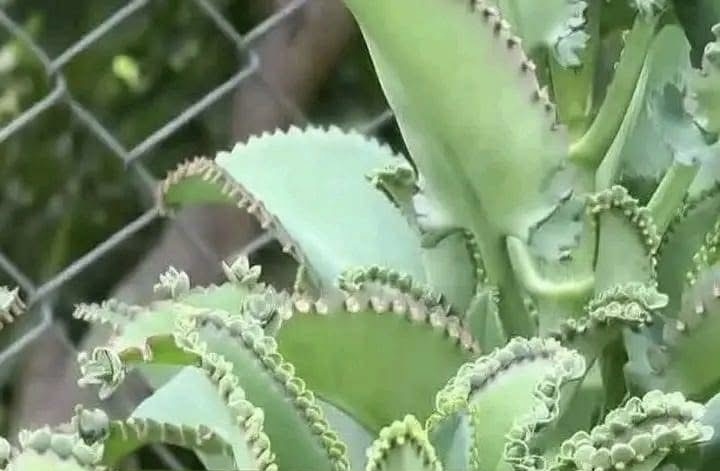
Kalanchoe plants are easy to recognize because of their thick, fleshy leaves and the tiny plantlets that often grow along the edges. These unusual plants have been used in traditional herbal practices in different parts of the world, which has contributed to growing interest in their possible health properties.
However, social media posts sometimes make dramatic claims that a particular Kalanchoe leaf can “destroy cancer” or that doctors are hiding a secret cancer treatment. These claims are not supported by sufficient clinical evidence. While researchers have investigated compounds found in some Kalanchoe species, this is very different from proving that eating the leaves or drinking a homemade preparation can treat or cure cancer.
What Is Kalanchoe?
Kalanchoe is a large group of succulent plants belonging to the Crassulaceae family. Several species have been used traditionally as medicinal plants, and some are known by names such as mother of thousands, mother of millions, or miracle leaf.
The plant in the image has thick green leaves with small plantlets growing around the edges, a characteristic commonly associated with certain Kalanchoe species.
Because different Kalanchoe species can contain different chemical compounds, identifying the exact plant is important before considering any medicinal use. A photograph alone is not always enough to determine the species with certainty.
Why Has Kalanchoe Attracted Scientific Interest?
Kalanchoe species contain various naturally occurring compounds, including flavonoids, phenolic compounds, and other plant chemicals. Some laboratory research has investigated these compounds for antioxidant, antimicrobial, anti-inflammatory, and potentially cytotoxic activities.
The term “cytotoxic” simply means that a substance can damage or kill cells under certain experimental conditions. This does not automatically mean that the substance can selectively destroy cancer cells inside a person.
Many substances can affect cells in a laboratory. Turning such laboratory findings into a safe and effective medicine requires extensive research, including controlled clinical trials in humans.
Can Kalanchoe Cure Cancer?
There is currently no reliable evidence that consuming Kalanchoe leaves can cure cancer.
Cancer is not one single disease. It includes many different diseases involving different tissues, mutations, and biological mechanisms. Treatments therefore vary depending on the type and stage of cancer.
Depending on the specific cancer, established treatments may include surgery, chemotherapy, radiation therapy, targeted therapy, immunotherapy, hormone therapy, or combinations of these approaches.
A homemade herbal preparation should never be used instead of prescribed cancer treatment. Delaying appropriate medical care can allow a serious disease to progress.
What About Antioxidants?
One reason medicinal plants attract attention is their antioxidant content. Antioxidants are compounds that can help counter oxidative processes in the body.
Kalanchoe species contain several phytochemicals that researchers have investigated for antioxidant activity. Nevertheless, antioxidant activity observed in a laboratory does not prove that consuming the plant will prevent or cure cancer.
A balanced diet containing vegetables, fruits, legumes, whole grains, nuts, and other plant foods provides many different naturally occurring compounds and is a more reliable way to support general nutrition.
Why You Should Be Careful With Homemade Kalanchoe Remedies
Natural does not automatically mean safe. Some Kalanchoe species contain bufadienolides and other compounds that may have biological effects on the heart. The concentration of these substances can vary according to the species, plant part, growing conditions, and preparation method.
For this reason, preparing concentrated Kalanchoe drinks, extracts, or remedies at home can be unpredictable.
People should be especially cautious about consuming an unidentified plant. A plant that looks similar to a commonly used herbal species may belong to a different species with different chemical properties.
Traditional Use Is Not the Same as Medical Proof
Traditional medicine can provide interesting clues for scientific research. When a plant has been used for generations, researchers may investigate its chemical composition and potential biological effects.
But traditional use alone cannot establish that a remedy treats a serious disease.
The same distinction applies to laboratory research. A promising experiment may justify further study, but it does not establish that the plant is an effective or safe treatment for people.
This is particularly important when social media posts present preliminary research as if it were a confirmed medical breakthrough.
How Kalanchoe Can Be Appreciated Safely
For most people, Kalanchoe can simply be appreciated as an interesting succulent plant. Its unusual leaf edges and naturally produced plantlets make it a fascinating addition to a garden or indoor plant collection.
If you are interested in herbal medicine, it is better to learn the exact species, understand its known compounds, and consult a qualified healthcare professional before consuming it.
Avoid using unidentified plants as homemade medicines, particularly when the proposed remedy is claimed to treat cancer, heart disease, or another serious condition.
A Better Approach to Cancer Prevention
Instead of searching for a single “miracle leaf,” focus on habits with stronger evidence behind them. Eating a varied diet rich in plant foods, maintaining regular physical activity, avoiding tobacco, protecting the skin from excessive ultraviolet exposure, getting recommended vaccinations, and following appropriate cancer-screening recommendations can all play important roles in overall health.
No individual food or herb can guarantee protection against cancer, but healthy habits can contribute to long-term well-being.
Final Thoughts
Kalanchoe is an interesting medicinal plant that has attracted scientific attention because of its diverse natural compounds. Laboratory research has explored several potential biological activities, but this does not establish Kalanchoe leaves as a cancer treatment.
The claim that a Kalanchoe leaf can “destroy cancer” and that doctors are hiding the remedy is not a scientifically established conclusion. More research is needed to understand the safety and potential medical applications of compounds found in different Kalanchoe species.
For now, treat viral “miracle cure” claims with caution. When it comes to cancer or another serious illness, evidence-based medical care should remain the foundation of treatment, while herbs and traditional remedies should only be considered with appropriate professional guidance.