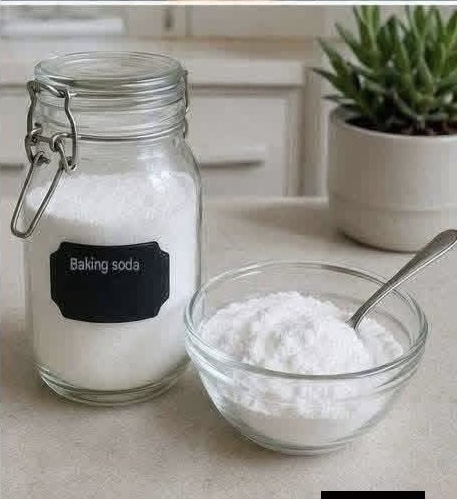
Baking soda is a common household ingredient that has become popular in DIY skincare recipes. Social media posts often claim that baking soda can remove dark spots, reduce wrinkles, brighten the skin, and even make dark circles disappear. While the idea may sound appealing, using a kitchen ingredient directly on your face is not always as harmless as it seems.
Baking soda, also known as sodium bicarbonate, is an alkaline substance. Healthy facial skin naturally has a mildly acidic environment, often called the skin’s acid mantle. Applying strongly alkaline products can interfere with this natural balance and may cause dryness, irritation, redness, or sensitivity. For this reason, baking soda should not be considered a proven treatment for wrinkles, pigmentation, or under-eye circles.
Why Baking Soda Became Popular in Skincare
Baking soda has a fine, powdery texture, which can make it seem useful as a homemade exfoliant. Some DIY recipes recommend mixing it with water, honey, yogurt, lemon juice, or other ingredients and applying the mixture to the face.
The temporary feeling of smoother skin may make people believe that the treatment is working. However, smoother-feeling skin does not necessarily mean that dark spots or wrinkles have been removed.
There is also an important difference between removing surface dead skin and treating the underlying causes of pigmentation or skin aging. Dark spots can develop because of sun exposure, previous acne, inflammation, hormonal changes, or other factors. Wrinkles are associated with the natural aging process and changes in collagen and elastin. A simple household powder cannot reverse these processes.
Baking Soda for Dark Spots
Dark spots, also called hyperpigmentation, can take time to fade. One of the most important steps in preventing them from becoming darker is daily sun protection.
Instead of using baking soda as a spot treatment, consider skincare ingredients that have been studied for uneven skin tone. Depending on your skin type and the cause of pigmentation, products containing niacinamide, vitamin C, azelaic acid, or certain exfoliating acids may be useful.
A broad-spectrum sunscreen is especially important. Without adequate sun protection, pigmentation can persist or become more noticeable even when other skincare products are being used.
Can Baking Soda Reduce Wrinkles?
There is no good evidence that applying baking soda to the face can erase wrinkles. In fact, excessive exfoliation or irritation can make the skin look temporarily dry and more noticeable in texture.
A basic anti-aging skincare routine is usually a better approach. Gentle cleansing, regular moisturizing, and daily sunscreen can help support healthy-looking skin. Products containing retinoids are also widely used for improving the appearance of fine lines, although they should be introduced carefully because they can cause irritation.
For teenagers and younger people, there is generally no need to use strong anti-aging treatments simply because of social media claims. A gentle cleanser, moisturizer, and sunscreen are usually more appropriate basics.
What About Dark Circles Under the Eyes?
The skin around the eyes is particularly delicate. Applying baking soda there can be especially irritating.
Dark circles can have many different causes, including genetics, shadows created by facial structure, lack of sleep, allergies, dehydration, and natural pigmentation. Because the causes vary, there is no single homemade ingredient that can reliably eliminate them.
Avoid putting baking soda directly under or around the eyes. If the area becomes irritated, swollen, painful, or persistently discolored, it is better to speak with a healthcare professional or dermatologist.
A Safer Simple Skincare Routine
If your goal is brighter, smoother-looking skin, you do not need a complicated homemade recipe. Start with a gentle cleanser that does not leave the skin feeling tight or burning.
Follow with a fragrance-free moisturizer suitable for your skin type. During the day, apply a broad-spectrum sunscreen with an appropriate SPF and reapply as directed, particularly when spending time outdoors.
If you want to address dark spots, introduce one targeted skincare ingredient at a time. This makes it easier to determine whether a product is helping or causing irritation.
Most importantly, avoid aggressive scrubbing. Healthy skin does not need to feel scratched or burned to be clean.
What to Remember Before Trying a DIY Face Mask
Natural or inexpensive does not automatically mean safe for facial skin. Baking soda may be useful for many household purposes, but that does not make it an effective facial treatment.
If you have already applied baking soda and your skin feels irritated, rinse it gently with lukewarm water and avoid additional exfoliating products until the irritation settles. Do not combine several strong DIY ingredients in an attempt to make the treatment more powerful.
For persistent dark spots, significant skin changes, or concerns about wrinkles or under-eye pigmentation, professional advice can help identify the actual cause and the most appropriate treatment.
The Bottom Line
Baking soda should not be promoted as a proven recipe for removing wrinkles, dark spots, or dark circles. Although it may leave the skin feeling temporarily smoother, its alkaline nature can disrupt the skin barrier and cause irritation, especially when used repeatedly or around the eyes.
A gentle skincare routine, daily sun protection, adequate moisturization, and carefully selected evidence-based ingredients are more sensible options for maintaining healthy-looking skin. When it comes to facial skincare, gentle and consistent care is generally a better strategy than harsh DIY treatments.