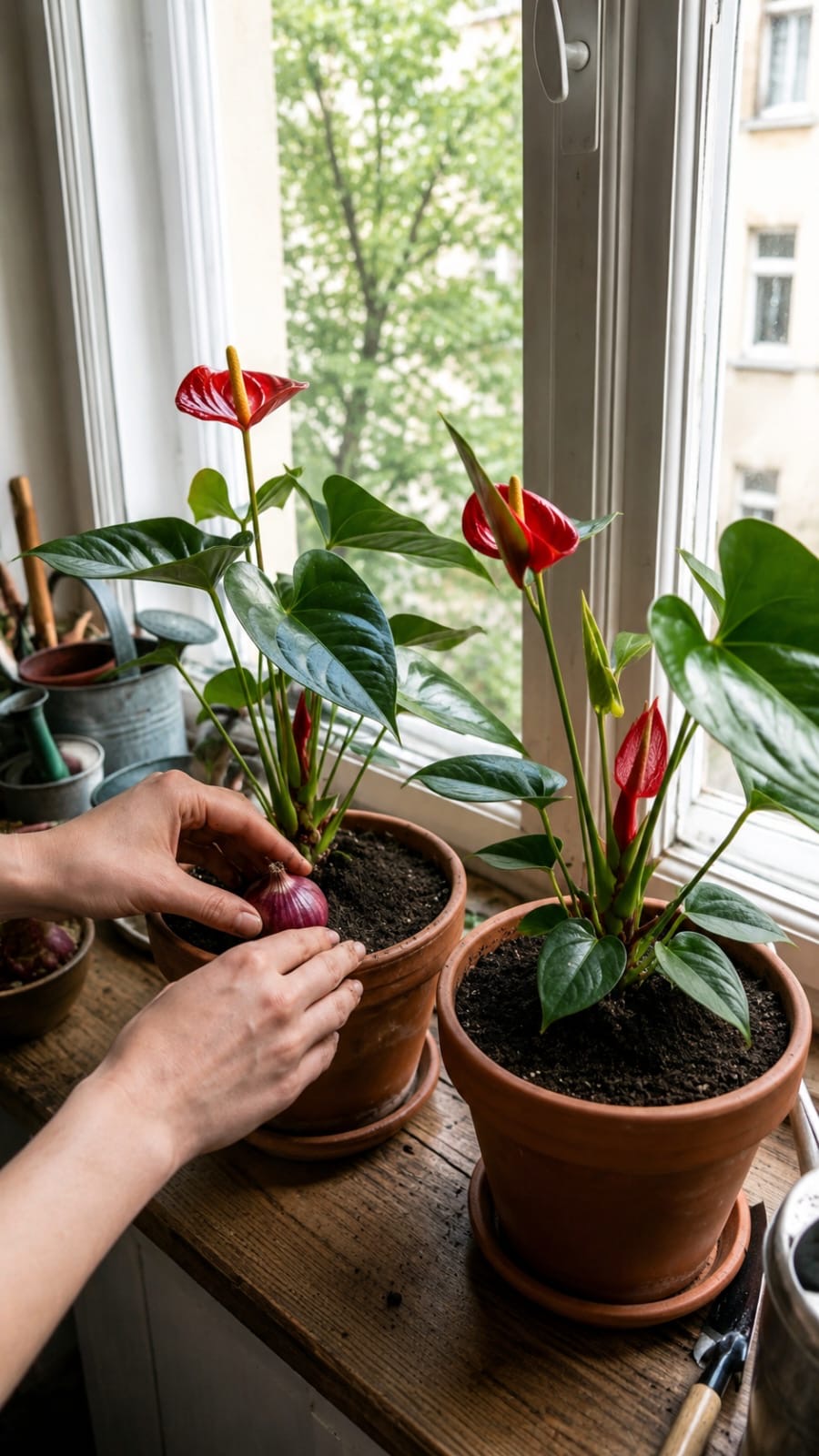
Anthurium is one of the most elegant indoor flowering plants, known for its shiny heart-shaped leaves and long-lasting red, pink, white, or purple blooms. With the right light, watering routine, and soil, it can stay attractive for months and produce fresh flowers throughout the year.
The image may show an onion being placed in the pot, but onion bulbs are not a reliable fertilizer for anthurium. They can break down in moist soil and attract pests. A better approach is to give the plant steady, gentle care with a well-draining potting mix, bright indirect light, and a balanced houseplant fertilizer.
Why Anthurium Is a Beautiful Indoor Plant
Anthurium brings a polished, tropical look to a living room, bedroom, office, or bright kitchen. Its colorful flower-like spathes can last much longer than many common houseplant blooms, while the deep green leaves keep the plant looking full even between flowering cycles.
It grows best when its roots receive air, moisture, and consistent warmth. The goal is not to force rapid blooms, but to build a healthy plant that can flower naturally.
The Best Light for Anthurium Blooms
Bright indirect light is the most important part of anthurium care. Place the pot near an east-facing window, or a few feet back from a bright south- or west-facing window with a sheer curtain.
Too little light can lead to slow growth and fewer blooms. Strong direct afternoon sun can fade the leaves and scorch their edges.
A bright corner beside a window is usually ideal. Rotate the pot a quarter turn every week or two so all sides receive even light.
Use the Right Potting Mix
Anthurium roots prefer a loose, airy mix instead of heavy garden soil. A chunky mixture lets excess water drain away while still holding enough moisture for the roots.
A simple anthurium potting mix can include:
- 2 parts quality indoor potting mix
- 1 part orchid bark
- 1 part perlite
- A small handful of coco coir or peat moss, optional
Always use a pot with drainage holes. Terracotta pots can be especially helpful because they allow the soil to dry more evenly between waterings.
How to Water an Anthurium Properly
Water when the top 1 to 2 inches of soil feels dry. Pour water slowly around the soil until a little drains from the bottom of the pot, then empty the saucer after a few minutes.
Anthuriums enjoy lightly moist soil, but they do not like sitting in water. Letting the roots breathe is just as important as watering them.
During warmer, brighter months, the plant may need water more often. In winter or lower light, allow more time between waterings.
A Gentle Fertilizer Routine for More Flowers
For healthy foliage and better flowering potential, use a balanced liquid houseplant fertilizer diluted to half strength. Apply it every 4 to 6 weeks during spring and summer.
Choose a fertilizer designed for indoor flowering plants or a balanced formula such as 10-10-10 or 20-20-20. Always apply fertilizer to already-moist soil rather than completely dry roots.
Avoid using onion pieces, kitchen scraps, or strong homemade mixtures directly in the pot. They are difficult to measure and can disturb the clean, airy conditions an anthurium needs.
Humidity and Temperature Needs
Anthurium comes from warm tropical environments, so it enjoys average household warmth and moderate humidity.
Keep it in a room between 65°F and 80°F. Avoid placing it beside cold windows in winter, air-conditioning vents, or strong heaters.
If the air is very dry, place the pot near other houseplants, use a small humidifier nearby, or set the plant on a pebble tray with water beneath the pot. The pot should sit above the water, not directly in it.
How to Encourage Healthy New Growth
Wipe the leaves gently with a soft damp cloth every few weeks. Clean leaves absorb light more effectively and make the plant look glossy and fresh.
Remove yellow leaves or spent flower stems with clean scissors. Cut old stems near the base without damaging new growth.
If the plant becomes crowded or roots begin circling the pot, repot it in spring into a container only 1 to 2 inches wider. A pot that is too large can stay wet for too long.
Common Anthurium Care Mistakes
One common issue is overwatering. If leaves turn yellow and the soil stays damp for many days, reduce watering and make sure the pot drains freely.
Another issue is placing the plant in a dark corner. Anthurium can survive in lower light, but bright indirect light helps it keep fuller foliage and produce more blooms.
Using dense soil can also slow the plant down. Refresh the potting mix if it feels compacted or water remains on the surface for a long time.
Best Places to Display an Anthurium
Anthurium looks beautiful on a living-room side table near a filtered window, on a bright home-office desk, or as a centerpiece in a dining area with natural daylight.
For a warm, luxurious display, place it in a simple ceramic or terracotta pot and pair it with smaller leafy plants. The red blooms look especially striking against cream, wood, white, or dark green décor.
Frequently Asked Questions
How often should I water my anthurium?
Water when the top layer of soil feels dry. In many homes, this is about once a week, but always check the soil first.
Why is my anthurium not flowering?
Low light, inconsistent watering, cold temperatures, or lack of nutrients can slow flowering. Move it to brighter indirect light and begin a gentle monthly fertilizer routine during the growing season.
Can anthurium grow near a window?
Yes. A bright window with filtered light is one of the best places for it. Avoid harsh direct sun for long periods.
Should I put onion in anthurium soil?
No. Onion is not a dependable houseplant fertilizer and may decompose in the pot. Use a diluted, balanced liquid fertilizer instead.
How long do anthurium flowers last?
Individual blooms can remain attractive for several weeks or even months when the plant has stable light, moisture, and warmth.
Final Thoughts
A thriving anthurium does not need complicated tricks. Bright indirect light, airy soil, careful watering, gentle fertilizer, and a warm indoor location are enough to keep the leaves glossy and support beautiful blooms.
Give the plant steady care, keep its roots comfortable, and enjoy the rich color and tropical style it brings to your home.