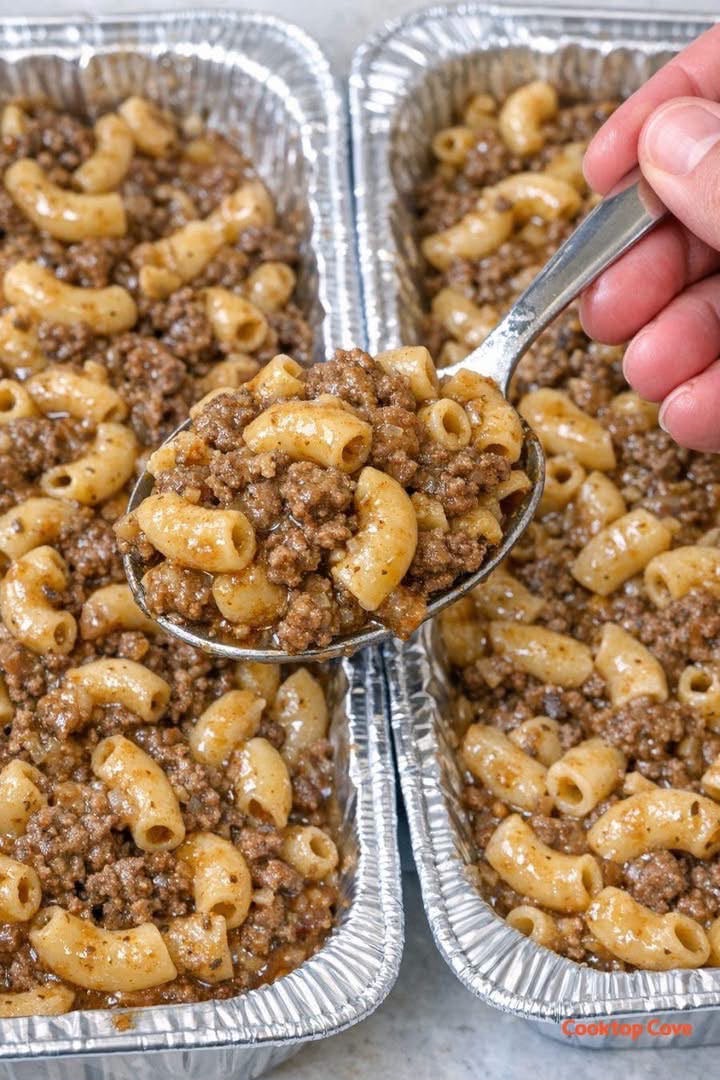
One-Pot Beef and Macaroni is a warm and satisfying family dinner made with seasoned ground beef, tender elbow macaroni, beef broth, tomato sauce, and simple pantry spices.
The pasta cooks directly inside the savory beef sauce, allowing it to absorb flavor while releasing starch that naturally thickens the dish. Every spoonful contains plenty of browned beef and soft macaroni coated with a rich, comforting sauce.
This easy homemade meal delivers the familiar appeal of boxed hamburger pasta while giving you greater control over the ingredients, salt level, texture, and seasoning.
It is perfect for busy weeknights, family dinners, meal preparation, potlucks, and evenings when you need an affordable meal that can feed several people without creating a large pile of dishes.
Why This Recipe Is Popular
Ground beef and macaroni remain a popular combination because the ingredients are affordable, familiar, and filling.
The beef provides savory flavor and protein, while the macaroni absorbs the sauce and creates a comforting texture that children and adults both enjoy.
Preparing the meal in one pot also reduces cleanup. There is no need to boil the pasta separately or prepare a second sauce.
The recipe can be adjusted according to what you already have in the kitchen. You can add cheese, vegetables, beans, cream, tomato sauce, different spices, or leftover cooked meat.
The finished meal also stores and reheats well, making it convenient for lunches or planned leftovers.
Recipe Information
The preparation time is approximately fifteen minutes.
The cooking time is approximately twenty-five to thirty minutes.
The total time is about forty-five minutes.
This recipe provides approximately six generous servings.
Main Ingredients
Ground beef creates the hearty and savory base of the recipe.
Elbow macaroni is small enough to cook evenly inside the sauce and holds the flavorful liquid inside its curved shape.
Onion and garlic provide aroma and depth.
Beef broth gives the pasta enough liquid to cook while strengthening the beef flavor.
Tomato sauce adds color, acidity, and moisture.
Worcestershire sauce creates a deeper savory taste.
Paprika, onion powder, Italian seasoning, salt, and black pepper provide balanced seasoning.
Cheddar cheese may be added for a creamy cheeseburger-style variation.
Ingredients
You will need one and a half pounds of ground beef.
You will also need one medium yellow onion finely chopped and four garlic cloves minced.
For the pasta and sauce, use two cups of dry elbow macaroni, two and a half cups of low-sodium beef broth, one fifteen-ounce can of tomato sauce, and one tablespoon of tomato paste.
For seasoning, use one tablespoon of Worcestershire sauce, one teaspoon of paprika, one teaspoon of onion powder, one teaspoon of Italian seasoning, half a teaspoon of salt, and half a teaspoon of black pepper.
You may also add one cup of shredded cheddar cheese, half a cup of heavy cream, or chopped parsley before serving.
The Best Ground Beef to Use
Ground beef containing approximately fifteen percent fat creates a flavorful dish without producing an excessive amount of grease.
An eighty-five-percent lean blend is a dependable choice because it remains moist while browning well.
Ground chuck also works beautifully and provides a rich beef flavor.
Very lean ground beef may become dry and may require a small amount of oil during cooking.
When using a fattier blend, drain most of the grease after browning. Leave only a small amount in the pan because it helps flavor the onions and sauce.
Ground beef should be cooked until it reaches an internal temperature of 160°F.
Choosing the Best Pasta
Elbow macaroni is the traditional choice for this recipe.
Its small shape cooks quickly and distributes evenly through the ground beef.
Small shells, rotini, mini penne, or cavatappi may also be used.
Larger pasta shapes generally need more liquid and additional cooking time.
Whole-wheat pasta can work, but it may absorb broth differently and remain firmer.
Gluten-free pasta can also be used, although it should be checked early because some varieties become soft quickly.
Why Low-Sodium Broth Is Recommended
Beef broth, Worcestershire sauce, tomato sauce, cheese, and packaged seasonings can all contain sodium.
Using low-sodium broth allows you to control the final flavor.
It is easier to add salt after the pasta has cooked than to correct an overly salty dish.
When regular broth is used, reduce or leave out the additional salt until the meal is finished.
Chicken broth or vegetable broth can replace beef broth, although the flavor will become lighter.
Prepare the Ingredients Before Cooking
Chop the onion into small, even pieces.
Mince the garlic finely.
Measure the macaroni, broth, tomato sauce, tomato paste, Worcestershire sauce, and seasonings before heating the pan.
One-pot pasta cooks quickly once the liquid is added, so preparing everything in advance makes the process easier.
Keep the dry macaroni separate until the sauce is ready.
Choose the Right Pot
Use a large, deep skillet, Dutch oven, or heavy saucepan with a lid.
The pan should provide enough room for the beef, sauce, and expanding pasta.
A pan that is too small may overflow or prevent the macaroni from cooking evenly.
A heavy-bottomed pot distributes heat more evenly and reduces the risk of the sauce sticking or burning.
Brown the Ground Beef
Place the pot over medium-high heat.
Add the ground beef and break it into medium crumbs with a wooden spoon or spatula.
Allow part of the meat to remain undisturbed for a short time so it can develop browned edges.
Continue cooking and stirring until no pink meat remains.
Browning creates deeper flavor than simply steaming the meat.
Drain excessive grease carefully before adding the onion.
Cook the Onion
Add the chopped onion to the browned beef.
Cook for approximately four to five minutes.
Stir regularly until the onion becomes soft and slightly translucent.
The onion will absorb some of the beef flavor remaining inside the pot.
When the pan looks very dry, add one teaspoon of oil or butter.
Avoid cooking the onion over excessively high heat because it may burn before becoming tender.
Add the Garlic
Add the minced garlic and cook for approximately thirty seconds.
Stir continuously.
Garlic becomes fragrant very quickly and can develop a bitter flavor when burned.
Do not add the liquid before the garlic has had a brief opportunity to cook in the warm beef mixture.
Add the Tomato Paste
Stir the tomato paste into the beef.
Cook it for approximately one minute.
Briefly cooking tomato paste removes some of its raw flavor and creates a deeper, slightly caramelized taste.
Spread it across the bottom of the pan and stir until the beef is evenly coated.
Add the Seasonings
Add the paprika, onion powder, Italian seasoning, salt, and black pepper.
Stir until the spices are distributed throughout the beef.
The warm pan helps release their aroma.
Add crushed red pepper flakes when you want gentle heat.
For a smoky variation, use smoked paprika instead of sweet paprika.
Add the Sauce Ingredients
Pour the tomato sauce and Worcestershire sauce into the pot.
Stir carefully and scrape the browned pieces from the bottom.
Those caramelized pieces contain concentrated beef flavor.
Add the beef broth and stir again until the sauce appears evenly combined.
The mixture may look thin at this stage, but the pasta will absorb much of the liquid.
Add the Dry Macaroni
Pour the uncooked elbow macaroni directly into the sauce.
Stir until every piece is submerged or coated with liquid.
Bring the mixture to a gentle boil.
Do not allow it to boil aggressively because the liquid may evaporate before the pasta becomes tender.
Simmer the Pasta
Reduce the heat to medium-low.
Cover the pot and allow the macaroni to simmer gently.
Stir every few minutes so the pasta does not stick to the bottom or clump together.
The macaroni generally requires approximately twelve to fifteen minutes, depending on the brand and shape.
Replace the lid after stirring so the liquid does not evaporate too quickly.
Adjust the Liquid While Cooking
Check the pasta near the ten-minute mark.
When it remains firm and the sauce has become very thick, add another small amount of warm broth or water.
Add approximately one-quarter cup at a time.
When the pasta is nearly tender but the sauce remains thin, remove the lid and simmer for several minutes.
The sauce will also thicken slightly as the dish rests.
How to Know When the Macaroni Is Ready
The pasta should feel tender but should not fall apart.
Taste one piece before removing the pot from the heat.
The sauce should coat the macaroni and beef without looking dry.
There should be enough moisture to keep the dish creamy after resting.
Avoid cooking until every drop of sauce disappears because the pasta continues absorbing liquid as it cools.
Add Cheese When Desired
For a cheesier homemade hamburger-helper version, reduce the heat to Low.
Add one cup of freshly shredded cheddar gradually.
Stir after every addition until the cheese melts.
Monterey Jack, Colby Jack, mozzarella, or a Mexican cheese blend may also be used.
Avoid boiling the dish after adding cheese because excessive heat can create a greasy or grainy texture.
Add Cream for a Richer Sauce
For a creamier texture, stir in half a cup of heavy cream, half-and-half, or evaporated milk after the macaroni becomes tender.
Keep the heat low.
The cream softens the tomato flavor and creates a smoother sauce.
Cream cheese can also be used. Soften it and add small pieces gradually until fully incorporated.
Allow the Dish to Rest
Remove the pot from the heat.
Cover it and allow the beef and macaroni to rest for approximately five minutes.
The pasta will absorb a little more sauce, and the mixture will become thicker.
Stir before serving.
When it becomes too thick, add a small splash of warm broth, milk, or water.
Taste and Adjust the Seasoning
Taste the finished dish before adding more salt.
Add black pepper, Worcestershire sauce, garlic powder, paprika, or Italian seasoning according to preference.
A small splash of vinegar or lemon juice can brighten the flavor when the sauce tastes heavy.
Add only a small amount because the tomato sauce already provides acidity.
How to Serve Beef and Macaroni
Serve the meal hot inside shallow bowls.
Finish each portion with shredded cheese, chopped parsley, green onion, or black pepper.
Ground beef macaroni pairs well with green salad, roasted broccoli, green beans, peas, corn, carrots, or garlic bread.
Because the recipe already contains beef and pasta, a light vegetable side creates a balanced dinner.
Simple Recipe Overview
Brown the ground beef inside a large pot.
Cook the onion and garlic with the meat.
Add tomato paste, seasonings, tomato sauce, Worcestershire sauce, and beef broth.
Stir in the dry elbow macaroni.
Cover and simmer until the pasta becomes tender.
Adjust the liquid when necessary.
Add cheese or cream if desired and allow the meal to rest before serving.
Tips for the Best Beef Macaroni
Use ground beef containing enough fat for good flavor.
Drain excessive grease after browning.
Cook the tomato paste briefly before adding liquid.
Use low-sodium broth.
Stir the pasta regularly while it simmers.
Add additional liquid gradually.
Stop cooking while the dish still contains some sauce.
Add cheese over low heat.
Allow the completed meal to rest before serving.
Common Mistakes to Avoid
Do not use a pot that is too small.
Avoid leaving excessive beef grease inside the meal.
Do not add too much salt before the pasta cooks.
Avoid boiling the sauce aggressively.
Do not leave the macaroni unstirred for a long period.
Avoid cooking until the pasta becomes mushy.
Do not add cheese while the sauce is boiling strongly.
Do not allow the finished dish to sit uncovered for too long before serving.
Cheesy Hamburger Helper-Style Macaroni
For a creamy cheeseburger-style meal, add two cups of shredded cheddar after the pasta becomes tender.
Stir over low heat until smooth.
Add half a cup of evaporated milk or heavy cream when you want a looser sauce.
A small amount of mustard can strengthen the cheeseburger flavor.
Serve with pickles, green onions, or chopped tomato.
Classic American Goulash
For American-style goulash, increase the tomato sauce and add one can of diced tomatoes.
Include oregano, basil, paprika, and Worcestershire sauce.
Some versions also contain bell peppers.
The finished meal should remain saucy and tomato-forward.
Serve it with Parmesan, cheddar, bread, or salad.
Creamy Beef and Macaroni
Leave out part of the tomato sauce and add cream cheese, sour cream, or heavy cream near the end.
Keep the heat low while adding dairy.
This creates a milder and richer meal.
Mushrooms, peas, spinach, or broccoli work especially well with a creamy beef sauce.
Taco Beef Macaroni
Replace the Italian seasoning with taco seasoning.
Add diced green chilies, corn, black beans, or salsa.
Use cheddar, Monterey Jack, or a Mexican cheese blend.
Serve the completed macaroni with sour cream, avocado, cilantro, green onion, or crushed tortilla chips.
Reduce the additional salt because taco seasoning may already contain sodium.
Chili Mac
Add chili powder, cumin, paprika, and drained beans.
Use tomato sauce and diced tomatoes for a thicker chili-style base.
Cheddar cheese can be stirred in or sprinkled over each serving.
This version combines homemade chili with tender macaroni and is especially comforting during colder weather.
Barbecue Beef Macaroni
Replace part of the tomato sauce with thick barbecue sauce.
Add smoked paprika and a small amount of mustard.
Use cheddar or smoked Gouda.
The sweet and smoky sauce works well with ground beef and pasta.
Serve with coleslaw, pickles, or roasted corn.
Bacon Cheeseburger Macaroni
Cook six slices of bacon until crisp.
Drain and crumble them.
Stir half into the finished beef macaroni and sprinkle the remaining bacon over the top.
Add cheddar, mustard, and chopped pickles when desired.
Reduce the salt because bacon and cheese already contain sodium.
Mushroom Beef Macaroni
Slice eight ounces of mushrooms.
Cook them with the ground beef until their moisture evaporates and their edges begin browning.
Add garlic, broth, Worcestershire sauce, and pasta.
Mushrooms provide a deeper savory flavor and help increase the volume of the meal.
A small amount of cream can create a stroganoff-inspired variation.
Beef Stroganoff Macaroni
Leave out the tomato sauce or reduce it significantly.
Use beef broth, mushrooms, garlic, onion, paprika, and Worcestershire sauce.
After the pasta becomes tender, remove the pot from strong heat.
Stir in sour cream gradually.
Do not boil the sauce after adding sour cream because it may separate.
Vegetable Beef Macaroni
Add finely chopped bell peppers, carrots, zucchini, mushrooms, spinach, or peas.
Cook firm vegetables with the onion.
Add soft vegetables near the end.
Remove excess moisture from zucchini or spinach when necessary.
This variation increases the number of servings and adds more color.
Ground Turkey Macaroni
Ground turkey can replace the beef.
Choose a blend containing some dark meat for better moisture.
Cook turkey until it reaches 165°F.
Add another small amount of Worcestershire sauce, paprika, or oil when the meat appears dry.
Cheddar and tomato sauce pair well with turkey.
Ground Chicken Macaroni
Ground chicken creates a lighter dish.
Cook it with onion, garlic, paprika, and herbs until it reaches 165°F.
Avoid cooking it for too long before adding the liquid.
Chicken broth may replace beef broth.
Add cream, Parmesan, or mozzarella for a mild and comforting version.
Sausage and Macaroni
Replace part or all of the ground beef with Italian sausage or breakfast sausage.
Remove the casing when necessary.
Cook and drain the sausage thoroughly.
Italian sausage pairs well with tomato sauce, garlic, basil, and mozzarella.
Breakfast sausage works well with cheddar and a creamy sauce.
Vegetarian Macaroni
Replace the ground beef with cooked lentils, mushrooms, beans, or plant-based meat crumbles.
Use vegetable broth.
Brown mushrooms thoroughly to create deeper flavor.
Add tomato sauce, herbs, and pasta according to the original method.
Cheese may be added when suitable for your dietary preferences.
Gluten-Free Beef Macaroni
Use a sturdy gluten-free elbow pasta.
Check the package cooking time because gluten-free pasta can soften quickly.
Add it near the end when necessary.
Stir gently to prevent breaking.
Check that the broth, Worcestershire sauce, tomato sauce, and seasonings are labeled gluten-free.
Dairy-Free Beef Macaroni
The tomato-based version can be prepared without dairy.
Leave out the cheese and cream.
Use nutritional yeast or dairy-free shredded cheese when desired.
Check the Worcestershire sauce ingredients according to your dietary needs.
The beef, tomato, garlic, and herb sauce remains flavorful without dairy.
What to Serve With Beef Macaroni
Serve the dish with green salad, Caesar salad, roasted broccoli, green beans, peas, carrots, corn, or sautéed cabbage.
Garlic bread, dinner rolls, biscuits, or cornbread are also good choices.
Pickles or cucumber salad provide a fresh and acidic contrast.
For a larger family dinner, serve smaller portions beside roasted vegetables.
Serving It for a Potluck
Prepare the macaroni shortly before leaving.
Transfer it to a covered slow cooker set to Warm.
Add a small amount of broth before serving when the pasta absorbs too much sauce.
Stir occasionally.
Do not keep the dish heated for many hours because the pasta will continue softening.
Provide shredded cheese and green onions separately.
Meal-Prep Instructions
Allow the completed meal to cool slightly.
Divide it between airtight containers.
Add vegetables or salad separately when desired.
Refrigerate for up to four days.
The macaroni will continue absorbing sauce during storage.
Add one or two tablespoons of broth, water, milk, or tomato sauce before reheating.
How to Store Leftovers
Transfer cooled beef and macaroni to an airtight container.
Refrigerate for up to four days.
Do not leave the dish at room temperature for longer than two hours.
During hot weather, refrigerate it sooner.
Store it with enough sauce to keep the pasta moist.
Discard leftovers that develop an unusual smell, appearance, or texture.
How to Reheat Beef Macaroni
Place the desired portion inside a saucepan or skillet.
Add a small splash of broth, water, milk, or tomato sauce.
Warm over medium-low heat while stirring gently.
Microwave individual portions in short intervals.
Cover loosely and stir between intervals for even heating.
Avoid overheating because the pasta may become soft and the beef may dry out.
Can You Freeze Beef and Macaroni?
Yes, although the pasta may become slightly softer after thawing.
Cool the meal completely.
Place it inside a freezer-safe container.
Freeze for up to two months.
Thaw overnight inside the refrigerator.
Reheat gently with additional broth or sauce.
For the best texture, slightly undercook the macaroni when preparing a batch specifically for freezing.
Freezing the Beef Sauce Separately
For a fresher pasta texture, prepare and freeze only the ground-beef sauce.
Leave out the macaroni.
Cool the sauce and freeze it for up to three months.
Thaw and reheat it inside a pot.
Add fresh broth and dry macaroni, then simmer according to the recipe.
This method produces a texture closer to a freshly prepared meal.
Make-Ahead Instructions
The ground-beef sauce can be prepared one day in advance.
Cool and refrigerate it.
When ready to serve, reheat the sauce and add the broth and dry macaroni.
Cook until tender.
Avoid preparing the complete pasta dish too far ahead because the noodles continue absorbing moisture.
Why Is My Macaroni Mushy?
The pasta cooked for too long or remained inside the hot sauce for an extended period.
Begin checking it before the package’s suggested time.
Remove the pot from the heat while the macaroni is just tender.
Serve soon after the resting period.
When preparing leftovers, undercook the pasta slightly.
Why Is the Pasta Still Firm?
The sauce may not contain enough liquid.
Add warm broth or water approximately one-quarter cup at a time.
Cover the pot and continue simmering.
Stir regularly so the macaroni cooks evenly.
Keep the heat gentle to prevent the liquid from evaporating too quickly.
Why Is the Dish Too Dry?
The pasta absorbed more liquid than expected.
Stir in warm broth, tomato sauce, milk, or cream.
Add only a small amount at a time.
The dish should remain slightly saucy because it continues thickening while resting.
Different pasta brands may require different amounts of liquid.
Why Is the Dish Too Soupy?
Remove the lid and simmer gently for several minutes.
Stir frequently.
The pasta will absorb more liquid as it rests.
Cheese can also thicken the sauce.
Avoid adding dry flour directly because it may create lumps.
Why Is My Beef Greasy?
The ground beef may contain a high percentage of fat.
Drain most of the grease after browning.
Use an eighty-five- or ninety-percent lean blend when you prefer less fat.
Do not remove every trace because a small quantity helps flavor the sauce.
Why Does the Sauce Taste Flat?
Add another small amount of Worcestershire sauce, black pepper, garlic powder, paprika, tomato paste, or Italian seasoning.
A small splash of vinegar can brighten the flavor.
Taste after every addition.
Fresh parsley or green onion can also add freshness before serving.
Why Is the Dish Too Salty?
Broth, Worcestershire sauce, tomato sauce, cheese, and seasoning blends may all contain sodium.
Use low-sodium broth and add salt gradually.
Stir in additional unsalted tomato sauce, cooked pasta, or broth when necessary.
Serving the dish with plain vegetables or bread can also balance the saltiness.
Why Is the Cheese Sauce Grainy?
The heat may have been too high when the cheese was added.
Reduce the burner to Low or remove the pot from direct heat.
Use freshly shredded cheese rather than packaged cheese containing anti-caking ingredients.
Add it gradually while stirring.
Avoid boiling after the cheese melts.
Can I Cook the Pasta Separately?
Yes.
Cook the macaroni until barely al dente.
Drain it and stir it into the completed beef sauce.
This method provides greater control over the pasta texture.
Reduce the broth in the sauce because the dry pasta will not be absorbing it.
Can I Use Leftover Cooked Beef?
Yes.
Cook the onion and garlic first.
Add the leftover beef with the sauce ingredients.
Bring everything to a simmer before adding the dry macaroni.
Pot roast or shredded beef can also be chopped and used.
Reduce the cooking time because the meat only needs to heat through.
Can I Double the Recipe?
Yes.
Use a very large Dutch oven.
Brown the beef in several batches so it develops color rather than steaming.
Add the pasta and liquid only when there is enough room for stirring.
You may need additional cooking time.
Add salt gradually because doubled recipes do not always require exactly twice the seasoning.
Final Thoughts
One-Pot Beef and Macaroni is an easy and affordable family dinner made with seasoned ground beef, tender elbow pasta, tomato sauce, broth, onion, garlic, and simple pantry spices.
Cooking the macaroni directly inside the beef sauce allows it to absorb flavor while naturally thickening the meal.
For the best result, brown the beef well, drain excessive grease, and use low-sodium broth.
Stir the pasta regularly and add extra liquid only when necessary.
Remove the pot from the heat while the macaroni remains tender and slightly saucy.
Customize the recipe with cheddar, cream, vegetables, beans, taco seasoning, barbecue sauce, mushrooms, bacon, or different ground meats.
This dependable homemade meal is perfect for busy weeknights, family dinners, meal preparation, potlucks, and affordable comfort-food cooking.