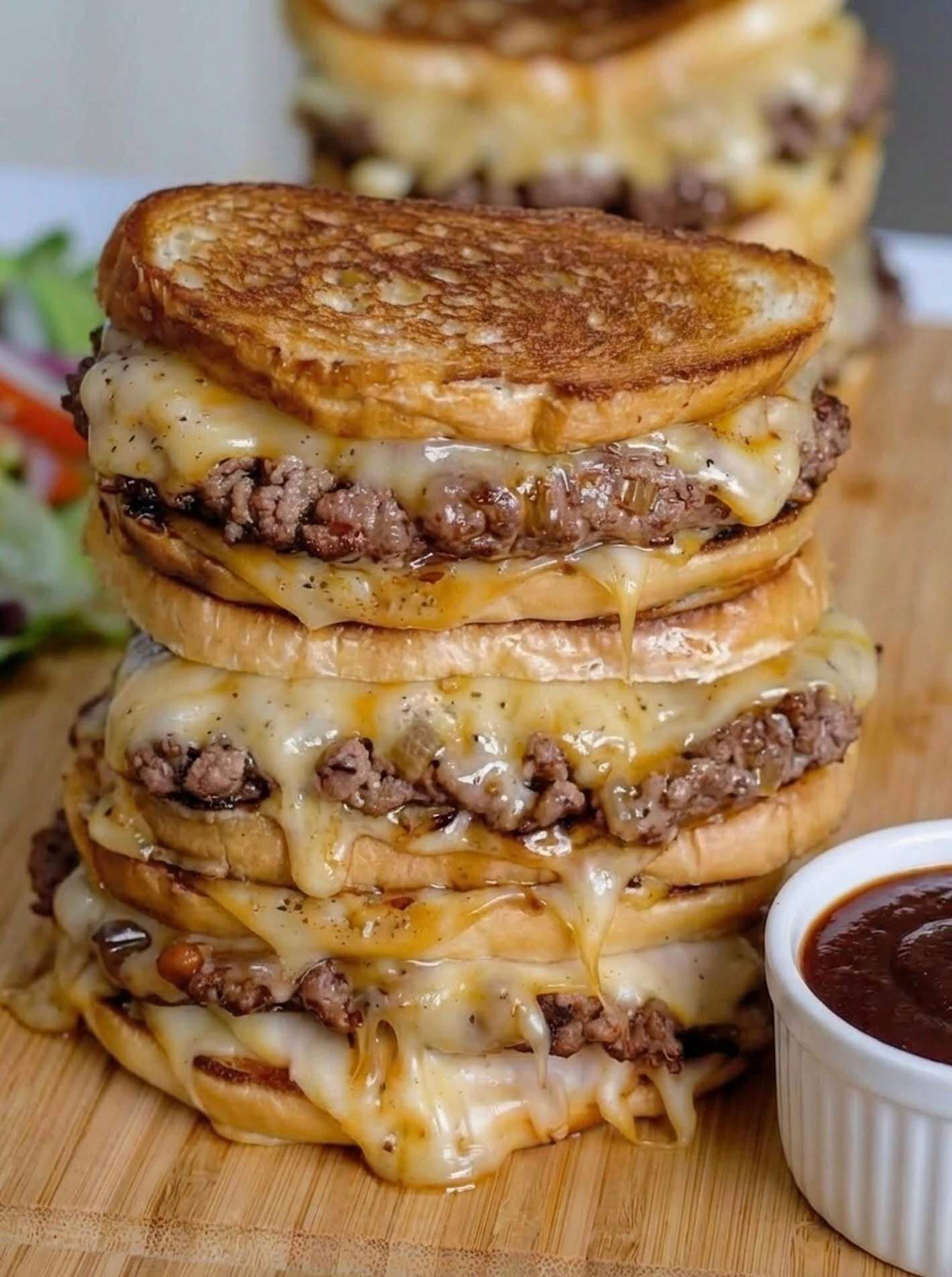
Cheesy Ground Beef Patty Melt Sandwiches combine juicy seasoned beef, sweet caramelized onions, melted cheese, and crisp buttery bread in one comforting meal.
Each sandwich is cooked slowly inside a skillet until the bread becomes deeply golden and crunchy. The cheese melts around the hot beef and onions, holding everything together and creating the rich, stretchy texture shown in the image.
A patty melt has the satisfying flavor of a cheeseburger but replaces the traditional soft bun with toasted sandwich bread. The result is crispy on the outside, juicy in the middle, and filled with savory flavor.
This easy homemade recipe is perfect for family dinners, weekend lunches, game-day meals, casual gatherings, or evenings when you want restaurant-style comfort food without leaving home.
Why This Recipe Is Popular
Patty melts are popular because they combine several familiar favorites inside one sandwich.
The beef provides a hearty and savory center. Caramelized onions add sweetness, while melted cheese creates richness and helps the filling stay in place.
Cooking the sandwich in butter transforms ordinary bread into a crisp golden crust.
The recipe is also flexible. You can use different cheeses, add mushrooms, prepare a spicy version, include bacon, or change the sauce according to your preferences.
Patty melts can be prepared in a skillet, on a griddle, or inside a sandwich press. They are easy to serve with fries, soup, salad, onion rings, pickles, or dipping sauce.
Recipe Information
The preparation time is approximately twenty minutes.
The onions require approximately twenty-five to thirty minutes to caramelize properly.
The beef and sandwiches require approximately twenty additional minutes.
The total time is about one hour.
This recipe produces approximately six large sandwiches.
Main Ingredients
Ground beef forms the juicy center of each sandwich.
Yellow onions cook slowly until soft, sweet, and deeply golden.
Sourdough, rye, or thick white bread creates a strong exterior that supports the heavy filling.
Provolone, Swiss, American, mozzarella, or cheddar cheese melts around the meat and onions.
Butter helps the bread become crisp and golden.
Worcestershire sauce, garlic powder, onion powder, salt, and black pepper give the beef a deeper savory flavor.
A simple burger-style sauce can be added for moisture and a slightly tangy finish.
Ingredients
You will need approximately two pounds of ground beef containing fifteen to twenty percent fat.
You will also need two large yellow onions, twelve slices of sturdy sandwich bread, twelve to eighteen slices of cheese, and approximately six tablespoons of softened butter.
For seasoning the beef, use one tablespoon of Worcestershire sauce, one teaspoon of garlic powder, one teaspoon of onion powder, one teaspoon of salt, half a teaspoon of paprika, and half a teaspoon of black pepper.
For cooking the onions, use two tablespoons of butter or oil and a small pinch of salt.
For an optional sauce, combine mayonnaise, ketchup, mustard, and a small amount of pickle juice.
Choosing the Best Ground Beef
Ground chuck containing approximately twenty percent fat provides excellent flavor and moisture.
Very lean ground beef can become dry, especially because it cooks once inside the skillet and continues heating after the sandwich is assembled.
An eighty-five-percent lean blend is another good option when you want slightly less fat while preserving enough moisture.
Ground sirloin may also be used, but it benefits from a small amount of butter or oil during cooking.
Drain excessive grease after browning the meat, but do not remove every trace of fat. A small amount helps keep the filling flavorful.
The Best Bread for Patty Melts
Rye bread is traditional and gives the sandwich a slightly earthy flavor.
Sourdough provides a crisp crust and a light tanginess that balances the rich beef and cheese.
Texas toast or thick white bread creates a softer and more familiar grilled-cheese texture.
Avoid very thin or fragile bread because the meat, onions, sauce, and cheese create a heavy filling.
Choose slices that are similar in size so the sandwiches cook evenly and are easy to assemble.
Slightly dry bread often toasts better than extremely fresh and soft bread.
Choosing the Best Cheese
Provolone melts smoothly and creates a mild, savory flavor.
Swiss cheese is traditional in many patty melts and pairs especially well with caramelized onions.
American cheese melts exceptionally well and gives the sandwich a classic diner-style texture.
Mozzarella creates long cheese pulls but has a milder flavor.
Cheddar adds a stronger and sharper taste.
A combination of provolone and cheddar or Swiss and American provides both flavor and excellent melting.
Use two or three slices per sandwich when you want the generous cheese layer shown in the photograph.
Why Caramelized Onions Matter
Caramelized onions are one of the most important parts of a classic patty melt.
Slow cooking removes their sharp raw flavor and brings out their natural sweetness.
Properly cooked onions become soft, golden brown, and deeply savory.
Rushing this step over high heat can burn the outside while leaving the inside firm.
Cooking the onions slowly allows their moisture to evaporate gradually and creates a richer flavor that balances the beef and cheese.
Slice the Onions
Peel the onions and cut them in half from top to bottom.
Slice each half into thin strips.
Try to keep the slices similar in thickness.
Extremely thin pieces may burn before the larger pieces soften.
Separate the onion layers gently with your hands.
Two large onions may appear like a large quantity at first, but they shrink considerably during cooking.
Caramelize the Onions
Heat two tablespoons of butter or oil inside a large skillet over medium-low heat.
Add the sliced onions and a small pinch of salt.
Cook slowly while stirring every few minutes.
The onions will first soften and release moisture. They will then begin turning light gold before developing a deeper brown color.
This process usually takes twenty-five to thirty minutes.
When the skillet becomes dry before the onions are ready, add one or two tablespoons of water and scrape the browned pieces from the surface.
Remove the onions when they are soft, golden, and sweet.
Prepare the Ground Beef
Place the ground beef inside a large mixing bowl.
Add Worcestershire sauce, garlic powder, onion powder, paprika, salt, and black pepper.
Mix gently using clean hands or a fork.
Avoid squeezing or overworking the meat because this can create a dense and firm texture.
The seasoning should be evenly distributed without compressing the beef into a solid mass.
Choose Between Patties and Crumbled Beef
The beef can be shaped into thin patties or cooked as loose crumbles.
Thin patties create a traditional patty melt and make the sandwich easier to hold.
Crumbled beef creates the appearance shown in the image and allows cheese to melt between the small pieces.
For patties, divide the beef into six equal portions and shape each portion slightly larger than the bread.
For crumbled beef, break the meat into small pieces while it cooks and keep some larger chunks for texture.
Cook Thin Beef Patties
Heat a skillet or griddle over medium-high heat.
Place the patties inside without overcrowding the surface.
Cook until the underside becomes deeply browned.
Turn the patties and cook the second side until the centers reach a safe temperature.
Ground beef should reach an internal temperature of 160°F.
Transfer the cooked patties to a plate and cover them loosely while assembling the sandwiches.
Cook Crumbled Ground Beef
Place the ground beef inside a hot skillet.
Allow part of the meat to brown before stirring.
Break it into medium pieces with a wooden spoon or spatula.
Continue cooking until no pink meat remains and the beef reaches 160°F.
Drain most of the excess grease.
Add a small amount of Worcestershire sauce or black pepper after cooking when the flavor needs adjustment.
Mix some of the caramelized onions into the meat or keep them separate for layering.
Prepare the Optional Sauce
Combine mayonnaise with ketchup and mustard inside a small bowl.
Add a teaspoon of pickle juice or Worcestershire sauce.
Stir until smooth.
The sauce should taste creamy, lightly tangy, and slightly sweet.
Spread only a thin amount over the inner surfaces of the bread.
Too much sauce can make the sandwich slippery and may prevent the bread from becoming crisp.
The sauce can also be served separately for dipping.
Butter the Bread
Spread softened butter over one side of every bread slice.
Cover the surface from edge to edge.
The buttered sides will become the outside of each sandwich.
Softened butter spreads more evenly than cold butter and reduces the chance of tearing the bread.
Mayonnaise can replace butter on the outside when you want an especially even golden crust.
Do not use an excessive amount because too much fat can make the bread greasy rather than crisp.
Assemble the Sandwiches
Place one bread slice with the buttered side facing downward.
Add one slice of cheese.
Place a thin beef patty or a generous portion of cooked crumbled beef over the cheese.
Add caramelized onions.
Place one or two additional cheese slices over the filling.
Finish with the second bread slice, keeping its buttered side facing upward.
The cheese on both sides helps hold the beef and onions inside the sandwich.
Avoid creating an extremely thick filling because the bread may burn before the center becomes hot.
Heat the Skillet
Place a large skillet or griddle over medium-low or medium heat.
Allow it to warm gradually.
Cooking over excessively high heat can burn the bread before the cheese melts.
A cast-iron skillet provides steady heat and creates an evenly browned crust.
A nonstick skillet works well for beginners and makes turning the sandwiches easier.
Cook the First Side
Place one or two assembled sandwiches inside the skillet.
Do not overcrowd the pan.
Cook for approximately three to five minutes.
Press very lightly with a spatula to keep the bread in contact with the hot surface.
Do not flatten the sandwich aggressively because the filling may escape.
Lift one corner to check the color.
Turn the sandwich when the underside becomes evenly golden brown.
Turn the Sandwich Carefully
Slide a wide spatula completely beneath the sandwich.
Hold the top gently with a second spatula when necessary.
Turn it in one smooth motion.
Cook the second side for another three to five minutes.
Reduce the heat when the bread darkens too quickly.
The sandwich is ready when both sides are crisp and the cheese has melted around the beef.
Help the Cheese Melt
When the bread is golden but the cheese remains firm, reduce the heat.
Add one teaspoon of water to an empty section of the skillet.
Cover the pan immediately for approximately thirty seconds.
The steam will help melt the cheese.
Avoid pouring water directly onto the sandwich.
Remove the cover and allow the bread to crisp again briefly before transferring the sandwich.
Allow the Sandwiches to Rest
Place the cooked sandwiches on a cutting board or wire rack.
Allow them to rest for approximately two to three minutes.
The cheese will remain melted but will become slightly more stable.
Cutting immediately may cause the hot filling to slide out.
Use a sharp serrated knife and cut each sandwich diagonally or straight through the center.
Simple Recipe Overview
Caramelize sliced onions slowly until soft and golden.
Season and cook the ground beef until it reaches 160°F.
Prepare the optional sandwich sauce.
Butter the outside of every bread slice.
Layer cheese, beef, onions, and additional cheese between the bread.
Cook the sandwiches over medium-low heat until both sides are golden.
Allow them to rest briefly before cutting and serving.
Tips for the Best Patty Melts
Use ground beef containing enough fat to remain juicy.
Cook the onions slowly instead of rushing them.
Choose sturdy bread and a cheese that melts smoothly.
Place cheese on both sides of the beef filling.
Cook over moderate heat so the bread browns while the cheese melts.
Avoid overfilling the sandwiches.
Turn them carefully with a wide spatula.
Serve them shortly after cooking for the crispiest texture.
Common Mistakes to Avoid
Do not cook the onions over very high heat.
Avoid overworking the ground beef.
Do not use bread that is too thin for the filling.
Avoid adding a large amount of wet sauce.
Do not cook the sandwiches over excessively high heat.
Avoid pressing them until the filling escapes.
Do not cut the sandwiches immediately after removing them from the skillet.
Classic Diner-Style Patty Melt
For a classic diner-style version, use rye bread, thin beef patties, caramelized onions, and Swiss cheese.
Spread a light amount of butter over the outside of each bread slice.
Cook the sandwich slowly until the rye becomes crisp and the Swiss cheese melts completely.
Serve it with pickles, French fries, and a small bowl of burger sauce.
Double-Cheese Patty Melt
Use two different cheeses inside every sandwich.
Place American cheese below the beef and provolone or cheddar above it.
American cheese provides excellent melting, while the second cheese adds a stronger flavor.
Keep the beef layer moderate so the additional cheese does not make the sandwich excessively thick.
Mushroom Swiss Patty Melt
Slice mushrooms and cook them inside the skillet after the onions are finished.
Continue cooking until their moisture evaporates and their edges become golden.
Layer the mushrooms with the beef, caramelized onions, and Swiss cheese.
A small amount of thyme or black pepper complements the earthy mushroom flavor.
Bacon Patty Melt
Cook bacon until crisp and drain it on paper towels.
Place two bacon pieces over the beef before adding the upper cheese layer.
Reduce the salt inside the beef because bacon and cheese already contain sodium.
Bacon adds smoky flavor and extra crunch.
Serve this variation with barbecue sauce, ranch dressing, or pickles.
Spicy Jalapeño Patty Melt
Add sliced jalapeños, Pepper Jack cheese, or hot sauce.
Fresh jalapeños create crunch, while pickled jalapeños provide acidity and a softer texture.
Place the peppers between the beef and cheese so they remain inside the sandwich.
Serve the spicy melt with ranch dressing, sour cream, or a cooling salad.
Barbecue Patty Melt
Stir a small amount of thick barbecue sauce into the cooked beef.
Use cheddar, smoked Gouda, or Monterey Jack cheese.
Add caramelized onions and crispy bacon when desired.
Avoid adding too much barbecue sauce because excess moisture can soften the bread.
Garlic Butter Patty Melt
Combine softened butter with garlic powder and chopped parsley.
Spread the mixture over the outer surfaces of the bread.
Use mozzarella, provolone, or Parmesan inside the sandwich.
Cook over medium-low heat until the garlic bread becomes golden and the cheese is fully melted.
Philly-Style Beef Melt
Cook chopped bell peppers and mushrooms with the onions.
Use provolone cheese and seasoned ground beef.
Add a small amount of Worcestershire sauce.
This variation combines the flavor of a Philly cheesesteak with the crisp texture of a patty melt.
Pizza Patty Melt
Season the beef with Italian herbs and garlic.
Spread a thin layer of marinara sauce inside the bread.
Add mozzarella, provolone, and pepperoni when desired.
Use only a small amount of sauce to prevent sogginess.
Serve additional warm marinara separately for dipping.
Breakfast Patty Melt
Replace part of the beef with cooked breakfast sausage.
Add a fried or softly scrambled egg.
Use cheddar or American cheese.
Cook the sandwich until the bread becomes golden and the cheese melts around the egg and meat.
This version works well for brunch or a filling weekend breakfast.
Ground Turkey Patty Melt
Ground turkey can replace ground beef.
Choose a blend containing some dark meat for better moisture.
Season it with Worcestershire sauce, garlic powder, onion powder, salt, and pepper.
Cook turkey to an internal temperature of 165°F.
Add extra cheese or caramelized onions to keep the filling juicy.
Ground Chicken Patty Melt
Ground chicken creates a lighter sandwich.
Cook it with onions, garlic, paprika, and black pepper.
Ground chicken must reach 165°F.
Provolone, mozzarella, and Pepper Jack pair especially well with chicken.
Avoid overcooking the meat because lean chicken can become dry quickly.
Vegetarian Patty Melt
Replace the beef with a large grilled mushroom, plant-based meat patty, or a mixture of mushrooms and lentils.
Caramelized onions and melted cheese provide the traditional patty-melt flavor.
Use vegetarian Worcestershire sauce when necessary.
Cook the sandwich according to the original skillet method.
What to Serve With Patty Melts
Patty melts pair naturally with French fries, potato wedges, onion rings, tater tots, coleslaw, pickles, or potato salad.
For a lighter meal, serve them with a green salad, tomato salad, cucumber salad, roasted broccoli, or vegetable soup.
Tomato soup is especially good because the sandwich can be dipped into the warm soup.
Macaroni salad and creamy pea salad also work well for potlucks and family meals.
Dipping Sauce Ideas
Burger sauce provides a creamy and tangy flavor.
Barbecue sauce adds sweetness and smoke.
Ranch dressing pairs well with spicy or bacon versions.
Warm cheese sauce creates an especially rich meal.
Ketchup, mustard, garlic mayonnaise, horseradish sauce, and spicy mayonnaise are also suitable choices.
Serve the sauces separately so the bread remains crisp.
How to Keep Several Sandwiches Warm
Preheat the oven to approximately 200°F.
Place the cooked sandwiches on a wire rack over a baking sheet.
Keep them inside the warm oven while finishing the remaining batches.
Do not cover them tightly because trapped steam will soften the toasted bread.
Serve them as soon as the final batch is ready.
Serving Patty Melts at a Party
Cut each sandwich into smaller triangles or rectangles.
Insert toothpicks to keep the layers together.
Arrange them on a warm platter.
Provide several dipping sauces.
Prepare the beef and onions ahead, but grill the sandwiches shortly before serving so the bread remains crisp.
Make-Ahead Instructions
The onions can be caramelized up to three days ahead.
Store them inside an airtight container in the refrigerator.
The beef can also be cooked one day in advance.
Reheat it gently before assembling the sandwiches.
The sauce may be prepared several days ahead.
Do not assemble the complete sandwiches too early because the bread may absorb moisture from the filling.
How to Store Leftovers
Allow leftover sandwiches to cool.
Wrap each one separately or place them inside an airtight container.
Refrigerate for up to three days.
Store extra beef and onions separately when possible.
Do not leave cooked meat sandwiches at room temperature for longer than two hours.
The bread will soften during refrigeration but can become crisp again when reheated properly.
How to Reheat Patty Melts
A skillet provides the best reheated texture.
Place the sandwich inside a dry skillet over medium-low heat.
Cover for one minute to warm the center.
Remove the cover and continue cooking until both sides become crisp.
An air fryer can reheat the sandwich at approximately 325°F for four to six minutes.
The microwave is fast but usually makes the bread soft.
Can Patty Melts Be Frozen?
Freezing the assembled sandwiches is possible, but the bread and onions may become softer after thawing.
For better results, freeze the cooked beef patties separately.
Caramelized onions can also be frozen inside a small container.
Thaw everything inside the refrigerator.
Assemble the sandwiches with fresh bread and cheese before cooking.
Why Is My Bread Burning?
The skillet temperature is probably too high.
Reduce the heat to medium-low.
Patty melts contain a thick filling that needs enough time to become hot.
Cooking slowly allows the cheese to melt before the bread becomes too dark.
Use a heavy skillet that distributes heat evenly.
Why Is the Cheese Not Melting?
The beef filling may be too cold or the skillet heat may be too high.
Warm the beef before assembling the sandwich.
Use thin cheese slices rather than thick blocks.
Cover the skillet briefly to trap heat.
A small amount of steam can help, but do not allow water to touch the bread.
Why Is the Sandwich Greasy?
The beef may contain excessive fat and may not have been drained.
The bread may also contain too much butter.
Drain only the excess grease from the beef and use a thin, even layer of butter.
Allow the cooked sandwich to rest on a wire rack rather than placing it directly on paper towels.
Why Is the Bread Soggy?
The onions may contain too much liquid, or too much sauce may have been added.
Cook the onions until their moisture evaporates.
Use only a thin sauce layer.
Avoid covering cooked sandwiches tightly.
Serve them shortly after they leave the skillet.
Why Is the Beef Dry?
The ground beef may be too lean or may have cooked too long.
Choose a blend containing fifteen to twenty percent fat.
Cook only until the beef reaches 160°F.
Avoid repeatedly pressing the patties because this forces out their juices.
Why Is the Filling Falling Out?
The sandwich may be overfilled.
Use moderate portions of beef and onions.
Place cheese on both sides of the meat to help hold everything together.
Allow the sandwich to rest for several minutes before cutting.
Use a wide spatula when turning it.
Can I Use Hamburger Buns?
Yes, but the result will resemble a grilled cheeseburger rather than a traditional patty melt.
Butter the cut surfaces and toast them inside a skillet.
Add beef, onions, cheese, and sauce.
Buns are softer and may require less cooking time.
Can I Use Leftover Cooked Beef?
Yes.
Chopped steak, roast beef, pot roast, or cooked hamburger can be used.
Warm the meat gently and drain excess sauce.
Cut or shred it into small pieces.
Layer it with cheese and caramelized onions before grilling the sandwich.
Can I Prepare the Onions Faster?
The onions can be cooked over medium heat to reduce the time slightly, but they must be stirred more frequently.
A small amount of water helps prevent burning.
Do not add a large quantity of sugar.
Natural caramelization provides the best flavor.
Can I Double the Recipe?
Yes.
Cook the onions inside a large skillet and prepare the beef in several batches.
Use a griddle to cook several sandwiches at once.
Avoid overcrowding the surface.
Keep completed sandwiches warm on a wire rack inside a low oven.
Final Thoughts
Cheesy Ground Beef Patty Melt Sandwiches are a satisfying combination of seasoned beef, sweet caramelized onions, melted cheese, and crisp buttery bread.
They deliver the flavor of a cheeseburger and grilled cheese sandwich in one comforting meal.
For the best result, choose ground beef with enough fat to remain juicy, cook the onions slowly, and use sturdy bread.
Place cheese below and above the beef so the filling remains together.
Cook the sandwiches over moderate heat until both sides become deeply golden and the cheese melts completely.
Serve them with fries, onion rings, pickles, soup, salad, or your favorite dipping sauce.
Customize the recipe with bacon, mushrooms, jalapeños, barbecue sauce, garlic butter, or different cheeses.
These homemade patty melts are perfect for family dinners, weekend lunches, game-day meals, and casual gatherings.