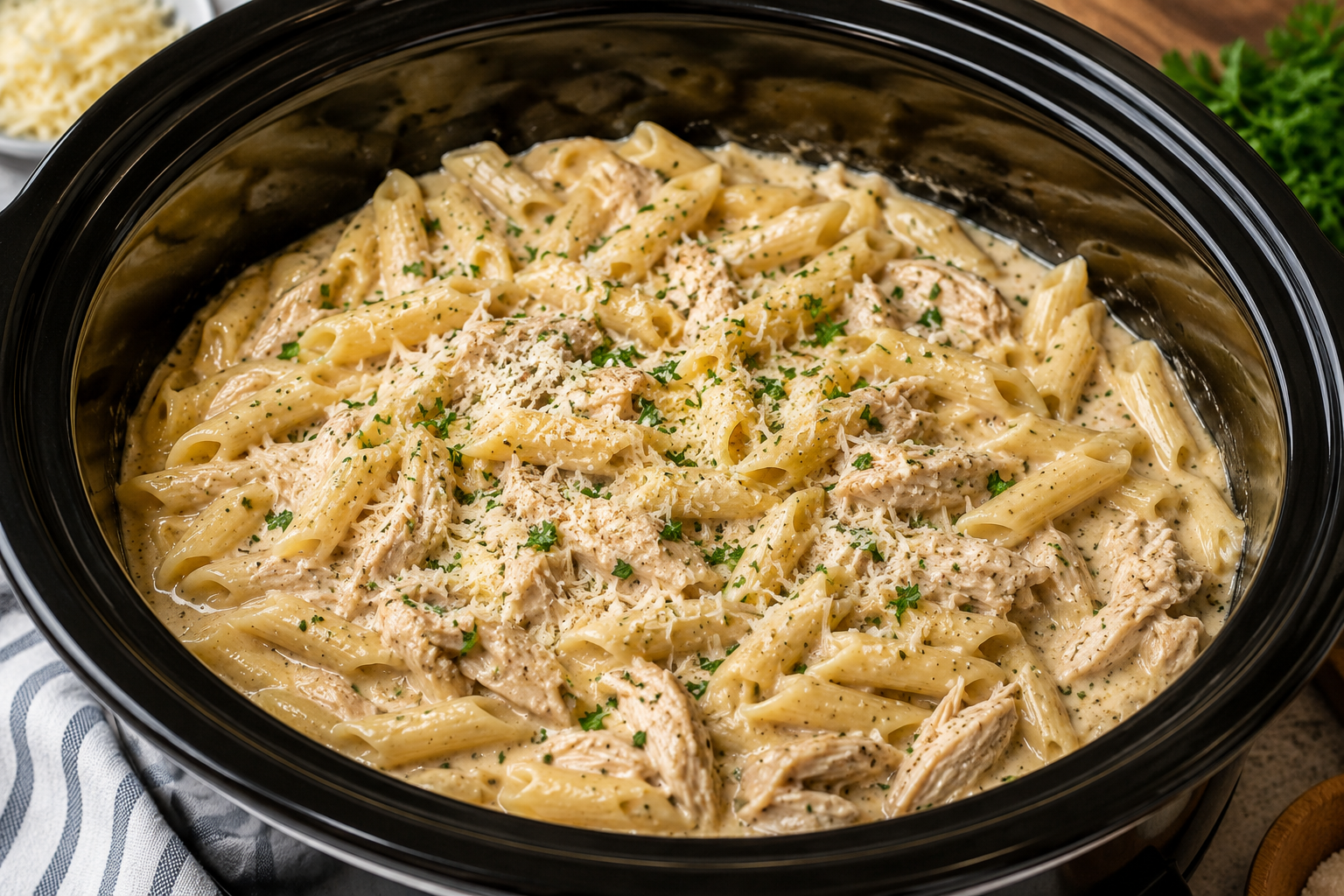
Slow Cooker Creamy Garlic Parmesan Chicken Pasta is a rich and comforting family dinner made with tender chicken, pasta, garlic, Parmesan cheese, herbs, and a smooth creamy sauce.
The chicken cooks slowly until it becomes tender enough to slice or shred easily. The sauce develops a deep savory flavor from garlic, chicken broth, cream cheese, Parmesan, Italian seasoning, and paprika.
Instead of adding dry pasta at the beginning, the pasta is cooked separately until barely al dente and stirred into the slow cooker near the end. This method helps prevent the pasta from becoming mushy or absorbing too much sauce.
This easy slow cooker chicken pasta is perfect for busy weeknights, Sunday dinners, family gatherings, meal preparation, or any evening when you want a warm and satisfying meal without spending hours beside the stove.
Why This Recipe Is Popular
Creamy chicken pasta is popular because it combines familiar ingredients in one comforting meal.
Chicken provides satisfying protein, pasta makes the dish filling, and the creamy garlic Parmesan sauce brings everything together.
The slow cooker reduces the amount of active cooking required. Once the chicken and sauce ingredients are added, the appliance handles most of the work.
The recipe is also easy to customize. Spinach, broccoli, mushrooms, sun-dried tomatoes, bacon, different cheeses, or mild spices can be added according to your family’s preferences.
Leftovers reheat well when stored properly, making this recipe useful for weekly meal preparation and next-day lunches.
Recipe Information
The preparation time is approximately twenty minutes.
The chicken cooks for about four to five hours on Low or two to three hours on High.
The pasta requires approximately ten to twelve minutes of separate stovetop cooking.
The total time is approximately five hours when using the Low setting.
This recipe provides about six generous servings.
Main Ingredients
Boneless and skinless chicken breasts create a lean and tender base for the pasta.
Chicken broth adds savory flavor while helping the sauce remain smooth.
Heavy cream and cream cheese create a rich and creamy texture.
Freshly grated Parmesan adds saltiness, depth, and a classic garlic Parmesan flavor.
Garlic, Italian seasoning, paprika, onion powder, salt, and black pepper season the chicken and sauce.
Rigatoni, penne, or another sturdy pasta shape holds the thick sauce well.
Fresh parsley adds color and a lighter finish shortly before serving.
Ingredients
You will need approximately one and a half pounds of boneless and skinless chicken breasts.
For the sauce, use two cups of low-sodium chicken broth, one cup of heavy cream, eight ounces of softened cream cheese, one cup of freshly grated Parmesan, three minced garlic cloves, one teaspoon of Italian seasoning, one teaspoon of paprika, half a teaspoon of onion powder, half a teaspoon of black pepper, and approximately half a teaspoon of salt.
For the pasta, use twelve ounces of rigatoni, penne, rotini, or another short and sturdy pasta shape.
You may also add half a cup of shredded mozzarella when you want a cheesier finish.
Two tablespoons of chopped fresh parsley and additional Parmesan can be used for serving.
The Best Chicken to Use
Boneless chicken breasts work well because they cook evenly and are easy to shred or slice.
Choose pieces that are similar in thickness so they finish cooking at approximately the same time.
Very large chicken breasts can be cut in half horizontally before being placed inside the slow cooker.
Boneless chicken thighs may also be used. They contain more natural fat and usually remain especially juicy during slow cooking.
Chicken tenderloins cook faster than full chicken breasts and should be checked near the early end of the recommended cooking range.
Always thaw frozen chicken completely inside the refrigerator before placing it in a slow cooker.
Choosing the Best Pasta
Rigatoni is an excellent choice because its large tubes capture the creamy sauce.
Penne, rotini, ziti, shells, and bow-tie pasta can also be used.
Avoid very delicate pasta shapes because they may soften too quickly after being added to the hot sauce.
Cook the pasta separately until it is barely al dente.
The pasta will continue softening slightly after it is mixed with the warm chicken and sauce.
Do not add fully cooked soft pasta because it may become overly tender while resting.
Why the Pasta Should Be Cooked Separately
Dry pasta absorbs a large amount of liquid while cooking.
Adding it directly to the slow cooker at the beginning may cause uneven cooking and can leave the sauce too thick.
The pasta pieces near the edges may become soft while those in the center remain firm.
Cooking the pasta separately provides better control over the texture.
It also allows you to drain away the starchy water and stir the pasta into the finished sauce only when the chicken is ready.
This method creates a smoother sauce and more reliable results.
Choosing the Parmesan Cheese
Freshly grated Parmesan provides the best flavor and texture.
Pre-shredded cheese often contains anti-caking ingredients that can prevent it from melting smoothly.
Buy a block of Parmesan and grate it shortly before adding it to the sauce when possible.
Parmesan is naturally salty, so taste the completed sauce before adding additional salt.
Pecorino Romano may replace part of the Parmesan when you want a sharper and saltier flavor.
Use it carefully because it can quickly make the sauce too salty.
Why Softened Cream Cheese Matters
Softened cream cheese combines more easily with the broth and heavy cream.
Cold cream cheese may remain in large lumps during the first part of cooking.
Remove it from the refrigerator approximately thirty to forty-five minutes before preparing the recipe.
Cut it into small cubes so it melts more evenly.
Full-fat block-style cream cheese produces the richest and most stable sauce.
Reduced-fat cream cheese may be used, but the finished sauce can be slightly thinner.
Avoid whipped cream cheese because it contains additional air and may not create the same texture.
Prepare the Slow Cooker
Lightly coat the inside of a five- or six-quart slow cooker with cooking spray or a small amount of oil.
This step is optional, but it can make cleanup easier.
Arrange the thawed chicken breasts inside the slow cooker in a mostly even layer.
Avoid creating a very tall stack of chicken because the pieces may cook at different speeds.
Season the Chicken
Sprinkle the chicken with paprika, onion powder, Italian seasoning, black pepper, and a small amount of salt.
Add the minced garlic evenly over the chicken.
The seasoning will mix with the liquid as the chicken cooks.
Use low-sodium broth because Parmesan and cream cheese already contribute salt to the recipe.
Additional seasoning can be added near the end after the sauce has been tasted.
Prepare the Creamy Garlic Sauce
Place the chicken broth, heavy cream, and softened cream cheese inside a large bowl or measuring jug.
Whisk until mostly combined.
The mixture does not need to be perfectly smooth because the cream cheese will continue softening during cooking.
Add approximately half of the grated Parmesan and whisk again.
Reserve the remaining Parmesan for finishing the sauce.
Pour the creamy mixture evenly over the seasoned chicken breasts.
Cook the Chicken on Low
Cover the slow cooker securely with its lid.
Cook on Low for approximately four to five hours.
Begin checking the chicken near the four-hour mark.
The exact cooking time depends on the thickness of the chicken and the power of the slow cooker.
The chicken is safely cooked when the thickest section reaches an internal temperature of 165°F.
Avoid cooking chicken breasts much longer than necessary because lean meat can become dry.
Cook the Chicken on High
When time is limited, cook the chicken on High for approximately two to three hours.
Begin checking the temperature near the two-hour mark.
Keep the lid closed during most of the cooking time because opening it repeatedly allows heat and steam to escape.
Boneless chicken thighs may require slightly more time depending on their size.
Always use a food thermometer rather than relying only on the color of the meat.
Remove and Shred the Chicken
Once the chicken reaches 165°F, transfer it carefully to a clean plate or cutting board.
Allow it to rest for several minutes.
Shred it using two forks or cut it into bite-sized slices.
Shredded chicken distributes evenly through the pasta.
Sliced chicken creates larger and more noticeable pieces.
Choose the style you prefer.
Keep the chicken covered while completing the sauce so it remains warm.
Finish the Creamy Sauce
Stir the sauce inside the slow cooker until the cream cheese is fully incorporated.
Add the remaining Parmesan gradually.
Continue stirring until the sauce becomes smooth and creamy.
When the sauce seems too thick, add a small amount of warm chicken broth or pasta cooking water.
When it appears too thin, leave the slow cooker uncovered on High for approximately ten minutes.
The sauce will also thicken slightly after the pasta and chicken are added.
Cook the Pasta
Bring a large pot of salted water to a boil.
Add the pasta and cook it according to the package instructions until barely al dente.
Remove it approximately one minute before it becomes completely tender.
Reserve about half a cup of the pasta cooking water.
Drain the pasta thoroughly.
Do not rinse it because the light layer of starch on the surface helps the creamy sauce cling to every piece.
Combine the Chicken and Pasta
Return the shredded or sliced chicken to the slow cooker.
Add the drained pasta.
Fold everything together gently until the chicken and pasta are evenly coated with the creamy garlic Parmesan sauce.
Add a small amount of reserved pasta water when the sauce needs loosening.
Avoid stirring too aggressively because soft pasta can break.
Add Mozzarella When Desired
For a cheesier version, sprinkle shredded mozzarella over the pasta.
Cover the slow cooker for approximately five to ten minutes.
The residual heat will melt the cheese.
Stir gently before serving.
Do not add an excessive amount because too much mozzarella may make the sauce stringy and heavy.
Taste and Adjust the Seasoning
Taste the completed pasta.
Add black pepper, garlic powder, Parmesan, or a small amount of salt when necessary.
When the sauce tastes too rich, stir in a teaspoon of lemon juice.
The acidity brightens the flavor without making the dish taste strongly like lemon.
Chopped parsley can also provide a fresher finish.
Simple Recipe Overview
Arrange seasoned chicken breasts inside the slow cooker.
Pour the creamy broth, cream cheese, garlic, and Parmesan mixture over the chicken.
Cook until the chicken reaches 165°F.
Remove and shred the chicken.
Cook the pasta separately until barely al dente.
Finish the sauce with additional Parmesan.
Return the chicken and add the drained pasta.
Stir gently and serve the dish warm.
Tips for the Best Creamy Chicken Pasta
Use thawed chicken that is similar in thickness.
Choose low-sodium broth so the sauce does not become too salty.
Soften and cube the cream cheese before adding it.
Keep the slow-cooker lid closed during most of the cooking time.
Use a food thermometer and stop cooking the chicken once it reaches 165°F.
Cook the pasta separately and add it near the end.
Grate the Parmesan from a block when possible.
Add pasta cooking water gradually when the sauce needs thinning.
Serve the pasta soon after combining it with the sauce.
Common Mistakes to Avoid
Do not place frozen chicken directly inside the slow cooker.
Avoid adding dry pasta at the beginning of the recipe.
Do not overcook lean chicken breasts.
Avoid using too much salt before the Parmesan has been added.
Do not use cold cream cheese without cutting it into small pieces.
Avoid boiling the creamy sauce strongly.
Do not leave the completed pasta inside the slow cooker on High for a long time because it may become overly soft.
Spinach adds color and makes the meal feel fresher.
Use approximately three cups of fresh baby spinach.
Add it after the chicken has finished cooking and the sauce has been stirred smooth.
The residual heat will wilt the leaves within several minutes.
Frozen spinach can also be used, but it must be thawed and squeezed thoroughly to remove excess water.
Too much liquid from frozen spinach can thin the creamy sauce.
Broccoli Garlic Parmesan Chicken Pasta
Broccoli pairs naturally with creamy chicken and Parmesan.
Steam or blanch approximately three cups of small broccoli florets until they are just tender.
Add them to the slow cooker with the cooked pasta.
Do not add raw broccoli at the beginning because it may become extremely soft during the long cooking time.
Keeping the florets slightly firm creates a better contrast with the creamy pasta.
Mushroom Chicken Pasta
Slice approximately eight ounces of cremini or white mushrooms.
For the best flavor, cook them in a skillet with a small amount of butter until their moisture evaporates and the edges become golden.
Add the browned mushrooms during the final thirty minutes.
Mushrooms can be added raw earlier, but they will release additional liquid and become softer.
Browned mushrooms provide a stronger savory flavor.
Sun-Dried Tomato Chicken Pasta
Drain and chop approximately half a cup of oil-packed sun-dried tomatoes.
Add them during the final thirty minutes of cooking.
Their tangy and slightly sweet flavor balances the rich cream sauce.
Use only a small amount of the tomato oil because too much can make the sauce greasy.
Fresh spinach can also be added for a colorful Tuscan-style variation.
Bacon Garlic Parmesan Pasta
Cook six slices of bacon until crisp.
Drain the bacon on paper towels and crumble it into small pieces.
Stir half of the bacon into the completed pasta.
Sprinkle the remaining bacon over the top shortly before serving.
Reduce the added salt because bacon and Parmesan both contain significant sodium.
Chopped green onions can be added for color and a mild onion flavor.
Cajun Creamy Chicken Pasta
Add one to two teaspoons of Cajun seasoning to the chicken.
The quantity should depend on the salt and heat level of the seasoning blend.
Use less additional salt until the finished sauce has been tasted.
Add sliced bell peppers near the final hour when desired.
Cajun seasoning creates a warm and mildly spicy sauce that pairs well with Parmesan and cream.
Buffalo Chicken Pasta
Replace part of the chicken broth with approximately one-third cup of buffalo sauce.
Use cream cheese and a smaller amount of Parmesan.
Add shredded cheddar or Monterey Jack cheese near the end.
Serve the pasta with chopped green onions and a light drizzle of ranch dressing.
Begin with a small amount of buffalo sauce and add more after tasting.
Lemon Garlic Parmesan Chicken Pasta
Add one tablespoon of finely grated lemon zest to the completed sauce.
Stir in one or two tablespoons of fresh lemon juice shortly before serving.
Add the lemon gradually because too much acid may affect the texture of the dairy sauce.
Fresh parsley and black pepper complete the brighter flavor.
This variation is especially good during spring and summer.
Creamy Pesto Chicken Pasta
Stir approximately half a cup of basil pesto into the completed sauce.
Add it after the chicken has finished cooking.
Cooking pesto for several hours can dull its fresh basil flavor.
Reduce the Parmesan slightly because pesto already contains cheese.
Serve with fresh basil, cherry tomatoes, or roasted vegetables.
Three-Cheese Chicken Pasta
Use Parmesan, mozzarella, and cheddar or Monterey Jack.
Add Parmesan while smoothing the sauce.
Add cheddar or Monterey Jack with the pasta.
Sprinkle mozzarella over the top and allow it to melt.
Use moderate amounts of each cheese so the sauce remains creamy instead of becoming excessively thick.
Lighter Creamy Chicken Pasta
Replace the heavy cream with half-and-half.
Use reduced-fat cream cheese and reduce the total amount of Parmesan slightly.
The sauce will be thinner but still creamy.
Plain Greek yogurt can replace part of the cream cheese, but it should be stirred in after the slow cooker is reduced to Low or Warm.
Avoid boiling Greek yogurt because it may separate.
Gluten-Free Chicken Pasta
Use a sturdy gluten-free pasta made from rice, corn, chickpeas, or lentils.
Cook it separately according to its package instructions.
Gluten-free pasta can soften quickly, so drain it while it remains slightly firm.
Check that the chicken broth, seasonings, cream cheese, and Parmesan are labeled gluten-free when necessary.
Add the pasta shortly before serving.
What to Serve With Creamy Chicken Pasta
This pasta can be served with garlic bread, warm dinner rolls, roasted broccoli, green beans, asparagus, Brussels sprouts, or a fresh garden salad.
A salad with lemon or vinaigrette dressing helps balance the rich sauce.
Roasted vegetables provide color and texture.
The dish is filling enough to serve alone, but a lighter side makes the complete meal feel more balanced.
How to Serve the Pasta
Spoon the warm pasta into shallow bowls.
Make sure every portion includes chicken and enough creamy sauce.
Finish with freshly grated Parmesan, chopped parsley, and black pepper.
Serve immediately because the pasta continues absorbing sauce while it sits.
Keep a little warm broth or pasta cooking water available when the sauce needs loosening before a second serving.
Serving the Pasta at a Party
Prepare the chicken and sauce inside the slow cooker.
Cook the pasta shortly before guests are ready to eat.
Add it to the sauce and keep the slow cooker on Warm for a short period.
Stir occasionally and add a small amount of warm broth when necessary.
Avoid keeping the completed pasta warm for several hours because the noodles may become too soft.
Meal-Prep Instructions
Allow the chicken pasta to cool slightly.
Divide it between airtight meal-prep containers.
Add broccoli, green beans, spinach, or another vegetable when desired.
Refrigerate for up to four days.
The pasta will absorb some sauce during storage.
Add one or two tablespoons of milk or broth before reheating to restore the creamy texture.
How to Store Leftovers
Transfer cooled leftovers to an airtight container.
Refrigerate for up to four days.
Do not leave the pasta at room temperature for longer than two hours.
During warm weather, refrigerate it sooner.
Keep the container tightly closed so the pasta does not dry out or absorb odors from other foods.
Discard leftovers that develop an unusual smell, color, or texture.
How to Reheat Creamy Chicken Pasta
Place the pasta inside a saucepan or skillet over medium-low heat.
Add a splash of milk, chicken broth, or water.
Warm gently while stirring.
Do not use high heat because the sauce may separate and the chicken may become dry.
For microwave reheating, place one portion inside a microwave-safe bowl.
Add a spoonful of milk or broth and cover loosely.
Heat for one minute, stir, and continue in shorter intervals.
Can You Freeze Creamy Chicken Pasta?
Freezing the completed pasta is possible, but cream-based sauces and cooked noodles can change texture after thawing.
For the best result, freeze the cooked chicken and sauce without the pasta.
Allow the sauce to cool completely and transfer it to a freezer-safe container.
Freeze for up to two months.
Thaw overnight inside the refrigerator.
Reheat gently and prepare fresh pasta before serving.
Freezer-Meal Preparation
Place the thawed raw chicken, broth, garlic, Italian seasoning, paprika, onion powder, and black pepper inside a freezer-safe bag.
Do not add heavy cream, cream cheese, Parmesan, or pasta before freezing.
Seal and freeze immediately.
Thaw the bag overnight in the refrigerator.
Transfer the ingredients to the slow cooker and begin cooking.
Add the dairy ingredients according to the recipe once the chicken is nearly finished.
Make-Ahead Instructions
The chicken and sauce can be prepared earlier in the day.
Keep the completed sauce and chicken on Warm only for a short period.
Cook the pasta near serving time.
The cream cheese can be softened and the Parmesan grated one day in advance.
Store them inside covered containers in the refrigerator.
The seasonings can also be measured ahead to make assembly faster.
Why Is My Sauce Too Thin?
Chicken naturally releases liquid during cooking.
Leave the slow cooker uncovered on High for approximately ten minutes after removing the chicken.
Add the Parmesan gradually because it helps thicken the sauce.
You may also mix one teaspoon of cornstarch with one tablespoon of cold water and stir it into the sauce.
Cook until the sauce thickens.
Use cornstarch carefully so the sauce does not become gummy.
Why Is My Sauce Too Thick?
Add warm chicken broth, milk, heavy cream, or reserved pasta cooking water one tablespoon at a time.
Stir gently after every addition.
The pasta will continue absorbing liquid, so the sauce should be slightly looser when the pasta is first added.
Leftovers usually need additional liquid during reheating.
Why Is My Sauce Grainy?
The dairy or cheese may have been heated too strongly.
Use freshly grated Parmesan and add it gradually.
Reduce the slow cooker to Low or Warm before finishing the sauce.
Do not boil the sauce after adding cheese.
Pre-shredded cheese can sometimes create a less smooth texture because of anti-caking ingredients.
Why Is the Chicken Dry?
The chicken probably cooked for too long.
Use a food thermometer and remove it when the thickest section reaches 165°F.
Chicken thighs are a more forgiving choice for long cooking.
Very large breasts may cook unevenly, so cut them into similar portions.
Keep the shredded chicken covered while completing the sauce.
Why Is the Pasta Mushy?
The pasta may have been added too early or cooked until completely soft before being mixed with the sauce.
Cook it separately until barely al dente.
Add it only after the chicken and sauce are ready.
Serve the dish soon after combining everything.
Do not leave the pasta inside the slow cooker on High.
Why Is the Dish Too Salty?
Parmesan, chicken broth, cream cheese, and some seasoning blends contain sodium.
Use low-sodium broth.
Add only a small amount of salt at the beginning.
Taste the completed sauce before adding more.
When the dish is too salty, add unsalted cream, milk, broth, or additional plain pasta.
Can I Use Frozen Chicken?
Frozen chicken should not be placed directly inside the slow cooker.
Thaw it completely inside the refrigerator first.
Slow cookers may not heat frozen chicken quickly enough to keep it within a safe temperature range.
Never thaw raw chicken on the kitchen counter.
Can I Use Chicken Thighs?
Yes.
Boneless and skinless chicken thighs remain juicy and work very well in this recipe.
Trim excessive fat before cooking.
Cook until the thickest section reaches at least 165°F and the meat feels tender.
Thighs may create a slightly richer sauce.
Can I Use Cooked Rotisserie Chicken?
Yes.
Prepare the sauce inside the slow cooker without raw chicken.
Cook it on Low until the cream cheese becomes soft and the sauce is hot.
Add approximately three cups of shredded rotisserie chicken during the final thirty minutes.
Cook the pasta separately and stir it in shortly before serving.
Can I Double the Recipe?
Yes.
Use a large slow cooker and avoid filling it more than approximately three-quarters full.
Arrange the chicken as evenly as possible.
The cooking time may increase slightly.
Cook the pasta in a large pot and add it gradually so the sauce-to-pasta ratio remains balanced.
Final Thoughts
Slow Cooker Creamy Garlic Parmesan Chicken Pasta is a comforting family dinner made with tender chicken, sturdy pasta, garlic, cream cheese, heavy cream, herbs, and Parmesan.
The slow cooker makes the chicken tender while creating a rich and savory sauce.
For the best result, thaw the chicken completely, use low-sodium broth, soften the cream cheese, and cook the pasta separately.
Add the pasta only after the chicken and sauce are ready.
Serve the dish warm with Parmesan, parsley, garlic bread, salad, or roasted vegetables.
Customize the recipe with spinach, broccoli, mushrooms, bacon, pesto, sun-dried tomatoes, lemon, or mild spices.
This creamy chicken pasta is an easy choice for weeknight meals, family dinners, meal preparation, and colder evenings when you want simple homemade comfort food.